Global delivery from Hanoi, Vietnam ISO 9001:2015   ISO 27001:2013 hello@agiletech.vn (+84) 989 324 830

Student Information System Development

A student information system is the institution's memory. It answers who this person is, what they registered for, what they paid, what they attended, and what the transcript says, and it has to answer correctly for a student who graduated fifteen years ago under regulations that no longer exist.

10+Years of Industry Expertise 200+Talented Developers 90%Customer Satisfaction Rate
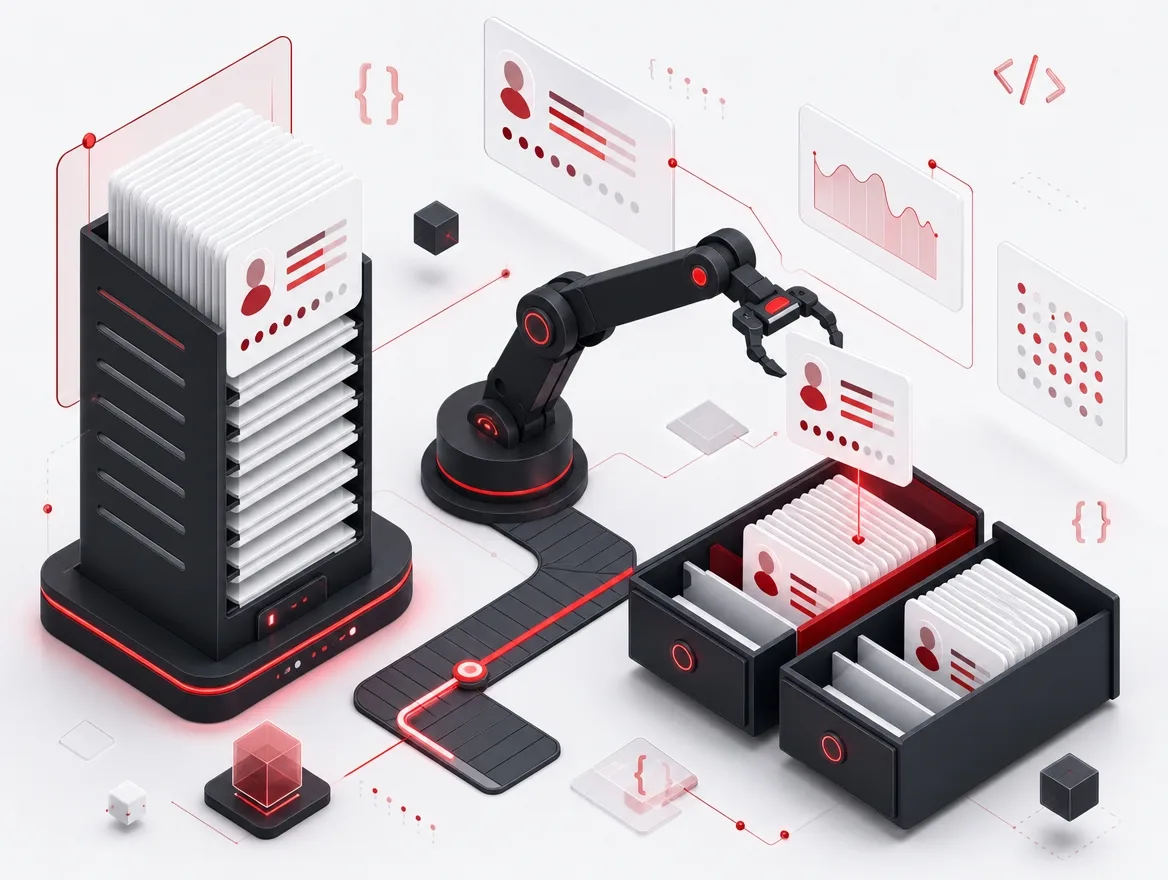
Student information system filing and indexing student records into a structured institutional database
ISO 9001:2015 Certified ISO 27001:2013 Certified

What Student Information Systems Clients Say About AgileTech

Independent reviews from Clutch and DesignRush. Every review below is shown in full and links back to its source platform so you can confirm it yourself.

5.0
Nov 2024

“The platform has greatly improved our operational efficiency, and we wholeheartedly recommend AgileTech.”

Working with AgileTech has been an amazing experience, especially when it comes to creating a personalized e-learning program for our IT services business. We were pleasantly surprised by how adaptable and scalable the platform developed by the AgileTech Team was. Their proficiency with user-friendly course administration and community participation technologies enabled us to provide a thorough instructional resource catered to our customers’ particular requirements. The platform has greatly improved our operational efficiency, and we are amazed by its capacity to manage heavy traffic with ease and offer comprehensive reporting and analytics. The platform remained successful and user-friendly because of the team’s dedication to continuous support and their quick response to criticism. For any organization looking to create innovative and reliable digital solutions, we wholeheartedly recommend AgileTech as a partner.

Personalized e-learning platform that handles heavy traffic

5.0
Nov 2024

“They used a potent tech stack including PHP, React, and AWS to guarantee perfect scalability and zero downtime.”

AgileTech provided a superb Learning Management System (LMS) that creatively and precisely addressed the intricate needs of our organization. Within a scalable, completely customizable platform, the LMS made it possible to create comprehensive courses, administer student tests, engage the community, and obtain real-time data insights. AgileTech’s modular and agile approach made sure that every component, from the user-friendly course builder to the sophisticated analytics and communication tools, was customized to meet our demands despite the difficulties of developing such a feature-rich system. In order to guarantee perfect scalability and zero downtime, even with high user concurrency, AgileTech used a potent tech stack that included PHP, React, and AWS. Their post-launch assistance, which included frequent training sessions and upgrades, gave our staff the means to fully use the LMS’s potential. This project was a testament to AgileTech’s technical skill, rapid deployment, and dedication, making them an outstanding choice for educational technology development.

Feature-rich LMS with course builder, analytics, and comms

4.5
Apr 2021

“They are incredible to work with and are truly passionate about technology and our concept.”

AgileTech Viet Nam provides mobile app development services for a social media startup. They are building the app using Node.js and Flutter. With the ongoing partnership, AgileTech Viet Nam’s passion has impressed the client so far. The team is truly into technology, and their concept makes the client feel confident about the project’s continuous success.

5.0
Jun 2025

“Their proactive communication, flexibility, and technical expertise stood out throughout the project.”

AgileTech Viet Nam used React Native to develop an iOS and Android app for a real estate platform. The team integrated the app with the client’s backend and implemented property search features. AgileTech Viet Nam’s high-quality work resulted in a 30% increase in user registrations and over 1,000 app downloads within the first month. The team delivered on time, provided regular updates, and responded to feedback. Their flexibility and proactive communication impressed the client.

30% more sign-ups and 1,000+ downloads in the first month

5.0
May 2026

“They followed a structured Agile approach with clearly defined milestones.”

AgileTech Viet Nam developed a web-based logistics management system for an automotive parts supplier. The team integrated the platform with third-party providers and built a real-time tracking dashboard. AgileTech Viet Nam’s work reduced manual processing by 55%, improved real-time shipment visibility, and increased operational efficiency across multiple departments. The team followed a structured Agile approach, communicated consistently, delivered on time, and was flexible.

Manual processing reduced by 55% with real-time shipment visibility

5.0
May 2026

“They were not just executing tasks but were genuinely invested in the product’s success.”

AgileTech Viet Nam developed an MVP for a digital solutions provider’s marketplace platform. They created the UI/UX design, developed the front- and backend, and integrated payment systems. AgileTech Viet Nam successfully launched the MVP on time, allowing the client to onboard 500 users within two months. The platform was stable with minimal issues. Moreover, the team was collaborative, flexible, quick to adapt to changing priorities, and genuinely invested in the project’s success.

MVP launched on time, 500 users onboarded within two months

5.0
May 2026

“Their ability to handle both high-level architecture and hands-on implementation is rare.”

An IT services company hired AgileTech Viet Nam to re-architect their enterprise SaaS platform. The team conducted a technical audit, designed a new architecture, migrated legacy data, and added API gateways. Thanks to AgileTech Viet Nam’s work, the client saw improvements in system scalability, platform uptime, and deployment time. The team followed the Agile methodology, communicated effectively, and was responsive to the client’s feedback. AgileTech Viet Nam helped the client make better decisions.

Improved scalability, uptime, and deployment time on an enterprise SaaS

5.0
May 2026

“They were flexible in accommodating evolving business needs while still keeping the project on track.”

AgileTech Viet Nam developed a digital platform for a real estate firm. They designed the UI/UX, implemented advanced search and filtering functionalities, integrated dashboards, and automated reporting tools. The platform improved operational efficiency, business performance, lead conversion rates, and customer responsiveness. AgileTech Viet Nam implemented a well-structured project management approach, meeting timelines and responding to feedback with flexibility. Their tailored solutions stood out.

Improved efficiency, business performance, and lead conversion

4.0
Jun 2019

“I was impressed with the flow of the project.”

AgileTech Viet Nam developed a mobile app from scratch. After helping with scoping and objective formation, AgileTech created design mockups and developed the full iOS and Android solutions. Valuable user data is being gathered in ongoing beta tests, which will soon lead to growth and expansion opportunities. AgileTech Viet Nam provided consistent communication and established a smooth workflow. Issues were raised proactively, allowing fixes to come earlier in the process.

5.0
Nov 2024

“AgileTech excelled in supporting our project from initial mock-ups through to the final delivery on the App Store.”

AgileTech excelled in supporting our project from initial mock-ups through to the final delivery on the App Store, incorporating data analytics that we could easily share with our customers. The scope of work included mock-up creation, UI/UX design, interactive prototyping, app development, rigorous testing, and setting up a secure production environment on AWS, culminating in the apps release on both iOS and Android platforms.

5.0
Nov 2024

“Since we launched our new site we’ve seen a significant increase in traffic and sales, which proves their work is effective.”

We’ve had an amazing experience with AgileTech for our eCommerce platform. The team worked with us to build an user friendly online store that met all our business needs. Their eCommerce development expertise was evident from the start as they shared valuable insights on how to maximize sales. The AgileTech team are not only talented but also care about their clients success. Since we launched our new site we’ve seen a significant increase in traffic and sales which proves their work is effective.

5.0
Nov 2024

“Their attention to detail in web development and UI/UX design has given us a site that looks great and works flawlessly.”

Working with AgileTech has been a game changer for us. We wanted a modern and responsive website and AgileTech delivered more than we expected. The team was super collaborative and involved us in every step of the process. Their attention to detail in web development and UI/UX design has given us a site that looks great and works flawlessly. The AgileTech team members are not only talented professionals but also great communicators, so we could share our vision and ideas easily. They were so committed to our success and the end result has increased our user engagement and satisfaction so much.

5.0
May 2026

“Their balance between technical expertise and product thinking stood out.”

AgileTech Viet Nam developed an AI-powered analytics platform for an AI visibility and GEO solutions company. The platform featured real-time reporting dashboards and data processing pipelines. AgileTech Viet Nam’s work improved the client’s data processing efficiency and the accuracy of AI-generated insights. The platform was user-friendly and supported the client’s first large-scale deployments. AgileTech Viet Nam’s team was communicative, adaptive, and technically proficient.

Improved data-processing efficiency and AI insight accuracy

5.0
Mar 2026

“The team demonstrated strong professionalism, reliability, and a proactive approach throughout the project.”

AgileTech Viet Nam developed a scalable engineering workflow system for an ICT company. The goal was to streamline internal processes, improve cross-team visibility, and enhance coordination. The system significantly improved operational efficiency by reducing manual processes and increasing transparency across teams for the client. AgileTech Viet Nam set clear milestones and provided regular updates to ensure everyone remained in sync. Their professionalism and reliability stood out.

Scalable engineering workflow system with fewer manual processes

5.0
Nov 2024

“We saw huge cost savings and optimized stock levels, so we consider AgileTech a partner in our company transformation.”

AgileTech created a working Supply Chain Management (SCM) system that has helped our supermarket chain simplify operations across inventory management, demand forecasting and logistics. They integrated our existing systems, automated inventory and logistics and gave us robust demand forecasting with AI, we saw huge cost savings and optimized stock levels. And they continued to deliver on quality post launch with regular updates and training sessions, so we consider AgileTech as a partner in our company transformation.

AI-driven demand forecasting across inventory and logistics

5.0
May 2026

“Their professionalism, responsiveness, and ability to execute efficiently made them feel like an operational partner.”

AgileTech Viet Nam optimized a workflow for a consulting firm. The team improved lead management processes and streamlined internal communication systems across multiple departments. AgileTech Viet Nam’s work improved the client’s operations, customer communication process, and overall workflow efficiency. The team was strategic and reliable. Moreover, AgileTech Viet Nam worked closely with the client to understand their business objectives and recommend solutions.

What a Student Information System Contains

The capability areas that define scope, whether we are building a record system or the layer that extends one already in service.

Admissions and Applicant Management

Enquiry through application with document upload, eligibility and qualification assessment, interview or test scheduling, offers including conditional offers with tracked and evidenced conditions, acceptance and deposit, and conversion to registration on one continuous identity.

Student Records and Transcripts

The authoritative record of person, programme, and progression, results captured with period and attempt, controlled amendment with reason and audit, progression and academic standing as recorded events, and award calculation reproducible under the regulations in force at the time.

Registration and Programme Structure

Programme and module catalogues with versioning by cohort, module selection with prerequisite and credit rules, section and group allocation, term registration with fee-status conditions, and transfers, deferrals, and withdrawals held as dated states rather than flags.

Timetabling and Resource Scheduling

Session scheduling against room capacity and facilities, staff qualification and availability, and student clash detection, with conflicts surfaced at scheduling time, central or devolved planning as your institution works, and change notification with visible knock-on effects.

Attendance and Engagement Records

Capture that works in the room in seconds by register, card, or self-check, authorised-absence and correction handling, engagement monitoring where funding or visa conditions require it, and thresholds that trigger intervention or reporting obligations.

Fees, Funding, and Statutory Reporting

Tuition schedules by programme and cohort, instalments, scholarships and sponsor funding, third-party invoicing, withdrawal refunds against published policy, charges arising from registration events rather than re-keyed, and statutory returns generated from operational data.

Systems a Student Information System Connects To

The SIS is the identity and record authority for an institution, so almost every other system depends on it. We map each interface and its failure behaviour before design.

  • Learning management systems: enrolments and cohorts pushed out, final results received back, with the SIS remaining authoritative for identity, registration, and the official transcript.
  • Finance and ERP systems: charge and payment posting, sponsor and agency invoicing, and reconciliation so academic registration and financial ledgers agree at period end.
  • Identity providers and directories: account provisioning and deprovisioning driven by registration state, with single sign-on across institutional systems rather than separately maintained credentials.
  • Admissions services and agents: national or regional application services, recruitment agent portals, and qualification verification bodies, with applications ingested rather than re-typed.
  • Statutory and funding bodies: regulatory returns, funding claims, and visa or immigration reporting produced to each body's specification on its own cycle.
  • Library and facility systems: entitlement and access driven by registration status, with borrowing rights, building access, and equipment loan reflecting current enrolment.
  • Assessment and examination platforms: candidate lists and accommodation requirements out, confirmed results in, keeping high-stakes assessment in a system built for it.
  • Communication and CRM tooling: applicant nurture, student notification, and alumni handover, with the SIS supplying the population rather than duplicating contact records.

Technical Considerations for SIS Development

The engineering decisions that determine whether a student information system development project holds up in production, set out before the build starts.

The record must be reproducible, not merely current

Most systems answer what is true now. A student record system must answer what was true then: which regulations governed an award in 2014, what the grading scheme was before it changed, which modules a discontinued programme required. This makes temporal modelling a foundational decision rather than an enhancement. Programme structures, grading schemes, fee schedules, and progression rules are all versioned by effective date and bound to cohorts, so a transcript reissued years later is identical to the original. Systems that overwrite these definitions cannot reproduce their own history, and that defect is not repairable after the fact.

Institutional policy is configuration, not code

Progression rules, award classification, refund policy, attendance thresholds, and fee calculation all change by committee decision on academic-year boundaries, and they frequently differ between faculties within the same institution. Encoding them in application logic guarantees a developer is required for every policy change, which in practice means changes happen late or not at all. We express them as versioned, testable configuration with an audit of who changed what and when it takes effect, so registry staff own policy and engineering owns the platform.

The academic calendar governs everything

An institution has hard boundaries and hard peaks. Registration week, results release, and clearing or late-admission periods concentrate enormous load into days, and there is no acceptable moment to be unavailable during any of them. Equally, a migration cannot land mid-term without splitting a cohort's records across two systems. We sequence releases and cutovers to calendar boundaries, load-test against registration and results profiles rather than average traffic, and treat the peak weeks as change-frozen periods with monitoring rather than deployment.

Stack choices we typically recommend

PostgreSQL for the record, with temporal modelling of programmes, schemes, and policies so history remains reconstructable, and strict referential integrity because an orphaned academic record is a legal problem. Java, .NET, or Node.js for the backend depending on your existing estate and integration surface, with the reporting and statutory-return layer isolated as its own service. ReactJS for registry, staff, and student self-service interfaces. Infrastructure with tested restoration, long-horizon retention, encryption, and immutable audit logging on record access and amendment.

  • Identity resolution across years: the same person may apply twice, transfer, or return after a decade, so duplicate detection and safe reversible merging are core rather than administrative tooling.
  • Long retention and disposal: record classes carry different retention periods, some measured in decades, requiring schedules that are enforced rather than documented.
  • Correction with accountability: grades and records must be amendable through an authorised path that preserves the prior value, the reason, and the approver.
  • Multi-campus and group operation: where several campuses or institutions are involved, decide early what is central and what is local, since retrofitting group-level control is substantially harder.

Who This Is For

Institutions with a model no product serves

Heavily modular qualifications, workplace and apprenticeship delivery, rolling intakes, or multi-jurisdiction operation all strain products designed around fixed annual cohorts. A focused build for the actual model can cost less over time than accumulated workaround in registry.

Groups coordinating several campuses or institutions

Once several sites are involved, the problem shifts from any one institution's features to shared identity, transfers between campuses, group reporting, and consistent policy where it must be consistent. That is usually a coordination layer rather than a replacement programme.

Institutions held back by an installed system

Where a legacy SIS works but cannot be integrated or extended at reasonable cost, building alongside it with a clear authority boundary is usually safer and faster than replacing something the whole institution knows how to operate.

Education technology companies building for institutions

If you are building administrative software to sell, multi-tenancy, policy configurability per institution, and statutory reporting breadth are product requirements rather than implementation details, and they must be designed in from the start.

How We Deliver SIS Projects

A sequence built around the constraint that an academic term cannot be interrupted for a deployment.

AgileTech software delivery process A six step delivery workflow: requirement analysis, planning and design, development, quality assurance, deployment, then maintenance and support. 01 RequirementAnalysis 02 Planning &Design 03 Development 04 QualityAssurance 05 Deployment 06 Maintenance &Support
01

Registry and Policy Discovery

We document how the institution actually administers itself: admissions routes, progression and classification rules, fee and refund policy, attendance obligations, and the variation between faculties. We also establish the build-versus-buy position and say plainly when buying is the better answer.

02

Record Authority and Temporal Modelling

We define which system owns each fact, then model programmes, grading schemes, and policies as versioned entities bound to cohorts. This decision determines whether the system can reproduce its own history, and it cannot be deferred.

03

Security, Retention, and Reporting Design

Role-based access reflecting real registry, academic, and finance differences, audit scope on record access and amendment, retention and disposal schedules per record class, and the statutory return specifications you are obliged to meet. Designed before feature work.

04

Iterative Build with Registry Validation

Short iterations validated by the registry, finance, and academic staff who will operate them, tested against real historical cases including the awkward ones: transfers, withdrawals, reinstatements, and amended results.

05

Function-by-Function Cutover at Calendar Boundaries

Phased go-live sequenced to term boundaries, migration reconciled by count and by value with sample transcripts verified against originals, legacy kept readable until nothing depends on it, and rollback prepared in advance.

06

Ongoing Ownership and Policy Evolution

Monitoring on registration and results-release load as well as system health, interface maintenance as connected systems change, and configuration updates for policy and regulatory changes aligned to academic-year boundaries.

Frequently Asked Questions

How is a student information system different from a learning management system?

The SIS is the institutional record of record; the LMS is where teaching happens. The SIS holds who a person is, what programme they are registered on, what they have paid, what they attended, and what the official transcript says. The LMS holds the course content, the activity, and the working gradebook. The two must exchange data in a defined direction: enrolments from the SIS to the LMS, final results back from the LMS to the SIS. Problems begin when both systems believe they own the same fact, which is why we fix the authority boundary before either integration is built. Our learning management system page covers the teaching side.

Should we build an SIS or buy one?

For a conventional institution, buying is usually correct and we will say so before scoping. Mature SIS products encode decades of administrative, regulatory, and reporting detail, and displacing a vendor that carries statutory reporting certification for your jurisdiction is expensive and rarely justified. Building becomes rational when you operate a model no product serves properly, when you are a group needing a coordination layer above several existing systems, when an installed system cannot be integrated or extended at any reasonable cost, or when you are building a platform to sell to other institutions. A failed SIS replacement is one of the more damaging projects an institution can undertake, so we assess this honestly.

Can you build around the SIS we already run?

That is the more common and usually the wiser engagement. Institutions rarely need a new record system; they need capability the incumbent does not offer, delivered around it. Applicant-facing admissions journeys, self-service portals for students and staff, timetabling that the core product handles badly, analytics beyond native reporting, and integration layers to finance or learning platforms can all be built as additions that read from and write to the record system through defined interfaces, leaving it authoritative and intact.

What does admissions and registration actually involve?

More variation than any other part of an SIS, because it is where institutional policy is least standardised. An applicant journey spans enquiry, application with document upload, qualification and eligibility assessment, interview or test scheduling where required, offer with conditions, acceptance, deposit, and conversion into a registered student without re-entering anything. Conditional offers are the part most often underbuilt: an offer contingent on results that arrive months later needs the condition tracked, evidenced, and cleared, with automatic consequences when it is not met. We model the applicant and the student as the same identity throughout, so history is continuous.

How are student records and transcripts handled?

The transcript is the most consequential artefact an institution produces, so the record behind it must be immutable in the right places and correctable through a controlled path in others. That means results recorded with the assessment period, the attempt number, and the marker or board that confirmed them, grade changes possible only through an authorised amendment with reason and audit, academic standing and progression decisions recorded as events rather than derived on the fly, and awards and classifications calculated by rules that can be reproduced years later. An institution must be able to reissue a transcript from ten years ago identically, including under the regulations in force at the time.

How does timetabling and scheduling work?

Timetabling is a constrained resource problem, and it is the part institutions most often want fixed. A session needs a room with adequate capacity and the right facilities, a member of staff who is qualified and available, a time that does not clash for any enrolled student, and often equipment or laboratory access. We model those constraints explicitly and surface conflicts at the point of scheduling rather than in week one, support both centrally planned and departmentally devolved timetabling since institutions differ, and handle room changes and cancellations with visible knock-on effects and notification. Full automated optimisation is achievable but should follow a trusted manual process, not precede it.

How are fees, finance, and funding handled?

This varies more by market and institution type than any other module, so we build against your actual arrangements rather than a generic model. That can include tuition schedules by programme and cohort, instalment plans, scholarships and bursaries, government or sponsor funding with its own reporting obligations, third-party invoicing where an employer or agency pays, refunds on withdrawal calculated against a published policy, and outstanding-balance consequences for registration or results release. The design essential is that charges arise from registration events rather than being re-keyed by finance staff, and that the SIS and the finance system agree at period end.

What about attendance and statutory reporting?

Attendance is operationally mundane and often legally significant, particularly for institutions with international students, funded programmes, or compulsory-age learners, where under-attendance carries reporting duties. We build capture that works in the room and in seconds, whether by register, card, or self-check, with exception handling for authorised absence and correction. Statutory returns are then produced from operational data rather than compiled manually each cycle, and we build them to your jurisdiction's specific submission requirements. We do not claim accreditation with any education regulator; we build to the return specifications you are obliged to meet.

How do you migrate historical student data?

Carefully, and usually more slowly than clients expect, because student data is legally consequential decades after the student leaves. Migration involves reconciling identity where the same person appears multiple times across years, mapping historical qualifications and grading schemes that have since changed, preserving the regulations under which each award was made, and validating that a sample of reissued transcripts matches the originals exactly. We keep the legacy system readable until nothing outstanding depends on it, and we reconcile by count and by value rather than declaring success on a completed import.

How long does an SIS project take?

Longer than most education software, because the scope crosses admissions, academic records, timetabling, finance, and reporting, each with institutional policy embedded in it. A first release covering a defined set of functions, typically admissions and registration or records and transcripts, is usually six to twelve months including discovery, integration, migration, and validation. Full coverage is a multi-phase programme. We sequence function by function rather than attempting a single institution-wide launch, because a simultaneous cutover across an institution carries risk that is difficult to justify against a term calendar.

How do you handle student data, security, and retention?

Student records contain identity, financial, and often health and disability information, held for long retention periods, frequently concerning minors. We build role-based access reflecting that a registry clerk, a tutor, and a finance officer need very different views, complete audit logging of record access, encryption in transit and at rest, defined retention and disposal schedules per record class, and subject access and correction mechanics. Our information security management is certified to ISO 27001:2013 and quality management to ISO 9001:2015. We do not describe ourselves as a FERPA or GDPR certified vendor, because no such certification exists for software suppliers; those obligations rest with the institution and we build so you can meet and evidence them.

Trusted and Recognized

Independent directories, certification bodies, and award programs that have assessed our work. Each badge links to its source or names the standard behind it, so every claim on this page can be checked at first hand.

Top Mobile App Developers - ClutchTop Software Development Company - GoodFirmsReliable Company - ExtractISO 9001:2015 certifiedISO 27001:2013 certifiedTechBehemoths Awards - Mobile App Development

Ready to Discuss Your Student Information System Project?

Tell us your student volume, which system owns the transcript today, and which statutory returns you must produce. We will come back with a straight assessment of build versus integrate, a delivery sequence, and an estimate within 48 hours.

Life at AgileTech

Consult Industry Specialists

Connect with us today to discuss your software development needs and discover how our tailored outsourcing services can propel your business forward.

Start a conversation
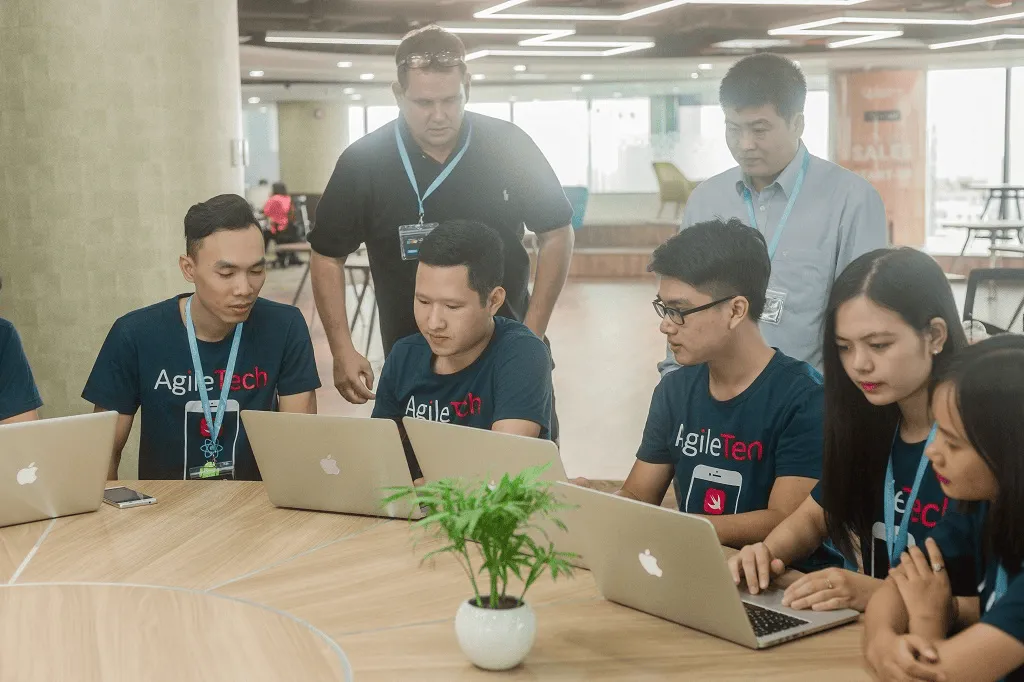
AgileTech Vietnam team at the office

Cookie settings

Strictly necessary storage keeps the site working and remembers this choice. Everything else is off until you switch it on, wherever you are in the world. Only one optional category has anything behind it today: External content, which covers the Google map of our Hanoi office on the Contact page.

Wherever you are. We apply one standard to everyone: nothing outside strictly necessary storage runs until you allow it. That meets the EU and UK requirement for prior consent, the notification and consent requirements of Singapore's PDPA, and US state privacy law. You can withdraw or change your choice at any time, as easily as you gave it, from Cookie settings in the footer.

If you are in the United States. We do not sell your personal information and we do not share it for cross-context behavioural advertising, so there is nothing to opt out of. We still honour an opt-out preference signal from your browser: if your browser sends Global Privacy Control, the optional categories stay off without you having to do anything.

Full detail, including the name and lifetime of the one cookie we set, is in the Cookie Policy.