Global delivery from Hanoi, Vietnam ISO 9001:2015   ISO 27001:2013 hello@agiletech.vn (+84) 989 324 830

MLS and Property Data Integration

Property data arrives from systems you do not control, in formats you did not choose, and it changes constantly. A multiple listing service, a portal feed, a public records source, and a valuation data provider each have their own model of what a property is. Integration work in real estate is mostly the work of reconciling those models without corrupting your own.

10+Years of Industry Expertise 200+Talented Developers 90%Customer Satisfaction Rate
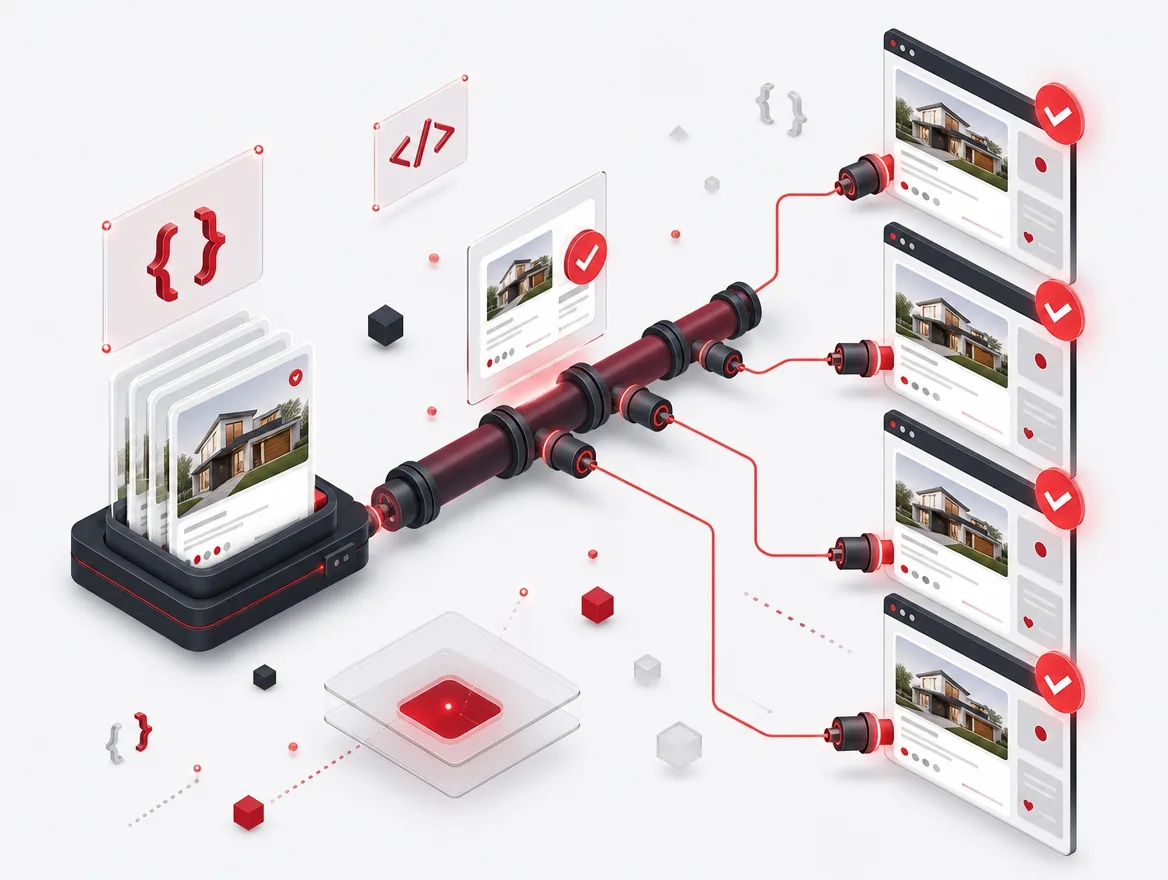
Property listing data syndicated from one source feed out to multiple portals and consuming systems
ISO 9001:2015 Certified ISO 27001:2013 Certified

What MLS & Property Data Clients Say About AgileTech

Independent reviews from Clutch and DesignRush. Every review below is shown in full and links back to its source platform so you can confirm it yourself.

5.0
Jun 2025

“Their proactive communication, flexibility, and technical expertise stood out throughout the project.”

AgileTech Viet Nam used React Native to develop an iOS and Android app for a real estate platform. The team integrated the app with the client’s backend and implemented property search features. AgileTech Viet Nam’s high-quality work resulted in a 30% increase in user registrations and over 1,000 app downloads within the first month. The team delivered on time, provided regular updates, and responded to feedback. Their flexibility and proactive communication impressed the client.

30% more sign-ups and 1,000+ downloads in the first month

5.0
May 2026

“They were flexible in accommodating evolving business needs while still keeping the project on track.”

AgileTech Viet Nam developed a digital platform for a real estate firm. They designed the UI/UX, implemented advanced search and filtering functionalities, integrated dashboards, and automated reporting tools. The platform improved operational efficiency, business performance, lead conversion rates, and customer responsiveness. AgileTech Viet Nam implemented a well-structured project management approach, meeting timelines and responding to feedback with flexibility. Their tailored solutions stood out.

Improved efficiency, business performance, and lead conversion

5.0
May 2026

“They followed a structured Agile approach with clearly defined milestones.”

AgileTech Viet Nam developed a web-based logistics management system for an automotive parts supplier. The team integrated the platform with third-party providers and built a real-time tracking dashboard. AgileTech Viet Nam’s work reduced manual processing by 55%, improved real-time shipment visibility, and increased operational efficiency across multiple departments. The team followed a structured Agile approach, communicated consistently, delivered on time, and was flexible.

Manual processing reduced by 55% with real-time shipment visibility

5.0
May 2026

“They were not just executing tasks but were genuinely invested in the product’s success.”

AgileTech Viet Nam developed an MVP for a digital solutions provider’s marketplace platform. They created the UI/UX design, developed the front- and backend, and integrated payment systems. AgileTech Viet Nam successfully launched the MVP on time, allowing the client to onboard 500 users within two months. The platform was stable with minimal issues. Moreover, the team was collaborative, flexible, quick to adapt to changing priorities, and genuinely invested in the project’s success.

MVP launched on time, 500 users onboarded within two months

5.0
May 2026

“Their ability to handle both high-level architecture and hands-on implementation is rare.”

An IT services company hired AgileTech Viet Nam to re-architect their enterprise SaaS platform. The team conducted a technical audit, designed a new architecture, migrated legacy data, and added API gateways. Thanks to AgileTech Viet Nam’s work, the client saw improvements in system scalability, platform uptime, and deployment time. The team followed the Agile methodology, communicated effectively, and was responsive to the client’s feedback. AgileTech Viet Nam helped the client make better decisions.

Improved scalability, uptime, and deployment time on an enterprise SaaS

5.0
May 2026

“Their balance between technical expertise and product thinking stood out.”

AgileTech Viet Nam developed an AI-powered analytics platform for an AI visibility and GEO solutions company. The platform featured real-time reporting dashboards and data processing pipelines. AgileTech Viet Nam’s work improved the client’s data processing efficiency and the accuracy of AI-generated insights. The platform was user-friendly and supported the client’s first large-scale deployments. AgileTech Viet Nam’s team was communicative, adaptive, and technically proficient.

Improved data-processing efficiency and AI insight accuracy

5.0
Mar 2026

“The team demonstrated strong professionalism, reliability, and a proactive approach throughout the project.”

AgileTech Viet Nam developed a scalable engineering workflow system for an ICT company. The goal was to streamline internal processes, improve cross-team visibility, and enhance coordination. The system significantly improved operational efficiency by reducing manual processes and increasing transparency across teams for the client. AgileTech Viet Nam set clear milestones and provided regular updates to ensure everyone remained in sync. Their professionalism and reliability stood out.

Scalable engineering workflow system with fewer manual processes

5.0
Nov 2024

“The platform has greatly improved our operational efficiency, and we wholeheartedly recommend AgileTech.”

Working with AgileTech has been an amazing experience, especially when it comes to creating a personalized e-learning program for our IT services business. We were pleasantly surprised by how adaptable and scalable the platform developed by the AgileTech Team was. Their proficiency with user-friendly course administration and community participation technologies enabled us to provide a thorough instructional resource catered to our customers’ particular requirements. The platform has greatly improved our operational efficiency, and we are amazed by its capacity to manage heavy traffic with ease and offer comprehensive reporting and analytics. The platform remained successful and user-friendly because of the team’s dedication to continuous support and their quick response to criticism. For any organization looking to create innovative and reliable digital solutions, we wholeheartedly recommend AgileTech as a partner.

Personalized e-learning platform that handles heavy traffic

5.0
Nov 2024

“They used a potent tech stack including PHP, React, and AWS to guarantee perfect scalability and zero downtime.”

AgileTech provided a superb Learning Management System (LMS) that creatively and precisely addressed the intricate needs of our organization. Within a scalable, completely customizable platform, the LMS made it possible to create comprehensive courses, administer student tests, engage the community, and obtain real-time data insights. AgileTech’s modular and agile approach made sure that every component, from the user-friendly course builder to the sophisticated analytics and communication tools, was customized to meet our demands despite the difficulties of developing such a feature-rich system. In order to guarantee perfect scalability and zero downtime, even with high user concurrency, AgileTech used a potent tech stack that included PHP, React, and AWS. Their post-launch assistance, which included frequent training sessions and upgrades, gave our staff the means to fully use the LMS’s potential. This project was a testament to AgileTech’s technical skill, rapid deployment, and dedication, making them an outstanding choice for educational technology development.

Feature-rich LMS with course builder, analytics, and comms

5.0
Nov 2024

“We saw huge cost savings and optimized stock levels, so we consider AgileTech a partner in our company transformation.”

AgileTech created a working Supply Chain Management (SCM) system that has helped our supermarket chain simplify operations across inventory management, demand forecasting and logistics. They integrated our existing systems, automated inventory and logistics and gave us robust demand forecasting with AI, we saw huge cost savings and optimized stock levels. And they continued to deliver on quality post launch with regular updates and training sessions, so we consider AgileTech as a partner in our company transformation.

AI-driven demand forecasting across inventory and logistics

5.0
May 2026

“Their professionalism, responsiveness, and ability to execute efficiently made them feel like an operational partner.”

AgileTech Viet Nam optimized a workflow for a consulting firm. The team improved lead management processes and streamlined internal communication systems across multiple departments. AgileTech Viet Nam’s work improved the client’s operations, customer communication process, and overall workflow efficiency. The team was strategic and reliable. Moreover, AgileTech Viet Nam worked closely with the client to understand their business objectives and recommend solutions.

4.5
Apr 2021

“They are incredible to work with and are truly passionate about technology and our concept.”

AgileTech Viet Nam provides mobile app development services for a social media startup. They are building the app using Node.js and Flutter. With the ongoing partnership, AgileTech Viet Nam’s passion has impressed the client so far. The team is truly into technology, and their concept makes the client feel confident about the project’s continuous success.

4.0
Jun 2019

“I was impressed with the flow of the project.”

AgileTech Viet Nam developed a mobile app from scratch. After helping with scoping and objective formation, AgileTech created design mockups and developed the full iOS and Android solutions. Valuable user data is being gathered in ongoing beta tests, which will soon lead to growth and expansion opportunities. AgileTech Viet Nam provided consistent communication and established a smooth workflow. Issues were raised proactively, allowing fixes to come earlier in the process.

5.0
Nov 2024

“AgileTech excelled in supporting our project from initial mock-ups through to the final delivery on the App Store.”

AgileTech excelled in supporting our project from initial mock-ups through to the final delivery on the App Store, incorporating data analytics that we could easily share with our customers. The scope of work included mock-up creation, UI/UX design, interactive prototyping, app development, rigorous testing, and setting up a secure production environment on AWS, culminating in the apps release on both iOS and Android platforms.

5.0
Nov 2024

“Since we launched our new site we’ve seen a significant increase in traffic and sales, which proves their work is effective.”

We’ve had an amazing experience with AgileTech for our eCommerce platform. The team worked with us to build an user friendly online store that met all our business needs. Their eCommerce development expertise was evident from the start as they shared valuable insights on how to maximize sales. The AgileTech team are not only talented but also care about their clients success. Since we launched our new site we’ve seen a significant increase in traffic and sales which proves their work is effective.

5.0
Nov 2024

“Their attention to detail in web development and UI/UX design has given us a site that looks great and works flawlessly.”

Working with AgileTech has been a game changer for us. We wanted a modern and responsive website and AgileTech delivered more than we expected. The team was super collaborative and involved us in every step of the process. Their attention to detail in web development and UI/UX design has given us a site that looks great and works flawlessly. The AgileTech team members are not only talented professionals but also great communicators, so we could share our vision and ideas easily. They were so committed to our success and the end result has increased our user engagement and satisfaction so much.

What Property Data Integration Involves

These are the components that make up most property data work. Which you need depends on whether you are consuming listings, publishing them, or both.

RESO Web API Integration

Connection to the current standard: authentication, OData queries against the Data Dictionary resources, incremental replication using modification timestamps, and correct handling of paging and rate limits. Because the standard defines resources and fields explicitly, a properly built integration survives feed changes far better than a bespoke parser does.

Listing Replication and Sync

Bringing listings into your own store and keeping them current, which is a harder problem than the initial load. Incremental updates, deletions, and status changes all have to be handled, because a sold property that stays visible is worse than one that never appeared. We reconcile periodically against the source rather than trusting an unbroken chain of updates.

IDX Display and Compliance

Internet Data Exchange display of listings on your own site, subject to the display rules of the originating service. These rules cover attribution, what may be shown, how long data may be retained, and which listings may be excluded at the seller's request. They are contractual obligations rather than technical preferences, and they differ between services.

Comparative Market Analysis Data

The data layer behind valuation work: comparable sold and active listings selected by location, property characteristics, and date range, with the adjustments an agent applies made visible rather than hidden. This supports the analysis; it does not replace the judgement of whoever signs the valuation.

Media and Document Handling

Photographs, floor plans, virtual tours, and documents arriving by reference rather than by value, which means fetching, storing, resizing, and re-checking them as they change. Media is usually the largest and least reliable part of a property feed, and it is where naive integrations fall over first.

Legacy RETS Migration

Assessment of an existing RETS integration, mapping of its fields to the RESO Data Dictionary, and migration to the Web API with parallel running so nothing is lost in the transition. Where a service you depend on still only offers RETS, we build a clean transport boundary so switching later is a contained change rather than a rewrite.

Data Sources and Systems This Connects

Property data integration sits between external sources and your own systems. These are the connections that come up most often.

  • Multiple listing services: the primary source of listing and sold data in markets where an MLS operates. Access is governed by agreement, each service has its own rules, and the RESO Web API is the standard route. Compliance obligations arrive with the data and are part of the build.
  • Property portals and syndication: publishing your listings outward to consumer portals, each with its own feed format, media requirements, and update frequency rules. This is the reverse direction from MLS consumption and is frequently confused with it.
  • Public records and land registry data: ownership, transaction history, and parcel information from official sources, useful for verification and valuation. Availability, licensing, and quality differ enormously by jurisdiction, so we establish what is actually obtainable before designing around it.
  • Geospatial and mapping services: geocoding, boundary data, and radius or polygon search. Property search is inherently spatial, and address matching is unreliable enough that geocoding quality directly affects search quality.
  • Valuation and market data providers: automated valuation models, market indices, and neighbourhood data used alongside comparables. We treat these as inputs to human analysis, not as a valuation the software issues on its own.
  • Your own CRM and sales platform: matched listings, buyer requirements, and enquiries flowing into the system agents actually work in. Our real estate CRM and sales platform page covers that side of the boundary.
  • Property management systems: rental availability published outward and let status returned, so advertised inventory reflects reality. Our property management system page covers the lettings side.
  • Search infrastructure: a dedicated search index for criteria-based and geographic property search, kept in step with the replicated listing store rather than queried directly from the source feed.

Technical Considerations for Property Data Integration

The engineering decisions that determine whether a property data integration project holds up in production, set out before the build starts.

RETS is deprecated, and building on it is a dated decision

RESO ended official RETS support in June 2018 and replaced it with the RESO Web API. RESO's own FAQ describes RETS as an older, deprecated standard for data transport. Many services still expose RETS feeds, so it remains a practical reality, but new development targeted at it inherits a transport the standards body has retired.

Reconciliation matters more than replication

Incremental sync assumes every change is delivered and applied. In practice updates are missed, deletions are silent, and clocks disagree. The visible symptom is stale inventory: sold properties still displayed, withdrawn listings still advertised, prices out of date. In IDX contexts that is a compliance problem as well as an embarrassment.

Display rules are obligations, not preferences

IDX and syndication agreements govern what may be displayed, how it must be attributed, how long it may be kept, and which listings must be excluded when a seller has opted out. These are contractual terms with the originating service, and they vary between services and markets.

Stack choices we typically recommend

These are starting points rather than rules. The right answer depends on how many sources you consume, how much media is involved, and whether you publish as well as consume.

  • Replicated store separate from the source: PostgreSQL holding your own normalised copy, so your application never depends on a third-party feed being available at request time, and so you can reason about your own data.
  • Queue-driven ingestion with replay: feeds fail, rate-limit, and return partial results. Durable queues with retry and replay turn an outage into a delay rather than a data loss, and make reconciliation possible after the fact.
  • Object storage with a media pipeline: property media is large, changes without notice, and arrives by URL. Fetching, deduplicating, resizing, and re-validating it needs its own pipeline rather than being handled inline during ingestion.
  • Dedicated search index: OpenSearch or Elasticsearch for criteria and geographic search, kept in step with the replicated store. Property search combines full text, structured filters, and spatial queries, which relational queries alone handle poorly at scale.

Who This Is For

Brokerages and agencies displaying MLS listings on their own site

The requirement is IDX display that is current, compliant, and fast, without a plugin that breaks whenever the feed changes. The usual trigger is either stale listings appearing publicly or an existing integration that nobody can maintain.

Property portals and marketplaces aggregating multiple sources

Aggregating several feeds means reconciling several models of the same property, deduplicating listings that appear more than once, and keeping search fast across the union. This is the hardest version of the problem, and the one where data modelling decisions dominate.

Proptech products built on property data

Valuation tools, investment analysis, and market analytics all depend on obtainable, licensed, well-understood data. We are frank early about what your intended sources actually permit, because a product built on data you cannot license is a product that cannot ship.

Anyone still running a RETS integration

If your feed is RETS, you are on a transport that RESO retired in 2018. It may still work today, and we will not pretend it is an emergency, but it is a known future failure with no upgrade path except migration. Assessing and planning that migration is a contained, well-defined piece of work.

How We Deliver Property Data Integration

A sequence built around rent cycles and live transaction chains, neither of which can be interrupted for a deployment.

AgileTech software delivery process A six step delivery workflow: requirement analysis, planning and design, development, quality assurance, deployment, then maintenance and support. 01 RequirementAnalysis 02 Planning &Design 03 Development 04 QualityAssurance 05 Deployment 06 Maintenance &Support
01

Source and Entitlement Assessment

We establish which sources you have access to, what your agreements permit, whether each offers the RESO Web API or only RETS, and what the display and retention obligations are. This comes first because it determines what is buildable, and clients are frequently surprised by what their agreements do and do not allow.

02

Data Model and Mapping Design

We map source fields to the RESO Data Dictionary and then to your own model, deciding explicitly what is normalised, what is kept as source-specific, and how conflicts between sources are resolved. Property types and local conventions differ, so this is real design work rather than configuration.

03

Ingestion and Reconciliation Build

We build incremental replication with durable retry, then the periodic reconciliation that catches what incremental sync misses. Media handling is built as its own pipeline. Both are instrumented from the start, since silent drift is the characteristic failure of this category.

04

Display and Compliance Implementation

We implement attribution, exclusion, and retention rules as configuration tied to the source that requires them, and we verify behaviour against the specific obligations you confirm rather than a generic interpretation.

05

Migration and Parallel Running

Where an existing integration is being replaced, we run old and new side by side and compare record counts, field values, and media completeness before cutting over. For RETS migration in particular, parallel running is how we prove nothing was lost.

06

Monitoring and Support

After launch we monitor feed freshness, reconciliation differences, and media failures, because these degrade quietly rather than breaking loudly. Support hours and response targets are set in your agreement, sized to how quickly stale data would actually harm you.

Frequently Asked Questions

Do you still build RETS integrations?

Only where a service you depend on offers nothing else, and we will tell you that is the situation rather than presenting it as a normal choice. RESO ended support for RETS in June 2018 and replaced it with the RESO Web API; RESO's own documentation calls RETS deprecated. Where RETS is unavoidable we isolate it behind a transport boundary so the rest of your system does not depend on it and migration later is contained. Our default and recommendation is the Web API.

What is the RESO Web API, in practical terms?

It is the current standard transport for real estate data: a REST interface using OData conventions, with a published Data Dictionary that defines resources and fields. In practice it means authentication is standard, queries are expressive, incremental replication works from modification timestamps, and field names follow a published standard rather than one service's local naming. That last point is what makes an integration maintainable when you add a second source.

What does CMA actually stand for?

Comparative Market Analysis. It is the process of estimating a property's value by reference to comparable properties that have recently sold or are currently listed. We mention it explicitly because it is sometimes expanded incorrectly, including in older copy on our own site that we have corrected. What we build is the data layer that supports the analysis: comparable selection, adjustment visibility, and traceable figures. The valuation judgement remains with the professional who signs it.

Can you put MLS listings on our website?

Yes, that is IDX display, and the technical part is usually the easier half. The harder half is compliance: what may be shown, how it must be attributed, how long it may be retained, and which listings must be excluded because a seller opted out. Those obligations come from your agreement with the service and differ between services. We build them as configuration and verify against the rules you confirm, but we do not interpret your agreement for you.

Why not just use an off-the-shelf plugin?

For a single feed and a simple site, a plugin is often the right answer and we will say so. Custom integration earns its cost when you consume multiple sources that need reconciling, when search performance matters, when you need the data inside your own application rather than just displayed, or when a plugin has already broken once and nobody can maintain it. The recurring failure mode of plugins is stale inventory, and stale inventory in an IDX context is a compliance issue.

How do you stop sold properties from showing as available?

Incremental sync alone does not, which is the honest answer. Updates get missed and deletions are frequently silent, so drift accumulates. We run periodic full reconciliation against the source alongside incremental updates, so differences are detected and corrected rather than discovered by a member of the public. We also monitor feed freshness and alert on it, because the failure is quiet by nature.

Can you combine several feeds into one search?

Yes, and it is the most demanding version of this work. The difficulties are deduplicating the same property appearing in multiple sources, reconciling fields that disagree, and keeping search fast across the union. We resolve conflicts by explicit rule with source and timestamp recorded, so a disputed figure can always be traced back. We scope this carefully, because the effort scales with the number of sources rather than staying flat.

Is property data available everywhere?

No, and this is worth establishing before designing a product. MLS systems are prevalent in some markets and absent in others; public records access, licensing terms, and data quality differ substantially by jurisdiction. We assess what is actually obtainable and licensable in your specific market first, because building on data you cannot license is the fastest way to lose a project.

Do you build automated valuation models?

We build the data layer, the comparable selection, and the interfaces that support valuation, and we integrate third-party valuation providers where you have access to them. We are careful not to overstate this: producing a defensible valuation is a professional judgement with regulatory weight in many jurisdictions, and software that presents an estimate as a valuation creates a liability. Our role is to make the inputs and adjustments transparent to the person responsible.

How long does a property data integration take?

A single RESO Web API source with listing replication and IDX display is typically a matter of weeks rather than months, assuming access and entitlements are already in place. Entitlement approval from the service is frequently the longest lead time and is outside our control. Multiple sources, heavy media, or migration from a legacy integration extend it, and we estimate after the source assessment rather than before.

Have you done this for a real estate client before?

We have not published a real estate case study, and we will not imply otherwise. What we have built repeatedly is the underlying engineering: third-party API integration, incremental replication with reconciliation, media pipelines, and search infrastructure, including the OTA and channel integrations described in our hospitality work, which are structurally similar problems. On a property data project we will be explicit about which parts are familiar ground for us and which are new, so you can weigh the risk yourself.

Trusted and Recognized

Independent directories, certification bodies, and award programs that have assessed our work. Each badge links to its source or names the standard behind it, so every claim on this page can be checked at first hand.

Top Mobile App Developers - ClutchTop Software Development Company - GoodFirmsReliable Company - ExtractISO 9001:2015 certifiedISO 27001:2013 certifiedTechBehemoths Awards - Mobile App Development

Ready to Discuss Your MLS and Property Data Project?

Tell us which data sources you have access to, whether each offers the RESO Web API or only RETS, and what your display obligations are. We will come back with a straight assessment of build versus integrate, a delivery sequence, and an estimate within 48 hours.

The AgileTech Vietnam team

Consult Industry Specialists

Connect with us today to discuss your software development needs and discover how our tailored outsourcing services can propel your business forward.

Start a conversation
AgileTech Vietnam team at the office

Cookie settings

Strictly necessary storage keeps the site working and remembers this choice. Everything else is off until you switch it on, wherever you are in the world. Only one optional category has anything behind it today: External content, which covers the Google map of our Hanoi office on the Contact page.

Wherever you are. We apply one standard to everyone: nothing outside strictly necessary storage runs until you allow it. That meets the EU and UK requirement for prior consent, the notification and consent requirements of Singapore's PDPA, and US state privacy law. You can withdraw or change your choice at any time, as easily as you gave it, from Cookie settings in the footer.

If you are in the United States. We do not sell your personal information and we do not share it for cross-context behavioural advertising, so there is nothing to opt out of. We still honour an opt-out preference signal from your browser: if your browser sends Global Privacy Control, the optional categories stay off without you having to do anything.

Full detail, including the name and lifetime of the one cookie we set, is in the Cookie Policy.