Global delivery from Hanoi, Vietnam ISO 9001:2015   ISO 27001:2013 hello@agiletech.vn (+84) 989 324 830

Hospital Management System Development

A hospital is a coordination problem. At any moment someone needs to know which beds are free, which theatre list is running late, whether a ward has the medication it needs, where a patient is right now, and what all of that has cost. The clinical decisions belong to clinicians; almost everything else is logistics under time pressure.

10+Years of Industry Expertise 200+Talented Developers 90%Customer Satisfaction Rate
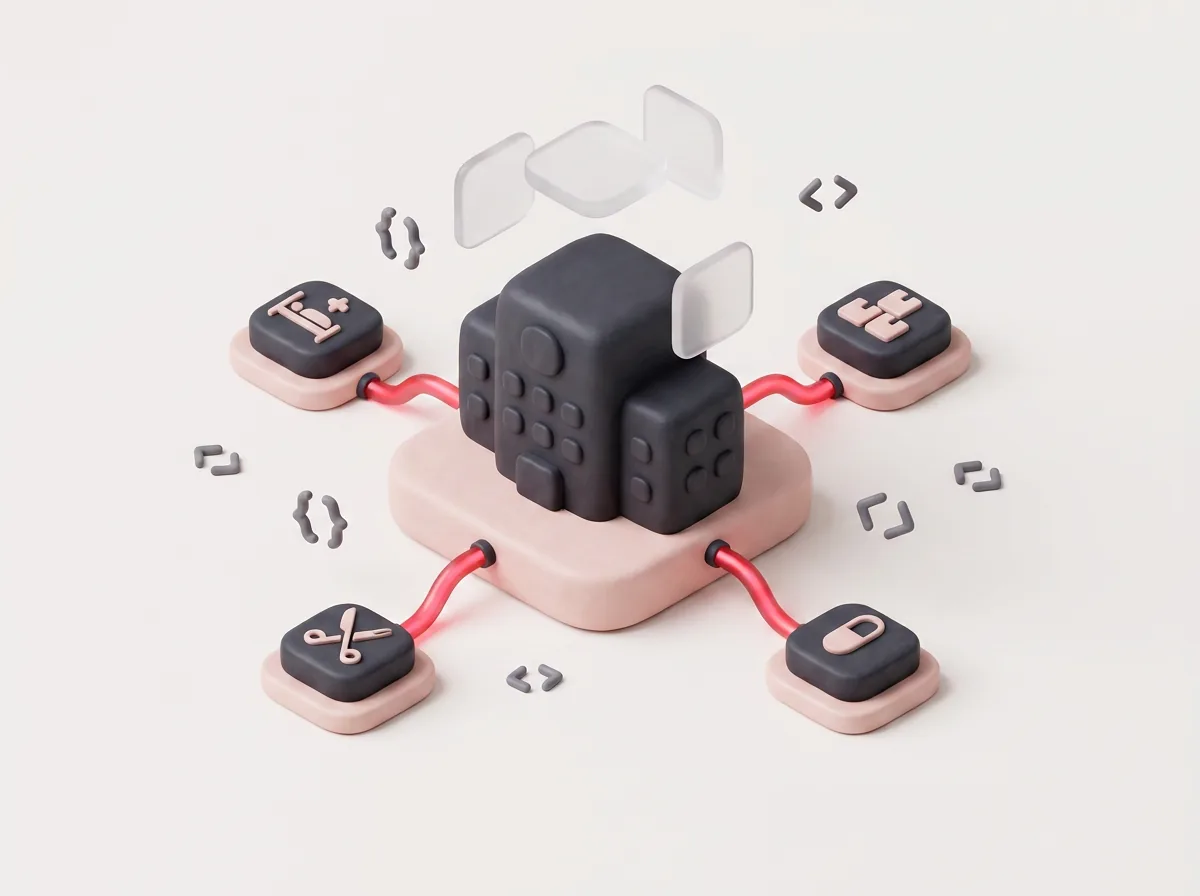
Hospital management system coordinating admissions, ward beds, theatre scheduling, and pharmacy
ISO 9001:2015 Certified ISO 27001:2013 Certified

What Hospital Management System Clients Say About AgileTech

Independent reviews from Clutch and DesignRush. Every review below is shown in full and links back to its source platform so you can confirm it yourself.

5.0
May 2026

“They followed a structured Agile approach with clearly defined milestones.”

AgileTech Viet Nam developed a web-based logistics management system for an automotive parts supplier. The team integrated the platform with third-party providers and built a real-time tracking dashboard. AgileTech Viet Nam’s work reduced manual processing by 55%, improved real-time shipment visibility, and increased operational efficiency across multiple departments. The team followed a structured Agile approach, communicated consistently, delivered on time, and was flexible.

Manual processing reduced by 55% with real-time shipment visibility

5.0
May 2026

“Their ability to handle both high-level architecture and hands-on implementation is rare.”

An IT services company hired AgileTech Viet Nam to re-architect their enterprise SaaS platform. The team conducted a technical audit, designed a new architecture, migrated legacy data, and added API gateways. Thanks to AgileTech Viet Nam’s work, the client saw improvements in system scalability, platform uptime, and deployment time. The team followed the Agile methodology, communicated effectively, and was responsive to the client’s feedback. AgileTech Viet Nam helped the client make better decisions.

Improved scalability, uptime, and deployment time on an enterprise SaaS

5.0
May 2026

“They were not just executing tasks but were genuinely invested in the product’s success.”

AgileTech Viet Nam developed an MVP for a digital solutions provider’s marketplace platform. They created the UI/UX design, developed the front- and backend, and integrated payment systems. AgileTech Viet Nam successfully launched the MVP on time, allowing the client to onboard 500 users within two months. The platform was stable with minimal issues. Moreover, the team was collaborative, flexible, quick to adapt to changing priorities, and genuinely invested in the project’s success.

MVP launched on time, 500 users onboarded within two months

5.0
May 2026

“They were flexible in accommodating evolving business needs while still keeping the project on track.”

AgileTech Viet Nam developed a digital platform for a real estate firm. They designed the UI/UX, implemented advanced search and filtering functionalities, integrated dashboards, and automated reporting tools. The platform improved operational efficiency, business performance, lead conversion rates, and customer responsiveness. AgileTech Viet Nam implemented a well-structured project management approach, meeting timelines and responding to feedback with flexibility. Their tailored solutions stood out.

Improved efficiency, business performance, and lead conversion

5.0
Nov 2024

“The platform has greatly improved our operational efficiency, and we wholeheartedly recommend AgileTech.”

Working with AgileTech has been an amazing experience, especially when it comes to creating a personalized e-learning program for our IT services business. We were pleasantly surprised by how adaptable and scalable the platform developed by the AgileTech Team was. Their proficiency with user-friendly course administration and community participation technologies enabled us to provide a thorough instructional resource catered to our customers’ particular requirements. The platform has greatly improved our operational efficiency, and we are amazed by its capacity to manage heavy traffic with ease and offer comprehensive reporting and analytics. The platform remained successful and user-friendly because of the team’s dedication to continuous support and their quick response to criticism. For any organization looking to create innovative and reliable digital solutions, we wholeheartedly recommend AgileTech as a partner.

Personalized e-learning platform that handles heavy traffic

5.0
Nov 2024

“They used a potent tech stack including PHP, React, and AWS to guarantee perfect scalability and zero downtime.”

AgileTech provided a superb Learning Management System (LMS) that creatively and precisely addressed the intricate needs of our organization. Within a scalable, completely customizable platform, the LMS made it possible to create comprehensive courses, administer student tests, engage the community, and obtain real-time data insights. AgileTech’s modular and agile approach made sure that every component, from the user-friendly course builder to the sophisticated analytics and communication tools, was customized to meet our demands despite the difficulties of developing such a feature-rich system. In order to guarantee perfect scalability and zero downtime, even with high user concurrency, AgileTech used a potent tech stack that included PHP, React, and AWS. Their post-launch assistance, which included frequent training sessions and upgrades, gave our staff the means to fully use the LMS’s potential. This project was a testament to AgileTech’s technical skill, rapid deployment, and dedication, making them an outstanding choice for educational technology development.

Feature-rich LMS with course builder, analytics, and comms

4.5
Apr 2021

“They are incredible to work with and are truly passionate about technology and our concept.”

AgileTech Viet Nam provides mobile app development services for a social media startup. They are building the app using Node.js and Flutter. With the ongoing partnership, AgileTech Viet Nam’s passion has impressed the client so far. The team is truly into technology, and their concept makes the client feel confident about the project’s continuous success.

5.0
Nov 2024

“Since we launched our new site we’ve seen a significant increase in traffic and sales, which proves their work is effective.”

We’ve had an amazing experience with AgileTech for our eCommerce platform. The team worked with us to build an user friendly online store that met all our business needs. Their eCommerce development expertise was evident from the start as they shared valuable insights on how to maximize sales. The AgileTech team are not only talented but also care about their clients success. Since we launched our new site we’ve seen a significant increase in traffic and sales which proves their work is effective.

5.0
Nov 2024

“Their attention to detail in web development and UI/UX design has given us a site that looks great and works flawlessly.”

Working with AgileTech has been a game changer for us. We wanted a modern and responsive website and AgileTech delivered more than we expected. The team was super collaborative and involved us in every step of the process. Their attention to detail in web development and UI/UX design has given us a site that looks great and works flawlessly. The AgileTech team members are not only talented professionals but also great communicators, so we could share our vision and ideas easily. They were so committed to our success and the end result has increased our user engagement and satisfaction so much.

5.0
Jun 2025

“Their proactive communication, flexibility, and technical expertise stood out throughout the project.”

AgileTech Viet Nam used React Native to develop an iOS and Android app for a real estate platform. The team integrated the app with the client’s backend and implemented property search features. AgileTech Viet Nam’s high-quality work resulted in a 30% increase in user registrations and over 1,000 app downloads within the first month. The team delivered on time, provided regular updates, and responded to feedback. Their flexibility and proactive communication impressed the client.

30% more sign-ups and 1,000+ downloads in the first month

5.0
May 2026

“Their balance between technical expertise and product thinking stood out.”

AgileTech Viet Nam developed an AI-powered analytics platform for an AI visibility and GEO solutions company. The platform featured real-time reporting dashboards and data processing pipelines. AgileTech Viet Nam’s work improved the client’s data processing efficiency and the accuracy of AI-generated insights. The platform was user-friendly and supported the client’s first large-scale deployments. AgileTech Viet Nam’s team was communicative, adaptive, and technically proficient.

Improved data-processing efficiency and AI insight accuracy

5.0
Mar 2026

“The team demonstrated strong professionalism, reliability, and a proactive approach throughout the project.”

AgileTech Viet Nam developed a scalable engineering workflow system for an ICT company. The goal was to streamline internal processes, improve cross-team visibility, and enhance coordination. The system significantly improved operational efficiency by reducing manual processes and increasing transparency across teams for the client. AgileTech Viet Nam set clear milestones and provided regular updates to ensure everyone remained in sync. Their professionalism and reliability stood out.

Scalable engineering workflow system with fewer manual processes

5.0
Nov 2024

“We saw huge cost savings and optimized stock levels, so we consider AgileTech a partner in our company transformation.”

AgileTech created a working Supply Chain Management (SCM) system that has helped our supermarket chain simplify operations across inventory management, demand forecasting and logistics. They integrated our existing systems, automated inventory and logistics and gave us robust demand forecasting with AI, we saw huge cost savings and optimized stock levels. And they continued to deliver on quality post launch with regular updates and training sessions, so we consider AgileTech as a partner in our company transformation.

AI-driven demand forecasting across inventory and logistics

5.0
May 2026

“Their professionalism, responsiveness, and ability to execute efficiently made them feel like an operational partner.”

AgileTech Viet Nam optimized a workflow for a consulting firm. The team improved lead management processes and streamlined internal communication systems across multiple departments. AgileTech Viet Nam’s work improved the client’s operations, customer communication process, and overall workflow efficiency. The team was strategic and reliable. Moreover, AgileTech Viet Nam worked closely with the client to understand their business objectives and recommend solutions.

4.0
Jun 2019

“I was impressed with the flow of the project.”

AgileTech Viet Nam developed a mobile app from scratch. After helping with scoping and objective formation, AgileTech created design mockups and developed the full iOS and Android solutions. Valuable user data is being gathered in ongoing beta tests, which will soon lead to growth and expansion opportunities. AgileTech Viet Nam provided consistent communication and established a smooth workflow. Issues were raised proactively, allowing fixes to come earlier in the process.

5.0
Nov 2024

“AgileTech excelled in supporting our project from initial mock-ups through to the final delivery on the App Store.”

AgileTech excelled in supporting our project from initial mock-ups through to the final delivery on the App Store, incorporating data analytics that we could easily share with our customers. The scope of work included mock-up creation, UI/UX design, interactive prototyping, app development, rigorous testing, and setting up a secure production environment on AWS, culminating in the apps release on both iOS and Android platforms.

What a Hospital Management System Contains

The capability areas that define scope, whether we are building an operational core or the layer that coordinates systems already in place.

Admissions, Transfers, and Discharge

Registration and patient identity, elective and emergency admission, the encounter record that ties an entire stay together, inter-ward and inter-department transfers with custody of care, discharge with summary generation, and referral or follow-up arrangement.

Bed and Capacity Management

The estate modelled to bed level with ward, specialty, isolation, and designation attributes, live state through occupied, reserved, cleaning, and blocked, planned-discharge visibility so beds can be committed before they empty, and updates fast enough to be done from a corridor.

Theatre and Resource Scheduling

Case booking against room, surgeon, anaesthetist, nursing, equipment, and post-operative bed constraints, session and list planning, conflict detection at booking rather than on the day, emergency insertion with visible knock-on effects, and utilisation reporting.

Ward and Departmental Operations

Ward rounds and task lists, observation recording, nursing handover, department-specific workflow for emergency, outpatients, radiology, and laboratory, plus portering, cleaning, and dietary requests generated from clinical and operational events.

Inpatient Pharmacy and Consumables

Prescription and administration records across an admission, ward stock and replenishment, controlled drug custody handling, reconciliation at admission, transfer, and discharge, and lot and expiry traceability for consumables and implants where recall matters.

Billing, Payers, and Reporting

Charges accumulated from operational events rather than re-entered, package and item-based pricing, insurance authorisation and coverage checks, scheme or government funding with its reporting obligations, patient co-payment, and operational and financial reporting.

Systems a Hospital Management System Connects To

An HMS is a coordinator, so its interfaces are its substance. We establish which system is authoritative for each domain and map every interface and its failure behaviour before design.

  • Clinical record systems: shared patient identity and encounter context, with the clinical content remaining in the record and the operational state remaining in the HMS rather than each half-holding both.
  • Laboratory information systems: order transmission and structured result return, usually over HL7 v2 in installed environments, with acknowledgement so a lost message is detected.
  • Imaging and PACS: order placement, study status for scheduling purposes, report retrieval, and viewer launch in context rather than as a separate system with its own login.
  • Pharmacy systems: prescription and dispensing flow, formulary and stock data, and controlled drug records where the pharmacy system rather than the HMS holds custody.
  • Finance and ERP: charge and revenue posting, procurement and supplier data for consumables, and reconciliation so clinical activity and financial records agree at period end.
  • Insurance and payer systems: eligibility, pre-authorisation for elective care, and claim submission derived from coded activity rather than assembled by hand after discharge.
  • Medical devices and monitoring: observation capture where the setting supports it, with device attribution and timestamps so device values are distinguishable from staff-entered ones.
  • Regulatory and public health reporting: notifiable conditions, activity returns, and quality indicator submissions produced from operational data rather than compiled manually each cycle.

Technical Considerations for HMS Development

The engineering decisions that determine whether a hospital management system development project holds up in production, set out before the build starts.

Operational data is worthless when stale

Bed state, theatre progress, and ward stock are only useful if they reflect the last few minutes. That makes the update interaction the critical design surface: it must be possible in seconds, from a shared terminal or a mobile device, by someone standing in a corridor between tasks. Systems that require a desk, a login sequence, and a multi-field form produce data that is hours behind reality, at which point staff stop trusting it and revert to phoning each other. We design the capture path first and the dashboard second.

Department boundaries are where projects fail

Most HMS difficulty lives at handoffs: emergency to ward, ward to theatre, theatre to recovery, pharmacy to ward, discharge to billing. Each transition carries custody of care, an information transfer, and often a change of responsible clinician. We model those transitions explicitly as first-class events with their own state and audit rather than as implicit consequences of a status change, because an ambiguous handoff is both an operational failure and a clinical risk.

Continuous operation constrains everything

A hospital has no quiet window. There is no overnight batch period, no low-traffic weekend, and no acceptable moment for an unplanned outage. This shapes deployment strategy toward zero-downtime releases and backward-compatible interfaces, migration toward phased department-by-department cutover, and the architecture toward graceful degradation so a failure in one component does not stop admissions. It also means the downtime procedure must be a tested clinical workflow rather than a document.

Stack choices we typically recommend

PostgreSQL for operational and financial data, with careful modelling of encounters, transfers, and charge events so history remains reconstructable. Java, .NET, or Node.js for the backend depending on your team and integration estate, with the HL7 and FHIR interoperability layer isolated as its own service. ReactJS for departmental interfaces, and a mobile-capable interface for ward and portering tasks. Infrastructure designed for continuous operation with tested restoration, encryption, network isolation, and immutable audit logging.

  • Shared-terminal reality: ward computers are used by many staff in sequence, so fast switching, short sessions, and no accidental documentation under the wrong identity are design requirements.
  • Emergency and unidentified patients: the system must admit and treat a patient with no known identity, then merge the record safely and reversibly once identity is established.
  • Multi-site and group operation: where several facilities are involved, decide early what is central and what is local, since retrofitting group-level control is substantially harder.
  • Traceability for recalls: lot and expiry tracking on implants and consumables so an affected batch can be traced to every patient who received it.

Who This Is For

Specialist hospitals no general product fits

Where the operational model differs materially from a general hospital, a mainstream HMS often forces workarounds in the departments that matter most. A focused build for that model can cost less over time than the accumulated inefficiency of fighting a product.

Hospital groups coordinating several facilities

Once several sites are involved, the problem shifts from any single facility's features to group capacity visibility, shared patient identity, transfers between sites, and consolidated reporting. That is usually a coordination layer rather than a replacement programme.

Providers with an installed system they cannot extend

Where a legacy HMS cannot be integrated or changed at reasonable cost, building alongside it with a clear authority boundary is frequently safer and faster than replacing something the whole organisation already knows how to operate.

Health technology companies building for providers

If you are building hospital software to sell, multi-tenancy, configurability per facility, and interoperability breadth are product requirements rather than implementation details, and they need designing in from the beginning.

How We Deliver Hospital Systems Projects

A sequence built around the constraint that clinical care cannot pause while software is deployed.

AgileTech software delivery process A six step delivery workflow: requirement analysis, planning and design, development, quality assurance, deployment, then maintenance and support. 01 RequirementAnalysis 02 Planning &Design 03 Development 04 QualityAssurance 05 Deployment 06 Maintenance &Support
01

Operational Discovery Across Departments

We observe how the hospital actually runs, department by department, including the handoffs and the informal practices that keep it working. We also establish the build-versus-buy position, and say so plainly when buying is the better answer.

02

System Authority and Boundary Definition

We document which system is authoritative for each domain, particularly the boundary between operational and clinical data, and specify every interface with its standard and failure behaviour. Ambiguity here is the most expensive thing to discover late.

03

Security, Access, and Continuity Design

Role and purpose-based access reflecting real departmental differences, audit scope, break-glass handling, encryption and key management, recovery objectives, and the per-department downtime procedure. Designed before feature work begins.

04

Iterative Build with Departmental Validation

Short iterations validated by the staff who will use them, tested on shared terminals and mobile devices in ward conditions rather than in a meeting room. Capture speed on high-frequency actions is measured, not assumed.

05

Department-by-Department Cutover

Phased go-live with parallel running where feasible, migration reconciled operationally as well as technically, and the downtime procedure exercised before each cutover. We do not recommend simultaneous organisation-wide launch.

06

Continuous Operation and Evolution

Zero-downtime release practice, monitoring on operational data freshness as well as system health, interface maintenance as partner systems change, and planned enhancement as services and reporting obligations evolve.

Frequently Asked Questions

How is a hospital management system different from practice management software?

By setting and by what the system has to coordinate. A hospital management system exists to run inpatient and multi-department operations: admissions and discharges, bed and ward occupancy, theatre scheduling, inpatient pharmacy and consumables, and the movement of a patient between departments over days or weeks. Practice management software serves outpatient clinics, where the unit of work is an appointment and the hard problems are scheduling density, claims, and revenue cycle. If your operation is a clinic or a group of clinics, our medical practice management page is the right starting point. If you admit patients and allocate beds, this one is.

Should we build an HMS or buy one?

For a general hospital with conventional departments, buying is usually correct and we will say so. A mature HMS product encodes years of operational detail across dozens of departments that is not economic to reproduce. Building becomes rational when you run a specialist facility no product serves properly, when you are a hospital group needing a coordination layer above several existing systems, when an installed system cannot be integrated or extended at any reasonable cost, or when you are building a platform to sell to other providers. We assess this honestly before scoping, since a failed HMS replacement is one of the more damaging projects a hospital can undertake.

Is an HMS the same thing as a clinical record system?

No, and conflating them is a frequent source of failed scope. An HMS is primarily operational: who is where, which bed is free, which theatre slot is available, what was consumed, what is billable. A clinical record holds the clinical content: notes, diagnoses, medications, results. They are tightly coupled and must share patient identity and encounter context, but they answer different questions and are often separate systems from separate vendors. We define the boundary explicitly at the start, because ambiguity there produces two systems each half-holding the same data.

Can it work alongside the systems we already run?

Usually that is the whole point. Hospitals typically run a laboratory system, an imaging system, a pharmacy system, a finance system, and often a clinical record, each embedded and each with its own vendor. We map which system is authoritative for each domain and build the coordination and interface layer rather than proposing a rip-out. Where a component genuinely must be replaced, we sequence it so no single cutover can stop the hospital, since a hospital cannot pause admissions while software is deployed.

How does bed and capacity management actually work?

It works only if the data reflects reality within minutes rather than hours, which makes it as much an operational design problem as a software one. The system models the estate down to bed level with attributes such as ward, specialty, isolation capability, and gender designation, tracks state through occupied, reserved, cleaning, and blocked, and reflects planned discharges so a bed can be committed before it is empty. If ward staff cannot update status in seconds from where they stand, the data goes stale and the system becomes a decorative dashboard. We design for the person holding the phone in a corridor, not the administrator at a desk.

What about theatre and resource scheduling?

Theatre scheduling is a constrained resource problem: a case needs a room, a surgeon, an anaesthetist, nursing staff, specific equipment, and often an intensive care bed available afterwards. We model those constraints explicitly and surface conflicts at booking time rather than on the day, support session and list planning as surgeons actually work, and handle cancellations and emergency insertions with visible knock-on effects. Utilisation reporting matters commercially, but only after the day-to-day scheduling is trusted enough to be used.

How is inpatient pharmacy and stock handled?

Inpatient medication differs fundamentally from outpatient dispensing: it is administered repeatedly over an admission, against a schedule, by staff who must record each administration. The system needs the prescription, the administration record, ward stock levels, controlled drug handling with the additional custody requirements those carry, and reconciliation at admission, transfer, and discharge. Consumables and implants also need lot and expiry tracking where traceability is required, since a recall means identifying every patient who received an affected item.

How do billing and payer arrangements work?

This varies more by market than any other part of an HMS, so we build it against your actual payer mix rather than a generic model. That may include package or procedure-based pricing, per-item charging accumulated across an admission, insurance authorisation and coverage checks before elective care, government or scheme funding with its own reporting, and patient co-payment. The essential design point is that charges accumulate from operational events rather than being re-entered by billing staff, because manual re-entry across a multi-day admission is where revenue is lost.

What availability and downtime planning is needed?

A hospital operates continuously, so unavailability affects care rather than merely inconveniencing users. Planning covers defined recovery objectives, tested restoration rather than assumed backups, and a documented downtime procedure per department so wards, theatres, and pharmacy can continue and reconcile afterwards. Where the setting justifies it, we provide read-only local access to critical operational data so a network fault does not leave staff without the current bed state or medication schedule. This is a clinical safety conversation, not only an infrastructure one.

How long does an HMS project take?

Longer than most healthcare software, because the scope spans many departments each with its own workflow. A first release covering a defined set of departments, typically admissions, bed management, and one or two clinical departments, is usually six to twelve months including discovery, integration, migration, and validation. Full estate coverage is a multi-phase programme. We deliberately sequence department by department rather than attempting a single organisation-wide launch, since simultaneous cutover across a hospital carries risk that is difficult to justify.

How do you handle security, access, and patient data?

Role-based and purpose-based access reflecting that a ward clerk, a pharmacist, and a consultant need very different views, complete audit logging of record access, encryption in transit and at rest, break-glass access with mandatory justification, and defined retention and disposal. Our information security management is certified to ISO 27001:2013 and quality management to ISO 9001:2015. We do not describe ourselves as a HIPAA-certified vendor, because no such certification exists for software suppliers; we build to your regulatory obligations under your compliance governance, with a business associate agreement where the arrangement requires one.

Trusted and Recognized

Independent directories, certification bodies, and award programs that have assessed our work. Each badge links to its source or names the standard behind it, so every claim on this page can be checked at first hand.

Top Mobile App Developers - ClutchTop Software Development Company - GoodFirmsReliable Company - ExtractISO 9001:2015 certifiedISO 27001:2013 certifiedTechBehemoths Awards - Mobile App Development

Ready to Discuss Your Hospital Management System Project?

Tell us your bed count, your departments, and where coordination breaks down on a busy day. We will come back with a straight assessment of build versus integrate, a delivery sequence, and an estimate within 48 hours.

Life at AgileTech

Consult Industry Specialists

Connect with us today to discuss your software development needs and discover how our tailored outsourcing services can propel your business forward.

Start a conversation
AgileTech Vietnam team at the office

Cookie settings

Strictly necessary storage keeps the site working and remembers this choice. Everything else is off until you switch it on, wherever you are in the world. Only one optional category has anything behind it today: External content, which covers the Google map of our Hanoi office on the Contact page.

Wherever you are. We apply one standard to everyone: nothing outside strictly necessary storage runs until you allow it. That meets the EU and UK requirement for prior consent, the notification and consent requirements of Singapore's PDPA, and US state privacy law. You can withdraw or change your choice at any time, as easily as you gave it, from Cookie settings in the footer.

If you are in the United States. We do not sell your personal information and we do not share it for cross-context behavioural advertising, so there is nothing to opt out of. We still honour an opt-out preference signal from your browser: if your browser sends Global Privacy Control, the optional categories stay off without you having to do anything.

Full detail, including the name and lifetime of the one cookie we set, is in the Cookie Policy.