Global delivery from Hanoi, Vietnam ISO 9001:2015   ISO 27001:2013 hello@agiletech.vn (+84) 989 324 830

Maintenance Management System Development

Maintenance software is unusual in that its main obstacle is not technical. It is that the people who need to use it are rarely at a desk. A technician is under a machine with dirty hands, and if recording the work takes a laptop, a login, and a form with fourteen fields, the work gets recorded at the end of the week from memory, or not at all. Every maintenance system that has failed in a plant has failed at exactly that point.

10+Years of Industry Expertise 200+Talented Developers 90%Customer Satisfaction Rate
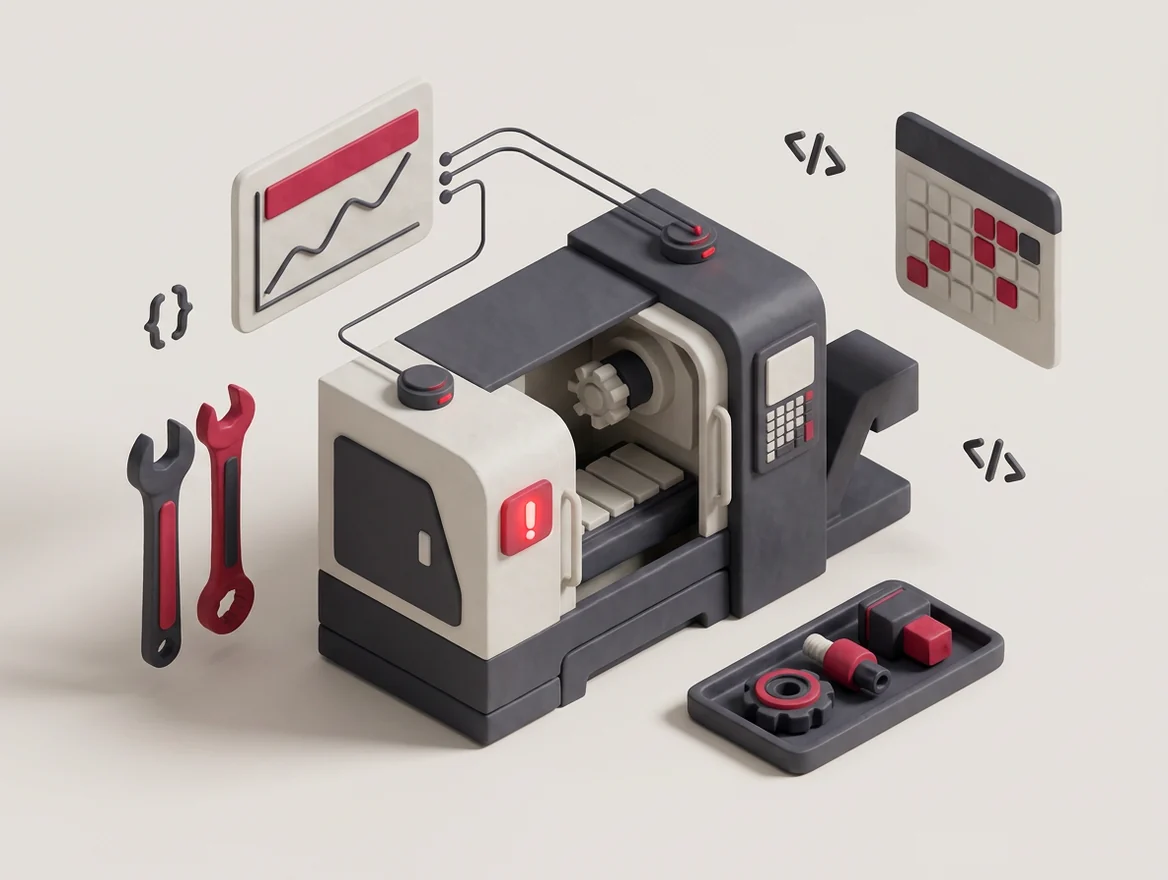
Industrial machine with condition monitoring, a service schedule, spare parts, and a raised maintenance alert
ISO 9001:2015 Certified ISO 27001:2013 Certified

What Maintenance Management Clients Say About AgileTech

Independent reviews from Clutch and DesignRush. Every review below is shown in full and links back to its source platform so you can confirm it yourself.

5.0
Mar 2026

“The team demonstrated strong professionalism, reliability, and a proactive approach throughout the project.”

AgileTech Viet Nam developed a scalable engineering workflow system for an ICT company. The goal was to streamline internal processes, improve cross-team visibility, and enhance coordination. The system significantly improved operational efficiency by reducing manual processes and increasing transparency across teams for the client. AgileTech Viet Nam set clear milestones and provided regular updates to ensure everyone remained in sync. Their professionalism and reliability stood out.

Scalable engineering workflow system with fewer manual processes

5.0
Nov 2024

“We saw huge cost savings and optimized stock levels, so we consider AgileTech a partner in our company transformation.”

AgileTech created a working Supply Chain Management (SCM) system that has helped our supermarket chain simplify operations across inventory management, demand forecasting and logistics. They integrated our existing systems, automated inventory and logistics and gave us robust demand forecasting with AI, we saw huge cost savings and optimized stock levels. And they continued to deliver on quality post launch with regular updates and training sessions, so we consider AgileTech as a partner in our company transformation.

AI-driven demand forecasting across inventory and logistics

5.0
Jun 2025

“Their proactive communication, flexibility, and technical expertise stood out throughout the project.”

AgileTech Viet Nam used React Native to develop an iOS and Android app for a real estate platform. The team integrated the app with the client’s backend and implemented property search features. AgileTech Viet Nam’s high-quality work resulted in a 30% increase in user registrations and over 1,000 app downloads within the first month. The team delivered on time, provided regular updates, and responded to feedback. Their flexibility and proactive communication impressed the client.

30% more sign-ups and 1,000+ downloads in the first month

5.0
May 2026

“They followed a structured Agile approach with clearly defined milestones.”

AgileTech Viet Nam developed a web-based logistics management system for an automotive parts supplier. The team integrated the platform with third-party providers and built a real-time tracking dashboard. AgileTech Viet Nam’s work reduced manual processing by 55%, improved real-time shipment visibility, and increased operational efficiency across multiple departments. The team followed a structured Agile approach, communicated consistently, delivered on time, and was flexible.

Manual processing reduced by 55% with real-time shipment visibility

5.0
May 2026

“They were not just executing tasks but were genuinely invested in the product’s success.”

AgileTech Viet Nam developed an MVP for a digital solutions provider’s marketplace platform. They created the UI/UX design, developed the front- and backend, and integrated payment systems. AgileTech Viet Nam successfully launched the MVP on time, allowing the client to onboard 500 users within two months. The platform was stable with minimal issues. Moreover, the team was collaborative, flexible, quick to adapt to changing priorities, and genuinely invested in the project’s success.

MVP launched on time, 500 users onboarded within two months

5.0
May 2026

“Their ability to handle both high-level architecture and hands-on implementation is rare.”

An IT services company hired AgileTech Viet Nam to re-architect their enterprise SaaS platform. The team conducted a technical audit, designed a new architecture, migrated legacy data, and added API gateways. Thanks to AgileTech Viet Nam’s work, the client saw improvements in system scalability, platform uptime, and deployment time. The team followed the Agile methodology, communicated effectively, and was responsive to the client’s feedback. AgileTech Viet Nam helped the client make better decisions.

Improved scalability, uptime, and deployment time on an enterprise SaaS

5.0
May 2026

“Their balance between technical expertise and product thinking stood out.”

AgileTech Viet Nam developed an AI-powered analytics platform for an AI visibility and GEO solutions company. The platform featured real-time reporting dashboards and data processing pipelines. AgileTech Viet Nam’s work improved the client’s data processing efficiency and the accuracy of AI-generated insights. The platform was user-friendly and supported the client’s first large-scale deployments. AgileTech Viet Nam’s team was communicative, adaptive, and technically proficient.

Improved data-processing efficiency and AI insight accuracy

5.0
May 2026

“They were flexible in accommodating evolving business needs while still keeping the project on track.”

AgileTech Viet Nam developed a digital platform for a real estate firm. They designed the UI/UX, implemented advanced search and filtering functionalities, integrated dashboards, and automated reporting tools. The platform improved operational efficiency, business performance, lead conversion rates, and customer responsiveness. AgileTech Viet Nam implemented a well-structured project management approach, meeting timelines and responding to feedback with flexibility. Their tailored solutions stood out.

Improved efficiency, business performance, and lead conversion

5.0
Nov 2024

“The platform has greatly improved our operational efficiency, and we wholeheartedly recommend AgileTech.”

Working with AgileTech has been an amazing experience, especially when it comes to creating a personalized e-learning program for our IT services business. We were pleasantly surprised by how adaptable and scalable the platform developed by the AgileTech Team was. Their proficiency with user-friendly course administration and community participation technologies enabled us to provide a thorough instructional resource catered to our customers’ particular requirements. The platform has greatly improved our operational efficiency, and we are amazed by its capacity to manage heavy traffic with ease and offer comprehensive reporting and analytics. The platform remained successful and user-friendly because of the team’s dedication to continuous support and their quick response to criticism. For any organization looking to create innovative and reliable digital solutions, we wholeheartedly recommend AgileTech as a partner.

Personalized e-learning platform that handles heavy traffic

5.0
Nov 2024

“They used a potent tech stack including PHP, React, and AWS to guarantee perfect scalability and zero downtime.”

AgileTech provided a superb Learning Management System (LMS) that creatively and precisely addressed the intricate needs of our organization. Within a scalable, completely customizable platform, the LMS made it possible to create comprehensive courses, administer student tests, engage the community, and obtain real-time data insights. AgileTech’s modular and agile approach made sure that every component, from the user-friendly course builder to the sophisticated analytics and communication tools, was customized to meet our demands despite the difficulties of developing such a feature-rich system. In order to guarantee perfect scalability and zero downtime, even with high user concurrency, AgileTech used a potent tech stack that included PHP, React, and AWS. Their post-launch assistance, which included frequent training sessions and upgrades, gave our staff the means to fully use the LMS’s potential. This project was a testament to AgileTech’s technical skill, rapid deployment, and dedication, making them an outstanding choice for educational technology development.

Feature-rich LMS with course builder, analytics, and comms

5.0
May 2026

“Their professionalism, responsiveness, and ability to execute efficiently made them feel like an operational partner.”

AgileTech Viet Nam optimized a workflow for a consulting firm. The team improved lead management processes and streamlined internal communication systems across multiple departments. AgileTech Viet Nam’s work improved the client’s operations, customer communication process, and overall workflow efficiency. The team was strategic and reliable. Moreover, AgileTech Viet Nam worked closely with the client to understand their business objectives and recommend solutions.

4.5
Apr 2021

“They are incredible to work with and are truly passionate about technology and our concept.”

AgileTech Viet Nam provides mobile app development services for a social media startup. They are building the app using Node.js and Flutter. With the ongoing partnership, AgileTech Viet Nam’s passion has impressed the client so far. The team is truly into technology, and their concept makes the client feel confident about the project’s continuous success.

4.0
Jun 2019

“I was impressed with the flow of the project.”

AgileTech Viet Nam developed a mobile app from scratch. After helping with scoping and objective formation, AgileTech created design mockups and developed the full iOS and Android solutions. Valuable user data is being gathered in ongoing beta tests, which will soon lead to growth and expansion opportunities. AgileTech Viet Nam provided consistent communication and established a smooth workflow. Issues were raised proactively, allowing fixes to come earlier in the process.

5.0
Nov 2024

“AgileTech excelled in supporting our project from initial mock-ups through to the final delivery on the App Store.”

AgileTech excelled in supporting our project from initial mock-ups through to the final delivery on the App Store, incorporating data analytics that we could easily share with our customers. The scope of work included mock-up creation, UI/UX design, interactive prototyping, app development, rigorous testing, and setting up a secure production environment on AWS, culminating in the apps release on both iOS and Android platforms.

5.0
Nov 2024

“Since we launched our new site we’ve seen a significant increase in traffic and sales, which proves their work is effective.”

We’ve had an amazing experience with AgileTech for our eCommerce platform. The team worked with us to build an user friendly online store that met all our business needs. Their eCommerce development expertise was evident from the start as they shared valuable insights on how to maximize sales. The AgileTech team are not only talented but also care about their clients success. Since we launched our new site we’ve seen a significant increase in traffic and sales which proves their work is effective.

5.0
Nov 2024

“Their attention to detail in web development and UI/UX design has given us a site that looks great and works flawlessly.”

Working with AgileTech has been a game changer for us. We wanted a modern and responsive website and AgileTech delivered more than we expected. The team was super collaborative and involved us in every step of the process. Their attention to detail in web development and UI/UX design has given us a site that looks great and works flawlessly. The AgileTech team members are not only talented professionals but also great communicators, so we could share our vision and ideas easily. They were so committed to our success and the end result has increased our user engagement and satisfaction so much.

What a Maintenance Management System Includes

Six areas make up the system. The asset register and work orders are the foundation; the analysis modules are only as good as the data those two collect.

Asset Register and Hierarchy

Equipment recorded in a hierarchy from site down to line, machine, and component, so a fault can be attributed to the part that failed rather than to the machine in general. Each asset carries its criticality, specifications, documentation, warranty position, and history. The hierarchy decides what analysis is possible later, which is why it is designed rather than imported from a spreadsheet as it stands.

Preventive and Scheduled Maintenance

Maintenance plans triggered by calendar, runtime hours, cycle counts, or condition, with task lists, required parts, and expected duration. Scheduling accounts for production commitments, so preventive work is planned into windows rather than competing with output. Compliance against plan is measured, since a preventive programme nobody completes is a source of false confidence rather than reliability.

Work Order and Technician Workflow

Requests raised from the floor, prioritised against asset criticality, assigned, executed, and closed with the work actually done, parts consumed, time taken, and cause of failure. The technician interface is mobile first with offline capability, built for a few taps and a photograph rather than a form. Failure cause is captured from a short controlled list, because free text cannot be analysed.

Spare Parts and Stores Inventory

Spare parts stock with reorder points, lead times, and consumption linked to the work orders and assets that used them. Critical spares are identified against asset criticality, which is what prevents a low value bearing stopping a high value line for a fortnight. Parts held for obsolete equipment are surfaced rather than quietly accumulating cost in a corner of the stores.

Condition Monitoring and Predictive Triggers

Runtime, vibration, temperature, and current signals from machines and sensors, used first for straightforward condition based triggers such as maintenance at actual hours rather than assumed hours. Genuine failure prediction is applied only where there is sufficient sensor coverage and failure history to support it, and we say plainly which assets those are.

Downtime, Reliability, and Cost Reporting

Downtime by asset and cause, mean time between failures, mean time to repair, and maintenance cost per asset including labour and parts. This is what converts maintenance from a cost centre argument into a capital case: knowing that one machine consumed a large share of unplanned downtime over a year is the evidence a replacement decision needs.

Integration Surface

Maintenance data becomes valuable when connected to production and cost, so these links determine most of the return.

  • Machine faults and stoppages raising maintenance requests automatically, and maintenance activity making a machine unavailable in production reporting.
  • Runtime hours, cycle counts, fault codes, and condition signals over OPC UA, MQTT, or vendor protocols, so schedules trigger on measured use rather than estimates.
  • Planned maintenance windows blocking capacity in the schedule, and production priorities informing when work can realistically be done.
  • Maintenance cost capture against assets and cost centres, spare parts purchasing, and capitalisation of major work where accounting requires it.
  • Spare parts stock, reorder triggering, and supplier lead times, with consumption posted from work orders rather than reconciled separately.
  • External work assigned, tracked, and closed with the same record quality as internal work, including certificates and reports from specialist providers.
  • Permits to work, isolation procedures, and safety checks tied to work orders, so a job cannot be recorded as started without the required authorisation.
  • Reliability and cost data extracted for analysis and capital planning, kept separate from the operational path so reporting cannot slow the technician interface.

Technical and Governance Decisions

The engineering decisions that determine whether a maintenance system development project holds up in production, set out before the build starts.

The Technician Interface Decides Everything

If logging a completed job takes more than about a minute on a phone with one hand, it will not be logged reliably. So the interface is designed for the physical situation: mobile first, large targets, offline by default, photographs instead of typed descriptions, scanning an asset tag rather than searching a list, and failure causes chosen from a short list rather than typed.

Asset Hierarchy Determines What You Can Learn

If faults are recorded against a whole machine, you can never establish which component fails repeatedly. If the hierarchy goes down to replaceable components, patterns become visible and preventive plans can target them. Restructuring a hierarchy after two years of history is painful and often loses the comparability of the data collected so far.

Honesty About Predictive Maintenance

Condition based maintenance triggered on measured runtime or a threshold is straightforward, reliable, and delivers most of the available benefit. Genuine failure prediction requires dense sensor data and enough recorded failures to learn a pattern, and most plants have neither for most assets. We assess which of your assets can support prediction and which cannot, and report that plainly.

Typical Stack

Chosen for reliability in poor connectivity and for long asset lifecycles, since equipment often outlasts several generations of software.

  • Progressive web applications or native clients with offline storage and sync, camera capture, asset tag scanning, and interfaces usable one handed with dirty gloves in poor light.
  • Java, Kotlin, or Go for asset, work order, and inventory services, with boundaries that let the technician facing path stay available even when reporting or integration components are not.
  • PostgreSQL for the asset register, work order history, and parts inventory with full change tracking, and a time series store for runtime and condition signals at the resolution the assets justify.
  • OPC UA or MQTT gateways near the equipment, queues that buffer when the central system is unavailable, and a warehouse for reliability, downtime, and cost analysis with documented calculations.

Who This Is For

Plants Running Maintenance on Spreadsheets and Memory

Preventive schedules exist in a workbook, history exists in a supervisor's head, and nobody can say what a machine has cost over three years. The immediate gain is not efficiency but visibility, and the practical route to it is a well designed asset register plus a technician interface simple enough that history starts accumulating from week one.

Capital Intensive Operations Where Downtime Is Expensive

Where an hour of unplanned stoppage costs a large amount, the value of reliability data is obvious and the case for condition based triggers is strong. These plants usually have better sensor coverage on critical assets, so genuine condition monitoring is viable on the assets that matter, even if not across the whole estate.

Multi Site Operations Standardising Maintenance

Several plants each with their own approach makes comparison impossible and shared learning accidental. A common asset hierarchy, failure cause taxonomy, and reporting basis allows sites to be compared honestly and a failure pattern found at one site to be acted on at the others. The hard part is agreeing the taxonomy, which is organisational rather than technical.

Manufacturers Facing Equipment Replacement Decisions

Deciding whether to repair or replace an ageing asset requires its real cost history, including labour, parts, and the production lost to its failures. Most plants cannot produce that figure, so the decision is made on impression. Building the cost and downtime record gives the capital case an evidential basis, though it takes a year or two of data to become persuasive.

How We Deliver a Maintenance System

A sequence built around planned downtime, because a factory cannot pause output to accommodate a release window.

AgileTech software delivery process A six step delivery workflow: requirement analysis, planning and design, development, quality assurance, deployment, then maintenance and support. 01 RequirementAnalysis 02 Planning &Design 03 Development 04 QualityAssurance 05 Deployment 06 Maintenance &Support
01

Design the asset hierarchy with the maintenance team

Depth is chosen to match the decisions you need to make, no deeper, and the failure cause taxonomy is agreed with the technicians who will select from it. These two decisions determine what the system can ever tell you, and both are difficult to change once history has accumulated against them.

02

Build and test the technician interface first

The mobile work order flow is built and tested in the plant, in the actual conditions, with the network deliberately unavailable and gloves on. Technicians tell us where it is too slow and it is corrected before anything else is built, because every other module depends on this data being captured honestly.

03

Load assets and establish preventive plans

The register is populated and existing preventive schedules are transferred, with duplication and obsolete entries cleaned rather than carried across. Where schedules are based on assumed rather than measured runtime, we flag it, since that is the first easy improvement once machine integration is available.

04

Add parts, stores, and criticality

Spare parts inventory linked to assets and work orders, with critical spares identified against asset criticality. This usually reveals both missing critical spares and stock held for equipment long since removed, and both findings tend to pay for a meaningful part of the project.

05

Connect machines and production systems

Runtime and fault signals from equipment where it is readable, so schedules trigger on real use and faults raise requests automatically. Integration with production planning ensures maintenance windows are respected. We state per asset what is readable before promising automation.

06

Measure, report, and hand over

Once history accumulates, downtime, reliability, and cost reporting become meaningful, and we set those up with the people who will use them in weekly and capital review. Handover includes runbooks for offline sync problems, machine integration failures, and the monthly routines for schedule compliance and stores review.

Frequently Asked Questions

What is the difference between a CMMS and what you build?

A commercial CMMS is a packaged product, and if one fits your operation you should probably buy it. Custom work makes sense when you need integration your plant systems cannot support off the shelf, when your asset or process structure does not fit a product's assumptions, or when a package would require you to change working practices that exist for good reasons. We will say when a package looks like the better choice, and we have done so.

Will our technicians actually use it?

Only if logging a job takes under a minute on a phone, works with no signal, and requires no typing where a photograph or a scan will do. That is the design constraint we start from. Where maintenance systems fail it is almost always here, and the failure looks like a full asset register with almost no work history, which makes every analysis module worthless.

Is predictive maintenance worth it for us?

For some assets, possibly, and we will tell you which. Real failure prediction needs dense sensor data and enough recorded failures to learn from, and most plants have neither across most equipment. Condition based triggers on measured runtime or a threshold are simpler, reliable, and capture much of the benefit. We would rather deliver that than a prediction model whose output nobody can trust.

How deep should the asset hierarchy go?

To the level at which you make decisions, usually the replaceable component on critical assets and the machine on the rest. Too shallow and you cannot see that one component fails repeatedly. Too deep and technicians face a long search at the worst possible moment and start selecting whatever is quickest, which corrupts the data. It is a judgement made with the people who will use it.

Can it work without machine integration?

Yes. Calendar based schedules, work orders, parts, and cost history all function on manual entry, and that is where most plants start. Machine integration improves it by triggering on actual runtime instead of assumed runtime and by raising requests automatically from faults. It is an enhancement rather than a prerequisite, and we sequence it after the basics are working.

How long before the reporting becomes useful?

Cost and downtime reporting needs history, so expect several months before trends mean anything and a year or more before a capital case is well supported. This is worth being honest about at the outset, because a client expecting reliability insight in month two will be disappointed by a system that is working correctly. Immediate benefits come from schedule compliance, spares visibility, and work order control.

What about spare parts we do not know we need?

The criticality analysis surfaces them. Working through which assets stop production and which parts have long lead times routinely finds critical spares nobody holds, and stock held for equipment removed years ago. That exercise often returns more in avoided downtime and released stores value than the software does in its first year.

Can you handle permits to work and safety procedures?

Yes, tied to work orders so a job cannot be recorded as started without the required authorisation, with isolation and safety steps recorded as part of the job. The specific procedures and their legal requirements are defined by your safety function, not by us. We implement them as enforceable steps and retain the evidence that they were followed.

How does this relate to production planning?

Maintenance needs machine time and production needs output, so the two must share a calendar rather than compete for it. Planned maintenance windows block capacity in the schedule, and production priorities inform when work can realistically happen. Our production planning page covers the scheduling side, including how maintenance windows enter the capacity picture.

How long does implementation take?

A focused system with asset register, preventive schedules, work orders, and parts is typically a few months, with hierarchy design and technician interface testing taking a meaningful share. Machine integration, condition monitoring, and multi site standardisation extend it. The organisational work of agreeing a failure taxonomy across sites is often slower than the software.

What do you need from us to start?

Your current asset list however messy, existing preventive schedules, spare parts stock data, a sample of recent maintenance history, an equipment list with controller types, and access to technicians and the maintenance manager. Time in the plant with technicians is the most valuable input, because the interface design that determines success cannot be specified from a meeting room.

Trusted and Recognized

Independent directories, certification bodies, and award programs that have assessed our work. Each badge links to its source or names the standard behind it, so every claim on this page can be checked at first hand.

Top Mobile App Developers - ClutchTop Software Development Company - GoodFirmsReliable Company - ExtractISO 9001:2015 certifiedISO 27001:2013 certifiedTechBehemoths Awards - Mobile App Development

Ready to Discuss Your Maintenance Management System Project?

Tell us how many assets you maintain, who raises work today, and whether any machine condition data already exists. We will come back with a straight assessment of build versus integrate, a delivery sequence, and an estimate within 48 hours.

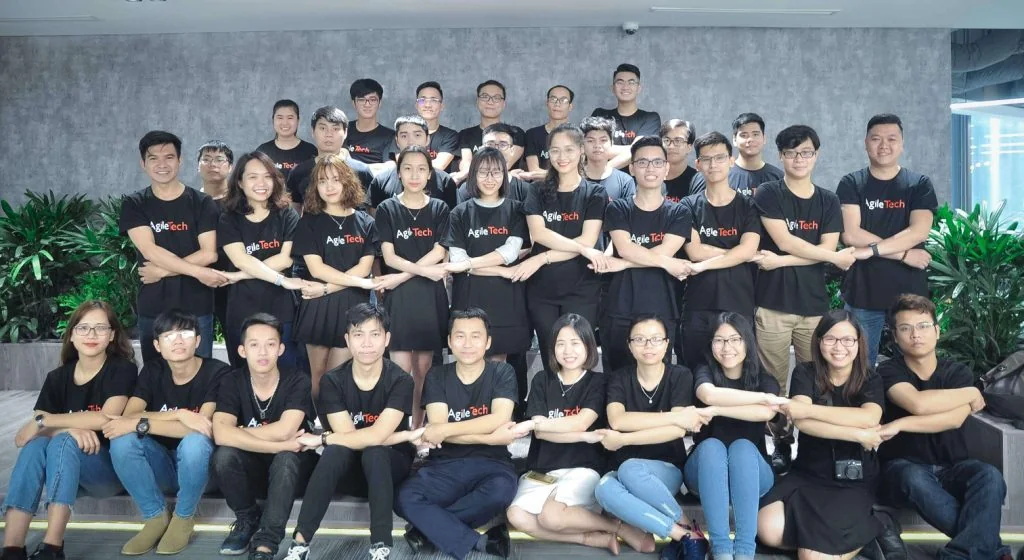
AgileTech Vietnam developers at work

Consult Industry Specialists

Connect with us today to discuss your software development needs and discover how our tailored outsourcing services can propel your business forward.

Start a conversation
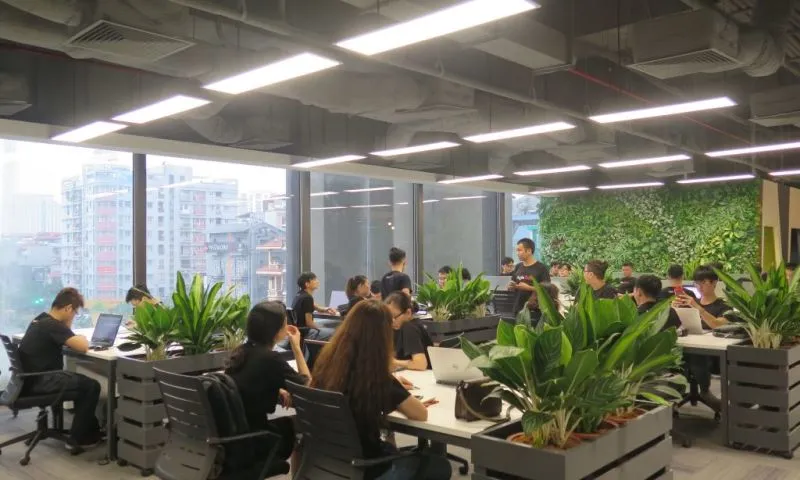
AgileTech Vietnam team at the office

Cookie settings

Strictly necessary storage keeps the site working and remembers this choice. Everything else is off until you switch it on, wherever you are in the world. Only one optional category has anything behind it today: External content, which covers the Google map of our Hanoi office on the Contact page.

Wherever you are. We apply one standard to everyone: nothing outside strictly necessary storage runs until you allow it. That meets the EU and UK requirement for prior consent, the notification and consent requirements of Singapore's PDPA, and US state privacy law. You can withdraw or change your choice at any time, as easily as you gave it, from Cookie settings in the footer.

If you are in the United States. We do not sell your personal information and we do not share it for cross-context behavioural advertising, so there is nothing to opt out of. We still honour an opt-out preference signal from your browser: if your browser sends Global Privacy Control, the optional categories stay off without you having to do anything.

Full detail, including the name and lifetime of the one cookie we set, is in the Cookie Policy.