How is a retail POS different from a restaurant POS?
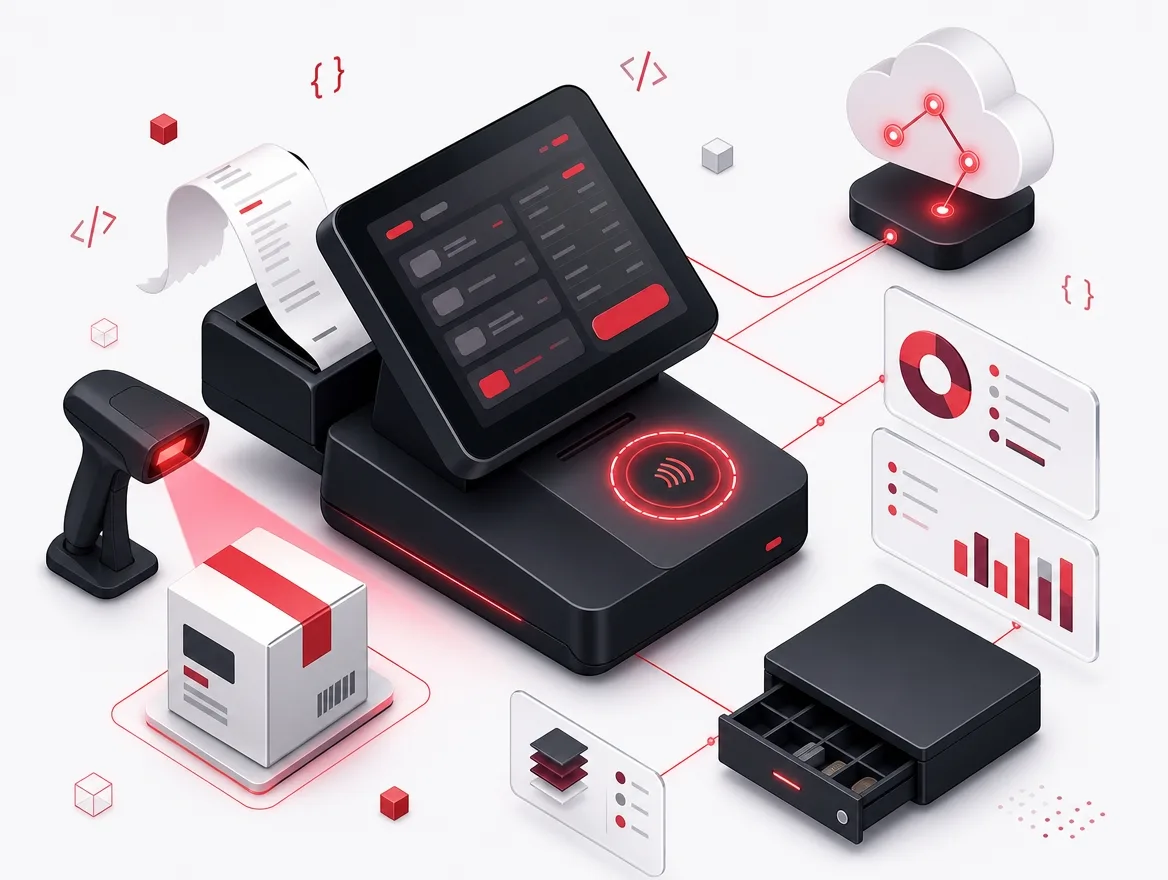
They solve different problems and share little beyond the word POS. Retail checkout is a fast, closed transaction: scan items, apply price and promotion rules, take payment, decrement stock, print or send a receipt, and move to the next customer in the queue. A restaurant check stays open across a sitting, gains courses over time, gets split between guests, moves between tables, and routes items to kitchen stations. Retail optimises for lane throughput and stock accuracy. Restaurants optimise for check lifecycle and kitchen coordination. We build both, and we do not reuse one design for the other. Our restaurant POS work is documented separately under our hospitality practice.
Should we build a POS or configure an existing product?
Configure a product if your checkout is conventional. Shopify POS, Lightspeed, Square, and regional systems handle scanning, payment hardware, and fiscal receipts competently, and rebuilding that is expensive with little differentiation. Building is justified when your selling model does not fit a product: weight and dimension pricing, serialised or made-to-order goods, service plus product mixed baskets, concession and shop-in-shop settlement, trade counters with account customers and credit limits, or a franchise model needing controls no vendor exposes. We tell you which case you are in before scoping.
Does the checkout have to keep working when the internet drops?
Yes, and this is the single largest architectural decision. A store cannot stop selling because a link is down. That means the lane holds the price book and stock position locally, records transactions to local durable storage, takes payment through a terminal that has its own offline path, and reconciles to the central system on reconnect with rules that a store manager can understand. Adding offline capability to an online-only checkout late is effectively a rebuild, so it belongs in the first architecture conversation rather than the second.
How fast does the lane actually need to be?
Fast enough that the operator never waits for the software. In practice that means each scan registers in well under a second, the total and promotion recalculation is immediate, payment starts without a page load, and the receipt is issued without a pause. Queue length is a function of per-item time, so a delay of half a second per scan on a twenty-item basket is ten seconds per customer and a visibly longer queue at peak. We set explicit per-interaction budgets and test against them on the actual hardware rather than a developer laptop.
How do you keep stock accurate between the till and the rest of the business?
Every sale, return, void, and adjustment is a movement in one stock ledger rather than an edit to a stock number, and the lane emits those movements even when offline, replaying them in order on reconnect. Ecommerce and marketplace channels read from the same position, with a reservation model so an item promised online is not sold again in store. Cycle counting corrects drift on a schedule instead of once a year. Accuracy problems are almost always caused by more than one system believing it owns the stock number, so we make ownership explicit in the design.
Can you handle complex promotions and pricing?
Yes, and this is where retail checkout gets genuinely difficult. Multi-buy, mix-and-match, threshold discounts, member pricing, staff discounts, coupons, bundles, and time-limited offers can interact, and two promotions that are each correct can combine into a basket that loses money. We model promotions as an ordered rule engine with explicit precedence and stacking limits, evaluate the whole basket rather than each line, and test the combinations against expected margin before release.
What about payments and PCI DSS scope?
Card data is handled by certified terminals or a provider SDK and tokenised, so it never enters your application or database. That keeps your PCI DSS scope proportionate rather than putting a cardholder data environment inside your own systems. We document the payment data flow and the scope boundary as part of the architecture, and support your evidence gathering, but formal validation is issued by your assessor or acquirer, not by us.
Can you support returns, exchanges, and omnichannel fulfilment at the till?
Yes, and this is usually where a store system earns its keep. Returning an online order in store, exchanging across sizes, refunding to the original payment method, collecting a click-and-collect order, and taking payment for a ship-from-store item all require the till to see orders it did not create. That means the checkout reads from an order system rather than only from its own transaction log, which is why POS and order management are often scoped together.
How do you handle multiple stores and franchises?
Central control of the price book, promotions, and product data, with a defined and audited set of local overrides. Per-store tax and fiscal configuration. Consolidated sales, margin, and shrinkage reporting by store, hour, category, and operator. Separated access for franchisees so they see their own stores and nothing else. Staged release of price and promotion changes so a mistake reaches one store rather than every store simultaneously.
How long does a retail POS project take?
An integration project connecting an existing till estate to ecommerce, order management, or group reporting is typically two to four months. A custom lane application with offline capability, payment integration, a promotion engine, and hardware validation is a larger undertaking and is sequenced so one store goes live and stabilises before any rollout begins. We will say plainly if configuring a product would serve you better than building.
What engagement models are available?
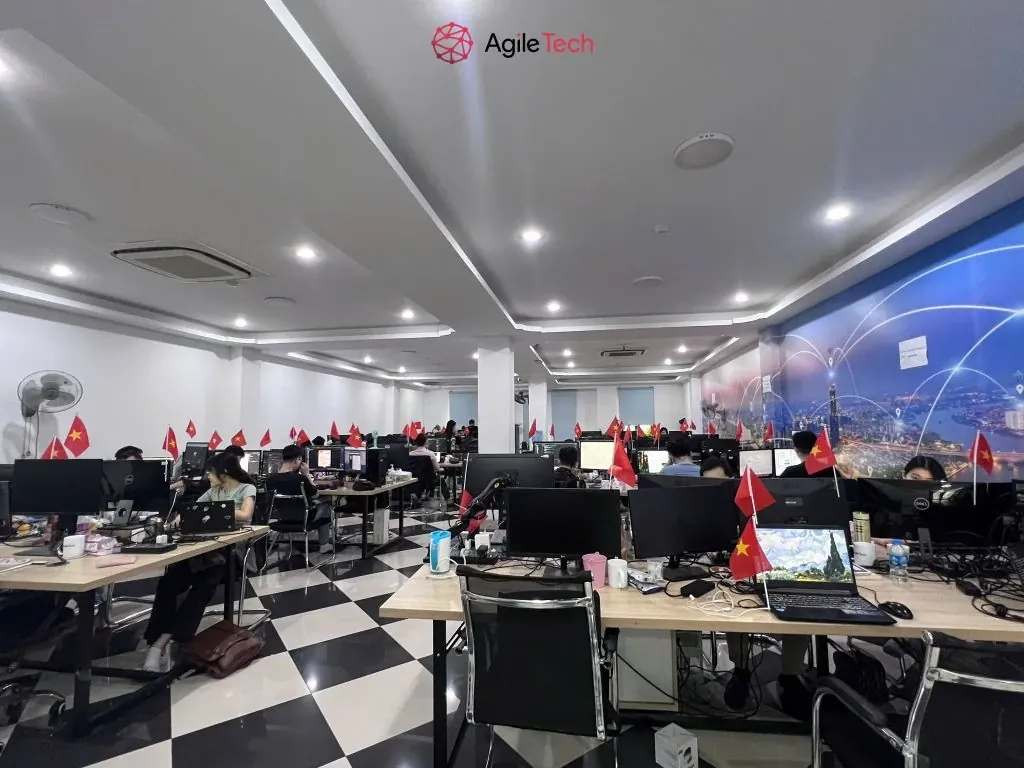
We offer a Dedicated Development Team for continuous product work and Staff Augmentation to extend your in-house team. AgileTech Vietnam brings 10+ years of experience and 200+ developers, with quality management certified to ISO 9001:2015 and information security to ISO 27001:2013. Share your requirements and we prepare a tailored proposal within 48 hours covering team composition, timeline, and cost.