Global delivery from Hanoi, Vietnam ISO 9001:2015   ISO 27001:2013 hello@agiletech.vn (+84) 989 324 830

PIM Software Development

Most retailers do not have a product data problem in one system. They have the same product described four different ways across four systems, with nobody able to say which is correct. Product information management fixes that upstream: one governed record, a workflow that gets it complete, and every channel consuming a version shaped for it rather than maintaining its own.

10+Years of Industry Expertise 200+Talented Developers 90%Customer Satisfaction Rate
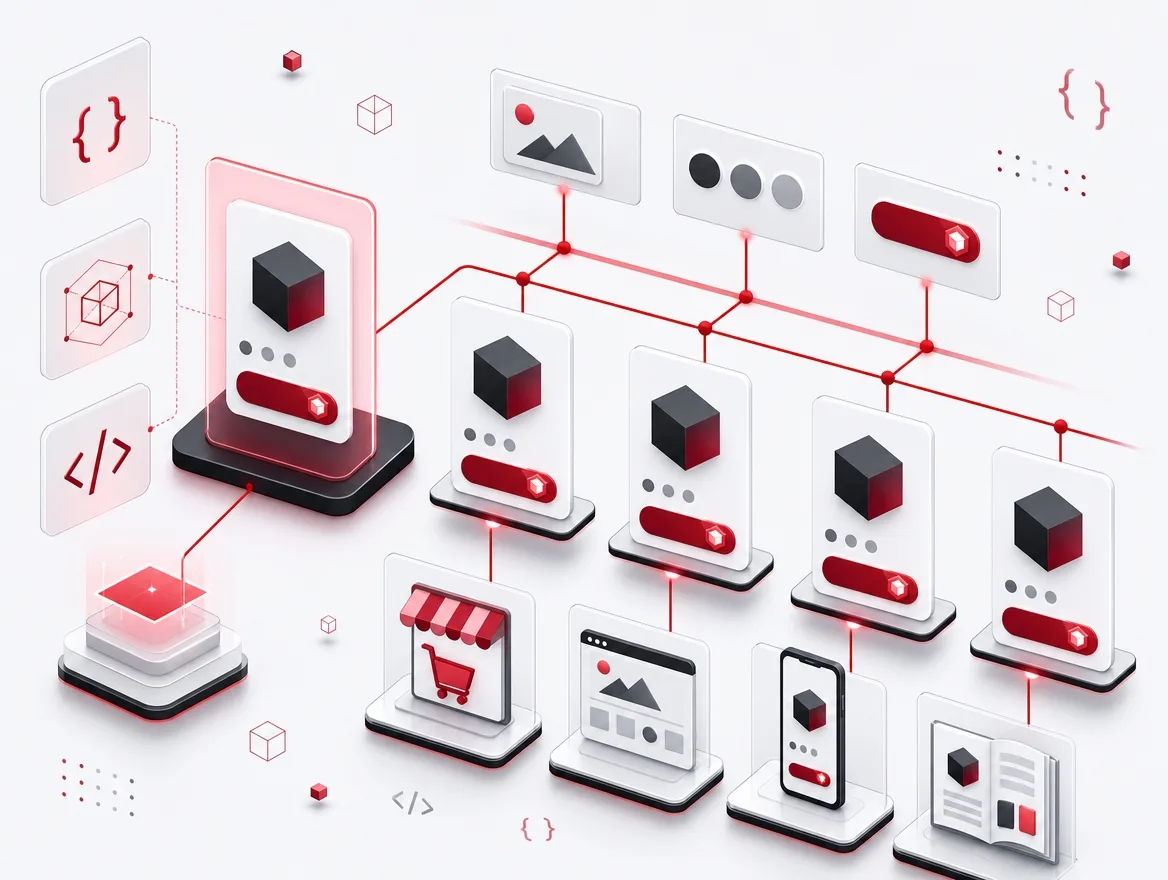
Product information management hub syndicating one product record to multiple sales channels
ISO 9001:2015 Certified ISO 27001:2013 Certified

What PIM Software Clients Say About AgileTech

Independent reviews from Clutch and DesignRush. Every review below is shown in full and links back to its source platform so you can confirm it yourself.

5.0
Nov 2024

“Since we launched our new site we’ve seen a significant increase in traffic and sales, which proves their work is effective.”

We’ve had an amazing experience with AgileTech for our eCommerce platform. The team worked with us to build an user friendly online store that met all our business needs. Their eCommerce development expertise was evident from the start as they shared valuable insights on how to maximize sales. The AgileTech team are not only talented but also care about their clients success. Since we launched our new site we’ve seen a significant increase in traffic and sales which proves their work is effective.

5.0
May 2026

“They were not just executing tasks but were genuinely invested in the product’s success.”

AgileTech Viet Nam developed an MVP for a digital solutions provider’s marketplace platform. They created the UI/UX design, developed the front- and backend, and integrated payment systems. AgileTech Viet Nam successfully launched the MVP on time, allowing the client to onboard 500 users within two months. The platform was stable with minimal issues. Moreover, the team was collaborative, flexible, quick to adapt to changing priorities, and genuinely invested in the project’s success.

MVP launched on time, 500 users onboarded within two months

5.0
Nov 2024

“We saw huge cost savings and optimized stock levels, so we consider AgileTech a partner in our company transformation.”

AgileTech created a working Supply Chain Management (SCM) system that has helped our supermarket chain simplify operations across inventory management, demand forecasting and logistics. They integrated our existing systems, automated inventory and logistics and gave us robust demand forecasting with AI, we saw huge cost savings and optimized stock levels. And they continued to deliver on quality post launch with regular updates and training sessions, so we consider AgileTech as a partner in our company transformation.

AI-driven demand forecasting across inventory and logistics

5.0
Jun 2025

“Their proactive communication, flexibility, and technical expertise stood out throughout the project.”

AgileTech Viet Nam used React Native to develop an iOS and Android app for a real estate platform. The team integrated the app with the client’s backend and implemented property search features. AgileTech Viet Nam’s high-quality work resulted in a 30% increase in user registrations and over 1,000 app downloads within the first month. The team delivered on time, provided regular updates, and responded to feedback. Their flexibility and proactive communication impressed the client.

30% more sign-ups and 1,000+ downloads in the first month

5.0
May 2026

“They followed a structured Agile approach with clearly defined milestones.”

AgileTech Viet Nam developed a web-based logistics management system for an automotive parts supplier. The team integrated the platform with third-party providers and built a real-time tracking dashboard. AgileTech Viet Nam’s work reduced manual processing by 55%, improved real-time shipment visibility, and increased operational efficiency across multiple departments. The team followed a structured Agile approach, communicated consistently, delivered on time, and was flexible.

Manual processing reduced by 55% with real-time shipment visibility

5.0
May 2026

“Their ability to handle both high-level architecture and hands-on implementation is rare.”

An IT services company hired AgileTech Viet Nam to re-architect their enterprise SaaS platform. The team conducted a technical audit, designed a new architecture, migrated legacy data, and added API gateways. Thanks to AgileTech Viet Nam’s work, the client saw improvements in system scalability, platform uptime, and deployment time. The team followed the Agile methodology, communicated effectively, and was responsive to the client’s feedback. AgileTech Viet Nam helped the client make better decisions.

Improved scalability, uptime, and deployment time on an enterprise SaaS

5.0
May 2026

“Their balance between technical expertise and product thinking stood out.”

AgileTech Viet Nam developed an AI-powered analytics platform for an AI visibility and GEO solutions company. The platform featured real-time reporting dashboards and data processing pipelines. AgileTech Viet Nam’s work improved the client’s data processing efficiency and the accuracy of AI-generated insights. The platform was user-friendly and supported the client’s first large-scale deployments. AgileTech Viet Nam’s team was communicative, adaptive, and technically proficient.

Improved data-processing efficiency and AI insight accuracy

5.0
May 2026

“They were flexible in accommodating evolving business needs while still keeping the project on track.”

AgileTech Viet Nam developed a digital platform for a real estate firm. They designed the UI/UX, implemented advanced search and filtering functionalities, integrated dashboards, and automated reporting tools. The platform improved operational efficiency, business performance, lead conversion rates, and customer responsiveness. AgileTech Viet Nam implemented a well-structured project management approach, meeting timelines and responding to feedback with flexibility. Their tailored solutions stood out.

Improved efficiency, business performance, and lead conversion

5.0
Mar 2026

“The team demonstrated strong professionalism, reliability, and a proactive approach throughout the project.”

AgileTech Viet Nam developed a scalable engineering workflow system for an ICT company. The goal was to streamline internal processes, improve cross-team visibility, and enhance coordination. The system significantly improved operational efficiency by reducing manual processes and increasing transparency across teams for the client. AgileTech Viet Nam set clear milestones and provided regular updates to ensure everyone remained in sync. Their professionalism and reliability stood out.

Scalable engineering workflow system with fewer manual processes

5.0
Nov 2024

“The platform has greatly improved our operational efficiency, and we wholeheartedly recommend AgileTech.”

Working with AgileTech has been an amazing experience, especially when it comes to creating a personalized e-learning program for our IT services business. We were pleasantly surprised by how adaptable and scalable the platform developed by the AgileTech Team was. Their proficiency with user-friendly course administration and community participation technologies enabled us to provide a thorough instructional resource catered to our customers’ particular requirements. The platform has greatly improved our operational efficiency, and we are amazed by its capacity to manage heavy traffic with ease and offer comprehensive reporting and analytics. The platform remained successful and user-friendly because of the team’s dedication to continuous support and their quick response to criticism. For any organization looking to create innovative and reliable digital solutions, we wholeheartedly recommend AgileTech as a partner.

Personalized e-learning platform that handles heavy traffic

5.0
Nov 2024

“They used a potent tech stack including PHP, React, and AWS to guarantee perfect scalability and zero downtime.”

AgileTech provided a superb Learning Management System (LMS) that creatively and precisely addressed the intricate needs of our organization. Within a scalable, completely customizable platform, the LMS made it possible to create comprehensive courses, administer student tests, engage the community, and obtain real-time data insights. AgileTech’s modular and agile approach made sure that every component, from the user-friendly course builder to the sophisticated analytics and communication tools, was customized to meet our demands despite the difficulties of developing such a feature-rich system. In order to guarantee perfect scalability and zero downtime, even with high user concurrency, AgileTech used a potent tech stack that included PHP, React, and AWS. Their post-launch assistance, which included frequent training sessions and upgrades, gave our staff the means to fully use the LMS’s potential. This project was a testament to AgileTech’s technical skill, rapid deployment, and dedication, making them an outstanding choice for educational technology development.

Feature-rich LMS with course builder, analytics, and comms

5.0
May 2026

“Their professionalism, responsiveness, and ability to execute efficiently made them feel like an operational partner.”

AgileTech Viet Nam optimized a workflow for a consulting firm. The team improved lead management processes and streamlined internal communication systems across multiple departments. AgileTech Viet Nam’s work improved the client’s operations, customer communication process, and overall workflow efficiency. The team was strategic and reliable. Moreover, AgileTech Viet Nam worked closely with the client to understand their business objectives and recommend solutions.

4.5
Apr 2021

“They are incredible to work with and are truly passionate about technology and our concept.”

AgileTech Viet Nam provides mobile app development services for a social media startup. They are building the app using Node.js and Flutter. With the ongoing partnership, AgileTech Viet Nam’s passion has impressed the client so far. The team is truly into technology, and their concept makes the client feel confident about the project’s continuous success.

4.0
Jun 2019

“I was impressed with the flow of the project.”

AgileTech Viet Nam developed a mobile app from scratch. After helping with scoping and objective formation, AgileTech created design mockups and developed the full iOS and Android solutions. Valuable user data is being gathered in ongoing beta tests, which will soon lead to growth and expansion opportunities. AgileTech Viet Nam provided consistent communication and established a smooth workflow. Issues were raised proactively, allowing fixes to come earlier in the process.

5.0
Nov 2024

“AgileTech excelled in supporting our project from initial mock-ups through to the final delivery on the App Store.”

AgileTech excelled in supporting our project from initial mock-ups through to the final delivery on the App Store, incorporating data analytics that we could easily share with our customers. The scope of work included mock-up creation, UI/UX design, interactive prototyping, app development, rigorous testing, and setting up a secure production environment on AWS, culminating in the apps release on both iOS and Android platforms.

5.0
Nov 2024

“Their attention to detail in web development and UI/UX design has given us a site that looks great and works flawlessly.”

Working with AgileTech has been a game changer for us. We wanted a modern and responsive website and AgileTech delivered more than we expected. The team was super collaborative and involved us in every step of the process. Their attention to detail in web development and UI/UX design has given us a site that looks great and works flawlessly. The AgileTech team members are not only talented professionals but also great communicators, so we could share our vision and ideas easily. They were so committed to our success and the end result has increased our user engagement and satisfaction so much.

What a PIM System Contains

The capability areas that define scope, whether we are building a product data layer or extending one already in place.

Product Model and Category Attributes

Category-specific attribute sets with data types, units, permitted values, and inheritance, plus variant and family structure, bundles and kits, relationships for cross-sell and accessories, and identifier management across internal codes, barcodes, and supplier references.

Enrichment Workflow and Ownership

Defined stages from creation to publish-ready, task assignment by role, approval gates, change history with attribution, and visibility of what is blocking a product launch, so enrichment is a managed pipeline rather than a chase over email.

Supplier Ingestion and Mapping

API, file, and spreadsheet ingestion with per-supplier mapping templates, validation against the category model at entry, a review queue for failures, duplicate and match detection, and change tracking so a supplier update does not silently overwrite curated copy.

Digital Assets and Renditions

Imagery and video linked to products with role and variant awareness, automatic channel renditions instead of manual resizing, standards enforced at upload, and usage rights and expiry tracking where licensed material is involved.

Channel Syndication and Validation

Per-channel mapping to the structure, taxonomy, and format each destination requires, completeness validation before publishing so incomplete listings are blocked upstream, and per-channel publish status with error visibility and retry.

Localisation and Data Quality Scoring

Locale-specific values with defined fallback, translation workflow and status per locale, market-specific units and compliance text, and completeness and quality scores per product, category, and channel that turn data gaps into an assignable work queue.

Systems a PIM Connects To

A PIM sits upstream of the systems that sell and downstream of those that create. We map every producer and consumer of product data before design, since an unmapped consumer will keep its own divergent copy.

  • Ecommerce platforms: the storefront catalogue becomes a consumer of the master record rather than the source of truth, receiving a channel-appropriate subset on publish.
  • Marketplaces: each has its own taxonomy, required attributes, and image rules, so per-channel mapping and pre-publish validation prevent the rejection cycles that consume commercial team time.
  • Point of sale: product identity, descriptions, barcodes, and unit structure at the lane, so the till and the website describe the same item the same way.
  • ERP: commercial and logistical data such as cost, supplier, and pack configuration, with a clear ownership boundary between what the ERP masters and what the PIM masters.
  • Inventory systems: consistent product and variant identity plus units of measure, since stock cannot be tracked reliably against an inconsistent product record.
  • Digital asset management: either the PIM holds assets or it links to a dedicated DAM, with product-to-asset relationships and rendition generation defined either way.
  • Translation providers: content sent for translation and returned with status per locale, so multi-market launches are tracked rather than coordinated in spreadsheets.
  • Print and partner feeds: catalogues, retail partner listings, and comparison sites served from the same master record, which is where most manual duplication currently accumulates.

Technical Considerations for PIM Development

The engineering decisions that determine whether a product information management project holds up in production, set out before the build starts.

The attribute model is the whole project

Everything else follows from how products are modelled. Too rigid and merchandisers cannot describe new ranges without a change request; too loose and you have a free-text field per channel and no data quality at all. The workable approach is category-specific required and optional attributes with controlled value lists, inheritance for shared attributes, and a governed process for extending the model. This is modelling work with your commercial team, not a configuration task.

Mastering boundaries must be explicit

The ERP typically masters cost, supplier, and logistical data. The PIM masters descriptive, marketing, and channel data. Overlap is normal and ambiguity is fatal: if both can write the same field, they will diverge and no one will know which is correct. We define field-level ownership and direction of flow before implementation, which resolves the majority of product data disputes in advance.

Publishing must validate before it reaches the channel

Marketplaces reject incomplete or non-conforming listings, and each rejection cycle costs commercial team time and delays launch. Validating completeness and conformance inside the PIM before publishing turns that into a pre-publish checklist owned by the team that can fix it, and makes the publish status per channel visible rather than something discovered from a rejection email.

Stack choices we typically recommend

PostgreSQL for the product record, with a flexible attribute structure that stays queryable rather than an unindexed document blob. Backend in Node.js, Python, or Java, with ingestion and syndication as separate workers so a large supplier import cannot slow the editing interface. Object storage plus an image transformation service for assets and renditions. A search index for internal product finding across large catalogues, queue-based publishing with retry and idempotency, and AWS or Azure hosting.

  • Editing performance: merchandisers work in bulk across hundreds of rows, so bulk edit, filtering, and save performance are treated as core requirements rather than convenience features.
  • Change auditability: every attribute change attributable to a user or an ingestion run, so an incorrect published value can be traced to its origin rather than argued about.
  • Migration reality: existing product data is profiled before migration, since importing inconsistent data into a governed model simply relocates the problem.
  • Extensibility governance: a controlled process for adding attributes and categories, without which the model degrades into an unmanaged field sprawl within a year.

Who This Is For

Retailers selling the same products across several channels

Once your own site, marketplaces, and retail partners each hold their own version of a product, maintenance cost scales with channels and inconsistency is guaranteed. Centralising the record is the direct remedy.

Businesses whose product launches are slow

When time to publish is dominated by chasing specifications, copy, and imagery rather than commercial decisions, the constraint is enrichment workflow. Making the blockage visible and assignable is usually worth more than any single feature.

Operators with large or supplier-driven catalogues

Where most product data arrives from suppliers in inconsistent formats, ingestion, mapping, and validation are the core problem. Automating the well-formed and streamlining correction of the rest is the realistic and effective goal.

Multi-market retailers managing localisation

Locale variants, market-specific compliance text, and different units multiply the maintenance surface. Locale-aware attributes with defined fallback and translation status keep a multi-market catalogue manageable as it grows.

How We Deliver PIM Projects

A sequence built around the constraint that trading cannot pause while software is deployed.

AgileTech software delivery process A six step delivery workflow: requirement analysis, planning and design, development, quality assurance, deployment, then maintenance and support. 01 RequirementAnalysis 02 Planning &Design 03 Development 04 QualityAssurance 05 Deployment 06 Maintenance &Support
01

Product Data Profiling

We profile what you actually hold across every system: completeness by category, duplication, conflicting values, and where each field is currently mastered. This establishes the real starting point rather than the assumed one.

02

Attribute Model and Ownership Design

We model category attributes with your commercial team, define variant and family structure, and set field-level mastering boundaries against the ERP and other systems, with the direction of flow stated explicitly.

03

Workflow and Channel Requirement Mapping

We design the enrichment stages, roles, and approval gates, and capture each channel's required attributes, taxonomy, and asset rules so validation can be enforced before publishing rather than after rejection.

04

Core PIM Build and Ingestion

The product record, attribute model, editing interface with bulk operations, and supplier ingestion with mapping and validation are built first, since enrichment cannot start until data can arrive and be corrected efficiently.

05

Syndication, Migration, and Quality Validation

Channel mappings tested against real destination accounts, migration executed with profiling and correction rather than a raw import, and completeness scoring validated so the readiness picture is trustworthy.

06

Category-by-Category Adoption

One category goes live end to end, from ingestion to publish, with the merchandising team working in it before the next is migrated. Support covers channel requirement changes and controlled model extension.

Frequently Asked Questions

What problem does a PIM actually solve?

It ends the situation where product information exists in several places and no version is authoritative. Without a PIM, product copy lives in the ecommerce platform, specifications in supplier spreadsheets, imagery in a shared drive, and marketplace-specific variants in whatever each channel needed. The result is inconsistent listings, slow launches, and time spent reconciling versions instead of selling. A PIM makes one record authoritative and every channel a consumer of it.

Is a PIM different from our ecommerce platform's product catalogue?

Yes, and conflating them is a common and expensive assumption. The platform catalogue exists to serve one storefront and is shaped for that purpose. A PIM is upstream and channel-neutral: it holds the complete product record with all attributes, media, and localisations, manages the workflow of enriching it, and syndicates channel-appropriate subsets outward. If you sell through more than one channel, the platform catalogue is a destination, not the source.

Should we buy a PIM product or build one?

Commercial PIM products are mature and often the right answer, particularly for conventional retail catalogues. Building is justified when your attribute model or workflow is genuinely unusual, when licensing at your SKU volume outweighs build cost, when PIM must be embedded in a wider platform you are already developing, or when integration into an unusual system estate would dominate the cost either way. We assess and say which case applies rather than defaulting to a build.

How do you handle attributes that differ by category?

With a category-specific attribute model rather than one universal schema. A television needs screen size and panel type; a shirt needs size, fit, and fabric composition. Each category defines its required and optional attributes, their data types, units, and permitted values, and inheritance lets shared attributes sit at higher levels. This structure is the core of a PIM, and getting it wrong produces either unusable rigidity or a field for everything that nobody completes.

Can you ingest supplier data automatically?

Partly, and honestly no PIM makes supplier data clean by itself. We build ingestion for API feeds, structured files, and spreadsheets, with mapping templates per supplier, validation against the category model on entry, and a review queue for anything that fails. Suppliers vary from an enterprise sending a well-formed feed to a business emailing an inconsistent spreadsheet, so the realistic goal is automating the well-formed and making the messy cases fast to correct rather than eliminating manual work entirely.

How does channel syndication work?

Each channel gets a mapping from the master record to its required structure, since a marketplace, your own storefront, a print catalogue, and a retail partner all want different subsets, formats, and taxonomies. The PIM validates completeness against each channel's rules before publishing, so an incomplete listing is blocked upstream rather than rejected by the marketplace after upload. Publishing is tracked per channel with status and error visibility.

How do you measure product data quality?

Through explicit completeness and quality scoring per product, per category, and per channel: which required attributes are missing, whether imagery meets standards, whether copy exists in each required locale, and whether the record is ready to publish to a given channel. That turns data quality into a visible, assignable work queue rather than a vague complaint, and it lets you see which suppliers and categories are actually causing the drag.

Does a PIM handle images and video too?

Either within the PIM or through a connected digital asset management system, depending on scale. What matters is that assets are linked to the product record with role and variant awareness, that channel-specific renditions are generated rather than manually resized, that usage rights and expiry are tracked where licensed imagery is involved, and that the storefront serves optimised formats. Loose files in a shared drive are the version-control problem the PIM exists to remove.

How does localisation work?

Locale-specific values for the attributes that need them, with a defined fallback so a missing translation degrades predictably rather than showing an empty field. Translation workflow with status per locale, integration to translation providers where volume justifies it, and per-market differences in units, compliance text, and regulatory attributes. Multi-market retail usually finds localisation, not attribute modelling, to be the larger long-term workload.

How long does a PIM project take?

A first release covering the attribute model, master record, enrichment workflow, and syndication to the primary channel typically takes three to five months, dominated by modelling and data migration rather than interface work. Additional channels, asset management, and localisation follow. The honest constraint is usually the quality of existing product data, which is why we assess it before committing to a plan.

What engagement models are available?

We offer a Dedicated Development Team for continuous product work and Staff Augmentation to extend your in-house team. AgileTech Vietnam brings 10+ years of experience and 200+ developers, with quality management certified to ISO 9001:2015 and information security to ISO 27001:2013. Share your requirements and we prepare a tailored proposal within 48 hours covering team composition, timeline, and cost.

Trusted and Recognized

Independent directories, certification bodies, and award programs that have assessed our work. Each badge links to its source or names the standard behind it, so every claim on this page can be checked at first hand.

Top Mobile App Developers - ClutchTop Software Development Company - GoodFirmsReliable Company - ExtractISO 9001:2015 certifiedISO 27001:2013 certifiedTechBehemoths Awards - Mobile App Development

Ready to Discuss Your PIM Software Project?

Tell us your catalogue size, how many channels you publish to, and who maintains product data now. We will come back with a straight assessment of build versus integrate, a delivery sequence, and an estimate within 48 hours.

AgileTech Vietnam team members

Consult Industry Specialists

Connect with us today to discuss your software development needs and discover how our tailored outsourcing services can propel your business forward.

Start a conversation
AgileTech Vietnam team at the office

Cookie settings

Strictly necessary storage keeps the site working and remembers this choice. Everything else is off until you switch it on, wherever you are in the world. Only one optional category has anything behind it today: External content, which covers the Google map of our Hanoi office on the Contact page.

Wherever you are. We apply one standard to everyone: nothing outside strictly necessary storage runs until you allow it. That meets the EU and UK requirement for prior consent, the notification and consent requirements of Singapore's PDPA, and US state privacy law. You can withdraw or change your choice at any time, as easily as you gave it, from Cookie settings in the footer.

If you are in the United States. We do not sell your personal information and we do not share it for cross-context behavioural advertising, so there is nothing to opt out of. We still honour an opt-out preference signal from your browser: if your browser sends Global Privacy Control, the optional categories stay off without you having to do anything.

Full detail, including the name and lifetime of the one cookie we set, is in the Cookie Policy.