Which of the four systems should we start with?
Whichever loss is currently largest, and it is usually clear once we look. If carrier invoices are unchecked, start with transportation management. If stock accuracy is disputed, start with warehouse management. If job margin is only known at month end, start with freight forwarding. If your support team spends its day on delivery exceptions, start with last mile. We will give you a view after seeing the operation, and we have advised clients to start somewhere other than where they intended.
Do we need custom software, or would a package do?
For a conventional operation, a package usually wins on cost and time, and we will tell you that even though it costs us the build. Custom work earns its place when you are a third party logistics provider whose process is your product, when your constraints genuinely do not fit a product's assumptions, when you need a tailored layer over a package you are keeping, or when integration with your existing systems is the actual problem. We are willing to be paid for an assessment that concludes you should buy.
What logistics work have you actually delivered?
Two published projects, both with the client named and the review verifiable. We built a web based logistics management system for MAG45, an automotive parts supplier, integrating third party providers and a real time tracking dashboard, reviewed on Clutch. We built a supply chain management system for Mancini's Sleepworld covering inventory management, demand forecasting and logistics, reviewed on DesignRush. Beyond that we will be specific on each system page about what would be new build for us, rather than implying broader experience than we have.
Can you integrate with our carriers and telematics providers?
In most cases yes, with effort that varies enormously and which we refuse to average. A carrier with a documented API might take days; one with EDI takes longer; one with only a portal login means a negotiated file exchange or fragile screen automation, and we will say which. Telematics units usually expose a feed, but reporting frequency matters: a tracker reporting every fifteen minutes cannot support live customer tracking no matter what sits above it.
How much will this reduce our costs?
We will not give you a percentage, and you should be sceptical of anyone who does before seeing your data. What we will do during discovery is quantify from your own records: recoverable invoice variance from your historical freight invoices, travel time removable from your actual layout and order profile, or failure causes from your own delivery exception data. That produces an estimate built from your numbers with the assumptions visible, which you can challenge, rather than a figure from a brochure.
What happens when connectivity fails in the warehouse or the van?
The device keeps working. Scanner and driver applications hold their data locally, queue completions, submit idempotently so a retry cannot create a duplicate movement, and show the operator what is still pending. There is a defined manual fallback for a longer outage that does not corrupt the data on recovery. We treat dead spots behind racking and in basement car parks as normal operating conditions, because on real sites they are.
Can we roll out gradually rather than all at once?
Yes, and we recommend it firmly. One lane, one zone, one product group or one depot proves the interface, the integration and the reconciliation before the pattern is repeated, and it gives the rest of the operation a working example rather than a promise. Whole network cutovers concentrate every risk into one weekend, and in logistics the largest risk is usually reconciling physical reality against a new data model while goods keep moving.
Do you file customs declarations or hold a transport licence?
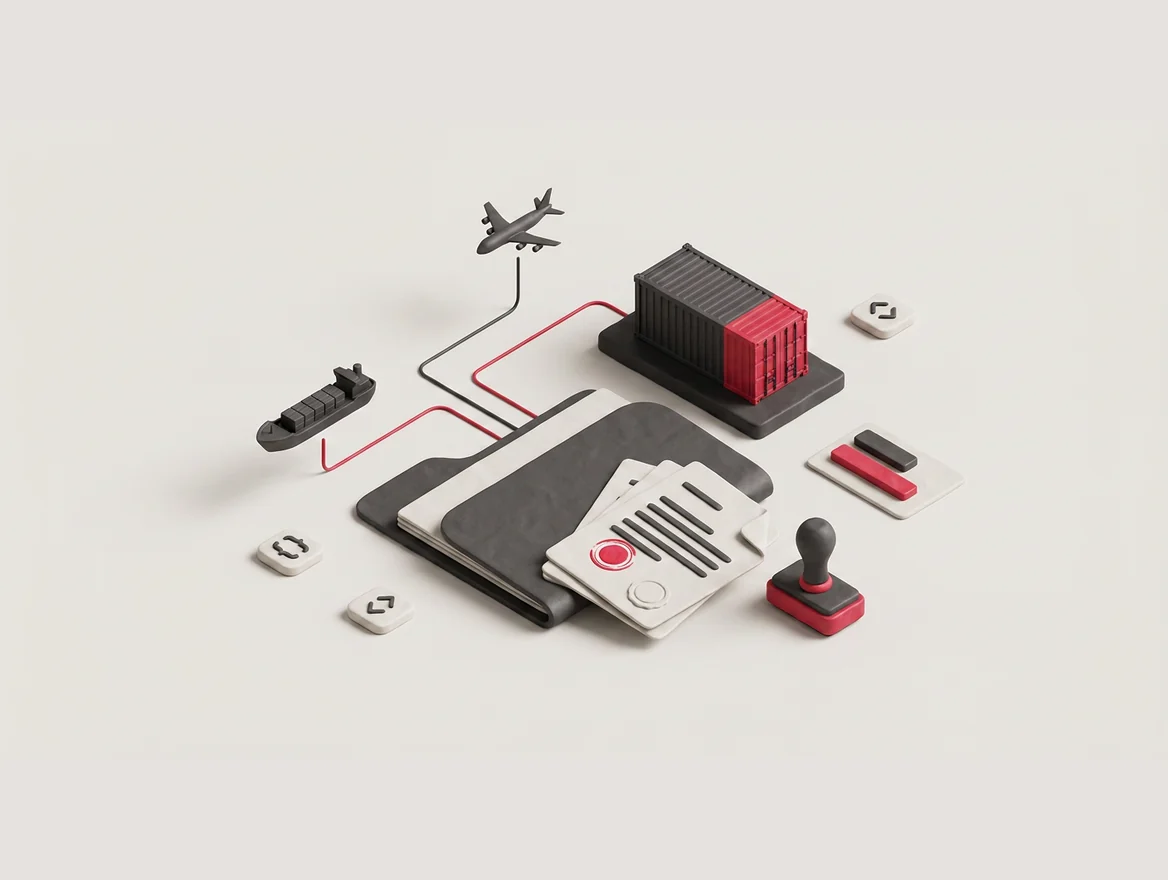
No. We are a software company. We hold no customs brokerage licence, no transport operator licence, and no accreditation of any kind beyond ISO 9001:2015 and ISO 27001:2013 for our own operations. What we build is the data and integration layer: capturing and validating declaration data, keeping documents and their provenance, and connecting to your broker or a national system where an interface exists. Professional responsibility for what is declared remains with you or your licensed broker.
How do these four systems fit together?
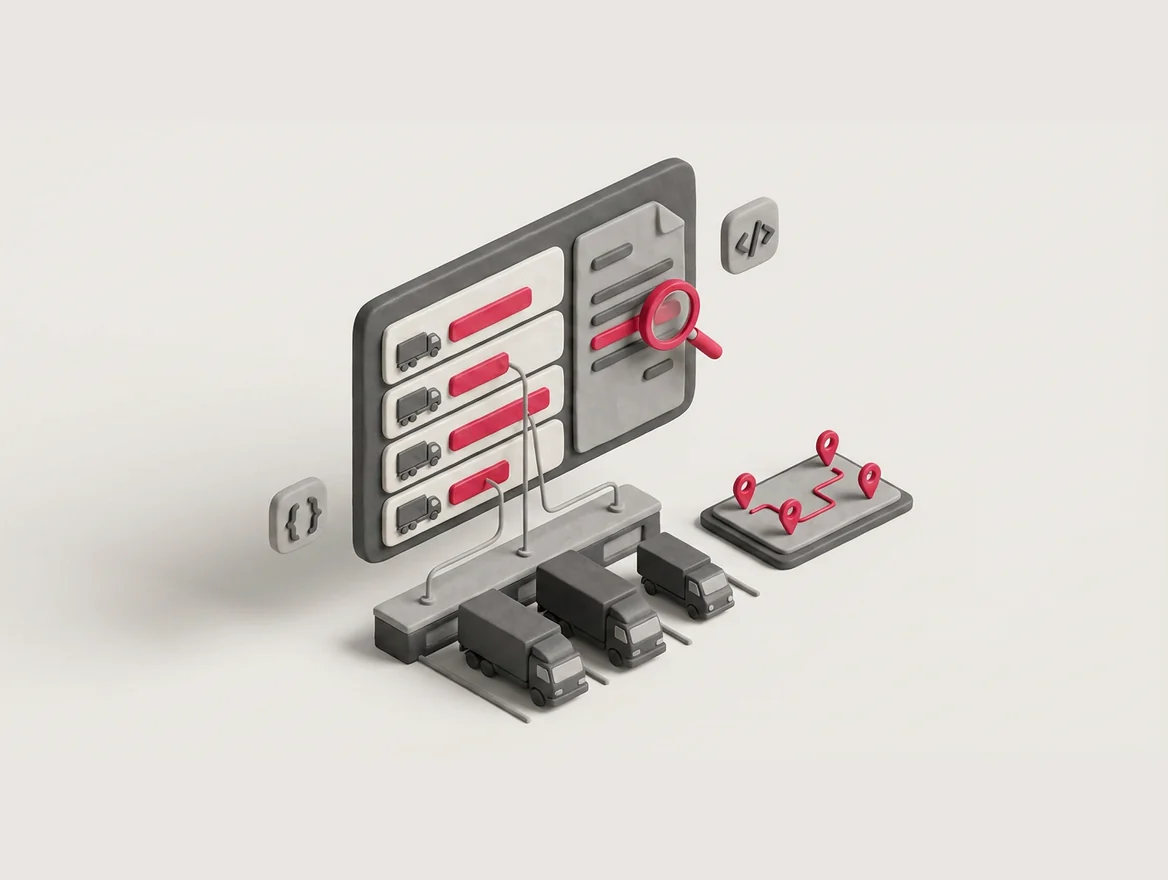
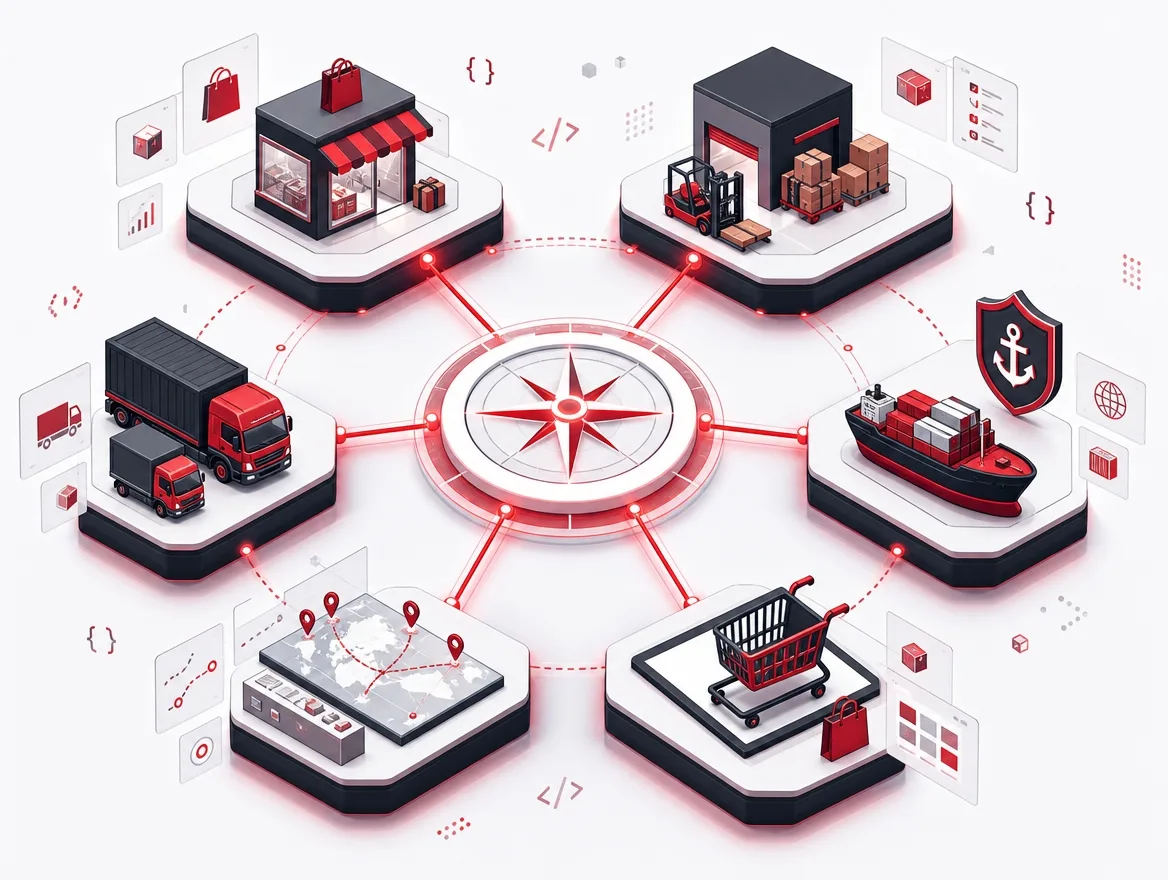
Warehouse management runs what happens inside the building, transportation management decides how goods move between buildings and what that costs, freight forwarding handles the job and its documentation when you are moving goods on behalf of others, and last mile covers the final leg to a door. They meet at packed weights and dimensions, at the dock and loading sequence, and at cost data. You do not need all four, and building all four at once is rarely the right sequence.
How long does a logistics system take to deliver?
A focused single system on one site or one lane set is typically a few months, with the counterparty survey and device testing taking a meaningful share of it. We will not quote a duration before that survey is done, because integration quality dominates everything else and the estimate has to be built on the awkward carriers rather than the cooperative ones. A multi site programme across several systems is staged, and we will not present it as anything shorter than it is.
What do you need from us to begin?
Access to the operation for observation, your rate tables and a sample of recent invoices including disputed ones, a list of every carrier and system connection, your current stock accuracy position if a warehouse is involved, and the actual devices your people carry. Time on the floor or in the van with the people doing the work is the single most valuable thing you can provide, and no document substitutes for it.