Global delivery from Hanoi, Vietnam ISO 9001:2015   ISO 27001:2013 hello@agiletech.vn (+84) 989 324 830

Payment Processing Platform Development

A payment platform is judged on the days it goes wrong, not the days it works. Anyone can take a card number and show a success page. The difficulty is what happens when the acquirer times out after authorising, when a customer taps pay twice on a slow connection, when a refund arrives before the original capture has settled, and when the finance team asks why the bank statement is short by a sum that does not appear in any report. We build payment platforms around those cases first, because they are the ones that cost money and trust.

10+Years of Industry Expertise 200+Talented Developers 90%Customer Satisfaction Rate
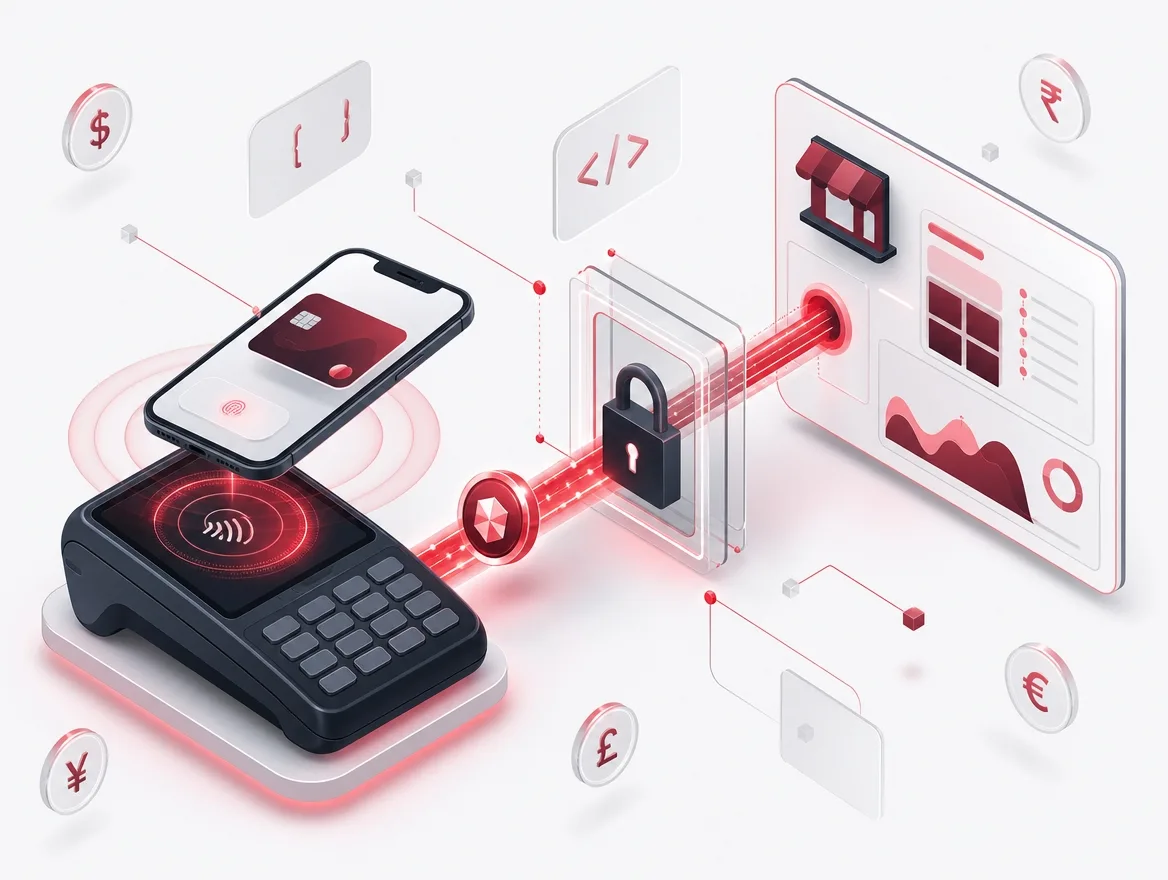
Contactless card payment moving through a tokenised gateway into merchant settlement reporting
ISO 9001:2015 Certified ISO 27001:2013 Certified

What Payment Processing Clients Say About AgileTech

Independent reviews from Clutch and DesignRush. Every review below is shown in full and links back to its source platform so you can confirm it yourself.

5.0
Jun 2025

“Their proactive communication, flexibility, and technical expertise stood out throughout the project.”

AgileTech Viet Nam used React Native to develop an iOS and Android app for a real estate platform. The team integrated the app with the client’s backend and implemented property search features. AgileTech Viet Nam’s high-quality work resulted in a 30% increase in user registrations and over 1,000 app downloads within the first month. The team delivered on time, provided regular updates, and responded to feedback. Their flexibility and proactive communication impressed the client.

30% more sign-ups and 1,000+ downloads in the first month

5.0
May 2026

“They followed a structured Agile approach with clearly defined milestones.”

AgileTech Viet Nam developed a web-based logistics management system for an automotive parts supplier. The team integrated the platform with third-party providers and built a real-time tracking dashboard. AgileTech Viet Nam’s work reduced manual processing by 55%, improved real-time shipment visibility, and increased operational efficiency across multiple departments. The team followed a structured Agile approach, communicated consistently, delivered on time, and was flexible.

Manual processing reduced by 55% with real-time shipment visibility

5.0
May 2026

“They were not just executing tasks but were genuinely invested in the product’s success.”

AgileTech Viet Nam developed an MVP for a digital solutions provider’s marketplace platform. They created the UI/UX design, developed the front- and backend, and integrated payment systems. AgileTech Viet Nam successfully launched the MVP on time, allowing the client to onboard 500 users within two months. The platform was stable with minimal issues. Moreover, the team was collaborative, flexible, quick to adapt to changing priorities, and genuinely invested in the project’s success.

MVP launched on time, 500 users onboarded within two months

5.0
May 2026

“Their ability to handle both high-level architecture and hands-on implementation is rare.”

An IT services company hired AgileTech Viet Nam to re-architect their enterprise SaaS platform. The team conducted a technical audit, designed a new architecture, migrated legacy data, and added API gateways. Thanks to AgileTech Viet Nam’s work, the client saw improvements in system scalability, platform uptime, and deployment time. The team followed the Agile methodology, communicated effectively, and was responsive to the client’s feedback. AgileTech Viet Nam helped the client make better decisions.

Improved scalability, uptime, and deployment time on an enterprise SaaS

5.0
May 2026

“Their balance between technical expertise and product thinking stood out.”

AgileTech Viet Nam developed an AI-powered analytics platform for an AI visibility and GEO solutions company. The platform featured real-time reporting dashboards and data processing pipelines. AgileTech Viet Nam’s work improved the client’s data processing efficiency and the accuracy of AI-generated insights. The platform was user-friendly and supported the client’s first large-scale deployments. AgileTech Viet Nam’s team was communicative, adaptive, and technically proficient.

Improved data-processing efficiency and AI insight accuracy

5.0
May 2026

“Their professionalism, responsiveness, and ability to execute efficiently made them feel like an operational partner.”

AgileTech Viet Nam optimized a workflow for a consulting firm. The team improved lead management processes and streamlined internal communication systems across multiple departments. AgileTech Viet Nam’s work improved the client’s operations, customer communication process, and overall workflow efficiency. The team was strategic and reliable. Moreover, AgileTech Viet Nam worked closely with the client to understand their business objectives and recommend solutions.

5.0
May 2026

“They were flexible in accommodating evolving business needs while still keeping the project on track.”

AgileTech Viet Nam developed a digital platform for a real estate firm. They designed the UI/UX, implemented advanced search and filtering functionalities, integrated dashboards, and automated reporting tools. The platform improved operational efficiency, business performance, lead conversion rates, and customer responsiveness. AgileTech Viet Nam implemented a well-structured project management approach, meeting timelines and responding to feedback with flexibility. Their tailored solutions stood out.

Improved efficiency, business performance, and lead conversion

5.0
Mar 2026

“The team demonstrated strong professionalism, reliability, and a proactive approach throughout the project.”

AgileTech Viet Nam developed a scalable engineering workflow system for an ICT company. The goal was to streamline internal processes, improve cross-team visibility, and enhance coordination. The system significantly improved operational efficiency by reducing manual processes and increasing transparency across teams for the client. AgileTech Viet Nam set clear milestones and provided regular updates to ensure everyone remained in sync. Their professionalism and reliability stood out.

Scalable engineering workflow system with fewer manual processes

4.5
Apr 2021

“They are incredible to work with and are truly passionate about technology and our concept.”

AgileTech Viet Nam provides mobile app development services for a social media startup. They are building the app using Node.js and Flutter. With the ongoing partnership, AgileTech Viet Nam’s passion has impressed the client so far. The team is truly into technology, and their concept makes the client feel confident about the project’s continuous success.

4.0
Jun 2019

“I was impressed with the flow of the project.”

AgileTech Viet Nam developed a mobile app from scratch. After helping with scoping and objective formation, AgileTech created design mockups and developed the full iOS and Android solutions. Valuable user data is being gathered in ongoing beta tests, which will soon lead to growth and expansion opportunities. AgileTech Viet Nam provided consistent communication and established a smooth workflow. Issues were raised proactively, allowing fixes to come earlier in the process.

5.0
Nov 2024

“AgileTech excelled in supporting our project from initial mock-ups through to the final delivery on the App Store.”

AgileTech excelled in supporting our project from initial mock-ups through to the final delivery on the App Store, incorporating data analytics that we could easily share with our customers. The scope of work included mock-up creation, UI/UX design, interactive prototyping, app development, rigorous testing, and setting up a secure production environment on AWS, culminating in the apps release on both iOS and Android platforms.

5.0
Nov 2024

“The platform has greatly improved our operational efficiency, and we wholeheartedly recommend AgileTech.”

Working with AgileTech has been an amazing experience, especially when it comes to creating a personalized e-learning program for our IT services business. We were pleasantly surprised by how adaptable and scalable the platform developed by the AgileTech Team was. Their proficiency with user-friendly course administration and community participation technologies enabled us to provide a thorough instructional resource catered to our customers’ particular requirements. The platform has greatly improved our operational efficiency, and we are amazed by its capacity to manage heavy traffic with ease and offer comprehensive reporting and analytics. The platform remained successful and user-friendly because of the team’s dedication to continuous support and their quick response to criticism. For any organization looking to create innovative and reliable digital solutions, we wholeheartedly recommend AgileTech as a partner.

Personalized e-learning platform that handles heavy traffic

5.0
Nov 2024

“They used a potent tech stack including PHP, React, and AWS to guarantee perfect scalability and zero downtime.”

AgileTech provided a superb Learning Management System (LMS) that creatively and precisely addressed the intricate needs of our organization. Within a scalable, completely customizable platform, the LMS made it possible to create comprehensive courses, administer student tests, engage the community, and obtain real-time data insights. AgileTech’s modular and agile approach made sure that every component, from the user-friendly course builder to the sophisticated analytics and communication tools, was customized to meet our demands despite the difficulties of developing such a feature-rich system. In order to guarantee perfect scalability and zero downtime, even with high user concurrency, AgileTech used a potent tech stack that included PHP, React, and AWS. Their post-launch assistance, which included frequent training sessions and upgrades, gave our staff the means to fully use the LMS’s potential. This project was a testament to AgileTech’s technical skill, rapid deployment, and dedication, making them an outstanding choice for educational technology development.

Feature-rich LMS with course builder, analytics, and comms

5.0
Nov 2024

“We saw huge cost savings and optimized stock levels, so we consider AgileTech a partner in our company transformation.”

AgileTech created a working Supply Chain Management (SCM) system that has helped our supermarket chain simplify operations across inventory management, demand forecasting and logistics. They integrated our existing systems, automated inventory and logistics and gave us robust demand forecasting with AI, we saw huge cost savings and optimized stock levels. And they continued to deliver on quality post launch with regular updates and training sessions, so we consider AgileTech as a partner in our company transformation.

AI-driven demand forecasting across inventory and logistics

5.0
Nov 2024

“Since we launched our new site we’ve seen a significant increase in traffic and sales, which proves their work is effective.”

We’ve had an amazing experience with AgileTech for our eCommerce platform. The team worked with us to build an user friendly online store that met all our business needs. Their eCommerce development expertise was evident from the start as they shared valuable insights on how to maximize sales. The AgileTech team are not only talented but also care about their clients success. Since we launched our new site we’ve seen a significant increase in traffic and sales which proves their work is effective.

5.0
Nov 2024

“Their attention to detail in web development and UI/UX design has given us a site that looks great and works flawlessly.”

Working with AgileTech has been a game changer for us. We wanted a modern and responsive website and AgileTech delivered more than we expected. The team was super collaborative and involved us in every step of the process. Their attention to detail in web development and UI/UX design has given us a site that looks great and works flawlessly. The AgileTech team members are not only talented professionals but also great communicators, so we could share our vision and ideas easily. They were so committed to our success and the end result has increased our user engagement and satisfaction so much.

What a Payment Processing Platform Includes

Six areas make up the core of the platform. The first three move money, the second three prove what happened to it. Teams routinely underestimate the second three, and then spend their first year in production building them under pressure.

Payment Acceptance and Orchestration

Card acquiring, digital wallets, bank transfers, direct debit, and local rails behind one internal interface, so adding a provider does not mean rewriting your checkout. Routing rules decide which provider handles which transaction, by currency, method, cost, or a fallback when the primary provider is failing. The orchestration layer is deliberately thin and testable, because it sits on the critical path of every sale.

Tokenisation and Stored Credentials

Card details are exchanged for tokens held by the provider or by a dedicated vault, so your application stores a reference and never a number. This supports card on file, subscriptions, and one-click repeat purchases without widening the surface you need to protect. Network tokens and provider tokens behave differently on expiry and reissue, and the platform tracks which is which.

Authorisation, Capture, and Void Lifecycle

Authorise now and capture later is the norm in retail, travel, and marketplaces, and each step can succeed, fail, expire, or partially complete. The platform models the full state machine, including partial capture, multiple captures against one authorisation, expiry of uncaptured authorisations, and voids that race against settlement. Ambiguous outcomes are resolved by reconciliation rather than by guessing.

Double Entry Ledger

A ledger of immutable entries, each balancing to zero across accounts, is the single source of truth for balances. Balances are derived, not stored and edited. This is what makes it possible to answer what a balance was on any past date, to explain the movement between two dates, and to detect a discrepancy rather than silently absorbing it. Corrections are posted as reversing entries, so history is never rewritten.

Refunds, Chargebacks, and Disputes

Full and partial refunds, refunds that exceed the remaining captured amount, and refunds attempted after settlement all need defined behaviour. Chargebacks arrive asynchronously days or weeks later, with their own lifecycle of notification, evidence submission, and outcome. Each stage posts its own ledger entries, including the fees, so the cost of disputes is visible instead of buried.

Reconciliation and Settlement Reporting

Provider settlement files are ingested and matched against internal ledger entries, and every unmatched item is surfaced for a human rather than discarded. Fees, foreign exchange spreads, rolling reserves, and timing differences are the usual causes of a gap between gross transactions and the money that actually lands. Finance teams get reports that tie to the bank statement, which is ultimately the only reconciliation that matters.

Integration Surface

A payment platform is mostly integration work. These are the connections we plan for from the start, because retrofitting any of them tends to force a change to the data model.

  • Authorisation, capture, refund, and settlement reporting APIs, plus asynchronous webhooks that can arrive out of order, be duplicated, or be delayed by hours.
  • Apple Pay, Google Pay, and regional wallets, each with its own session flow, device attestation, and decrypted payload handling.
  • Real time and batch account transfers, direct debit mandates with their own authorisation and failure semantics, and country specific schemes that behave nothing like cards.
  • 3DS2 flows that hand control to an issuer and return through a redirect or an embedded challenge, including frictionless outcomes and exemptions.
  • Pre authorisation scoring, rules, velocity checks, and manual review queues, whether through a provider or a model your own team maintains.
  • Screening and verification providers called at onboarding and at defined points afterwards, with results recorded as evidence rather than as a transient flag.
  • Journal exports at the level of detail your finance function actually needs, mapped to their chart of accounts, at their period close cadence.
  • Event and ledger data streamed out for analysis, with the operational system kept free of reporting queries that would compete with payment traffic.

Technical and Governance Decisions

The engineering decisions that determine whether a payment platform development project holds up in production, set out before the build starts.

Exactness and Idempotency Are Not Optional

Money is held as integer minor units. Floating point arithmetic on currency produces rounding errors that accumulate quietly and then surface as an unexplainable difference months later. Multi currency amounts are stored with their currency and never summed across currencies without an explicit rate and a record of which rate was used.

Card Data Scope, Stated Honestly

The cheapest way to protect card data is to never receive it. Hosted fields and provider hosted pages keep raw card numbers out of your servers entirely, which sharply reduces both your risk and your compliance obligations. We default to that arrangement and only depart from it when there is a concrete reason.

Availability, Degradation, and Recovery

Payment traffic does not pause for a deployment or a provider outage. The platform is built so that a failing provider results in routing to an alternative rather than a failed checkout, and so that a component outage degrades a feature rather than stopping acceptance. Read paths and write paths are separated so that reporting load cannot affect authorisation latency.

Typical Stack

Chosen for predictability and for the availability of engineers who can maintain it after handover, not for novelty.

  • Java or Go where strict typing and throughput matter on the transaction path, Node.js or Python for orchestration and internal tooling. The ledger service is kept deliberately small and boring.
  • PostgreSQL as the system of record, with append only ledger tables, strict constraints, and serialisable transactions on balance affecting operations. Redis for idempotency keys and rate limiting. A separate warehouse for analytics.
  • Kafka or a managed queue for webhook ingestion and event distribution, with dead letter handling so a malformed or out of order provider callback is inspected rather than lost.
  • Infrastructure as code, encrypted secrets management, structured audit logging with card data excluded by construction, and dashboards that alert on authorisation rate and reconciliation gap rather than only on server health.

Who This Is For

Marketplaces and Platforms

When you take money on behalf of sellers, you need split payments, held balances, payout scheduling, and a clear account structure per participant. The ledger model earns its keep here, because every seller needs an accurate balance and a statement that explains it. Payout timing, reserves, and negative balance handling are business decisions we help you make explicit rather than leave implicit in code.

Subscription and Recurring Revenue Businesses

Recurring billing fails in ways one off payments do not: expired cards, insufficient funds, changed plans mid cycle, proration, dunning, and involuntary churn. Stored credentials, retry strategies timed to payday patterns, and account updater services materially change revenue retention. The billing logic and the payment logic are kept separate, because they change for different reasons.

Retail, Travel, and Ticketing Operators

Authorise now and capture on fulfilment is standard, and so are partial shipments, itinerary changes, and cancellations with fees. These businesses also see sharp demand peaks, so the platform is load tested against your actual peak shape rather than an average. Offline and delayed capture paths matter when connectivity is imperfect.

Financial Institutions and Licensed Providers

If you hold the licence, your requirements centre on control, evidence, and auditability rather than convenience. That means segregated environments, four eyes approval on configuration that affects money movement, complete audit trails, and reporting that satisfies an external examiner. We work inside your control framework and your review gates.

How We Deliver a Payment Platform

A sequence that proves the ledger and reconciliation before launch, because money movement cannot be paused for a release.

AgileTech software delivery process A six step delivery workflow: requirement analysis, planning and design, development, quality assurance, deployment, then maintenance and support. 01 RequirementAnalysis 02 Planning &Design 03 Development 04 QualityAssurance 05 Deployment 06 Maintenance &Support
01

Map the money, not the screens

We start from the movements: who pays whom, in what currency, when the obligation arises, when the cash arrives, who bears the fee, and what happens when it reverses. This produces the account structure and ledger design. Getting this wrong is the single most expensive mistake in payments, and it is very hard to correct after go live.

02

Choose providers and confirm constraints

Provider selection is driven by your methods, currencies, geographies, cost, and settlement timing. We read the actual API documentation and test the sandbox before committing, because provider behaviour on partial capture, refunds after settlement, and webhook ordering differs in ways the marketing pages never mention.

03

Build the ledger and idempotency first

The ledger, account structure, and idempotency layer are built and tested before any provider integration. They are the foundation everything else posts into. We test them with generated adversarial sequences: duplicate requests, out of order events, refunds before captures, and concurrent operations on the same account.

04

Integrate acceptance and the full lifecycle

Provider integrations are added one at a time, each with the complete lifecycle rather than the happy path only. Every integration includes forced failure testing: timeouts mid authorisation, duplicated webhooks, delayed callbacks, and provider outages simulated deliberately.

05

Prove reconciliation before launch

We run settlement files through reconciliation against real sandbox and pilot traffic until gross transactions, fees, and net settlement tie out and every exception has an owner. If reconciliation is not proven before launch, the finance team inherits an unsolvable problem on day one. This gate is not negotiable.

06

Launch narrow, then widen

Live traffic begins on a limited slice, by method, market, or share of volume, with monitoring on authorisation rate, latency, error mix, and reconciliation gap. Volume increases as the numbers stay clean. Handover includes runbooks for provider outage, stuck settlement, dispute surges, and the reconciliation exceptions your team will actually see.

Frequently Asked Questions

Do we need a payment licence to build this?

It depends on whether you hold or control customer funds. If money flows directly from the payer to a licensed provider and then to your bank account, you are typically not holding funds and licensing may not apply. If you hold balances on behalf of others, schedule payouts, or move money between users, you are in regulated territory in most jurisdictions. This is a legal question and it needs a qualified adviser in your market. We build to whichever answer you get, and we will tell you plainly when a requirement you have described sounds like it crosses that line.

Is AgileTech PCI DSS certified?

No. AgileTech holds ISO 9001:2015 and ISO 27001:2013 certifications, and those are the only certifications we claim. PCI DSS applies to entities that store, process, or transmit card data, and the attestation belongs to you and your providers. Our contribution is engineering that keeps your PCI scope as small as possible, usually by ensuring raw card data never touches your systems, and documentation of the data flows your assessor will request.

Should we integrate one provider or several?

Start with one, but build the abstraction that allows several. Almost every business that scales eventually adds a second provider, for cost, for a market the first does not serve well, or for resilience after an outage. The cost of designing for that at the start is modest. The cost of retrofitting it once provider specific assumptions have spread through the codebase is not.

Why does the double entry ledger matter so much?

Because a stored balance you edit cannot be audited. If a balance is a single number that gets updated, and it turns out wrong, there is no way to determine when it went wrong or why. With an immutable double entry ledger, the balance is the sum of entries, every entry has a cause, and a discrepancy points to a specific movement on a specific date. It also makes corrections safe, because you post a reversing entry rather than editing history.

How do you prevent double charges?

Idempotency keys on every money moving request, enforced at the platform boundary. The caller generates a key, and a repeated request with the same key returns the original outcome instead of charging again. This covers the common causes: a user tapping twice, a mobile client retrying after a timeout, and a queue redelivering a message. Provider level idempotency is used as well where offered, but we never rely on it alone.

What happens when a provider goes down mid transaction?

The dangerous case is a timeout after the provider has authorised but before you received the response, because the money may have moved without your knowing. The platform records the attempt before making the call, then resolves the unknown state by querying the provider and by reconciliation, rather than assuming failure. Assuming failure and retrying without idempotency is exactly how duplicate charges happen.

How long does a payment platform take to build?

A single provider, single currency, card only platform with a proper ledger and reconciliation is usually a matter of a few months. Multiple providers, multiple currencies, wallets, local rails, marketplace splits, and payouts extend that considerably, and the extension is mostly in reconciliation and edge case handling rather than in the acceptance flow. We will give you a range after the money mapping step, because that is the first point at which an estimate means anything.

Can you work with our existing gateway integration?

Yes, and it is often the right starting point. A common engagement is leaving the working acceptance path in place while we build the ledger, reconciliation, and reporting layer that was never completed, then progressively moving acceptance behind an orchestration interface. This sequences the risk sensibly, since the part that is losing you money is usually the accounting, not the checkout.

How do you handle multiple currencies?

Amounts are stored with their currency and never added together without an explicit conversion that records the rate, the source of the rate, and the time it was taken. Provider foreign exchange spreads are captured as their own ledger entries so the true cost is visible. Whether you settle in one currency or several is a business decision with real consequences for reconciliation, and we surface it early.

Who owns the code and the provider relationships?

You do, in both cases. Provider contracts are between you and the provider, so the commercial relationship and the funds flow are never routed through us. Source code, infrastructure definitions, and documentation are yours, delivered in your repositories. We build for handover, on the assumption that your team or another vendor will maintain this without us.

What do you need from us to start?

The methods, currencies, and markets you need, your expected and peak volumes, who bears fees, your settlement and payout expectations, and whether you hold funds on behalf of anyone. If you have an existing system, access to its data model and a recent settlement file tells us more in an hour than a week of meetings. From that we can produce the money map and a realistic plan.

Trusted and Recognized

Independent directories, certification bodies, and award programs that have assessed our work. Each badge links to its source or names the standard behind it, so every claim on this page can be checked at first hand.

Top Mobile App Developers - ClutchTop Software Development Company - GoodFirmsReliable Company - ExtractISO 9001:2015 certifiedISO 27001:2013 certifiedTechBehemoths Awards - Mobile App Development

Ready to Discuss Your Payment Processing Platform Project?

Tell us your methods and currencies, your expected and peak volumes, and whether you hold funds on behalf of anyone. We will come back with a straight assessment of build versus integrate, a delivery sequence, and an estimate within 48 hours.

AgileTech Vietnam colleagues reviewing project plans

Consult Industry Specialists

Connect with us today to discuss your software development needs and discover how our tailored outsourcing services can propel your business forward.

Start a conversation
AgileTech Vietnam team at the office

Cookie settings

Strictly necessary storage keeps the site working and remembers this choice. Everything else is off until you switch it on, wherever you are in the world. Only one optional category has anything behind it today: External content, which covers the Google map of our Hanoi office on the Contact page.

Wherever you are. We apply one standard to everyone: nothing outside strictly necessary storage runs until you allow it. That meets the EU and UK requirement for prior consent, the notification and consent requirements of Singapore's PDPA, and US state privacy law. You can withdraw or change your choice at any time, as easily as you gave it, from Cookie settings in the footer.

If you are in the United States. We do not sell your personal information and we do not share it for cross-context behavioural advertising, so there is nothing to opt out of. We still honour an opt-out preference signal from your browser: if your browser sends Global Privacy Control, the optional categories stay off without you having to do anything.

Full detail, including the name and lifetime of the one cookie we set, is in the Cookie Policy.