Global delivery from Hanoi, Vietnam ISO 9001:2015   ISO 27001:2013 hello@agiletech.vn (+84) 989 324 830

Digital Banking Platform Development

Digital banking covers two quite different jobs, and confusing them wastes a great deal of money. The first is building the customer facing experience over a core banking system that already exists: apps, onboarding, transfers, cards, statements, and support tooling. The second is building the account and balance engine itself, which is a far larger undertaking and, for most organisations, the wrong thing to build. Most projects that fail were the first job that quietly turned into the second.

10+Years of Industry Expertise 200+Talented Developers 90%Customer Satisfaction Rate
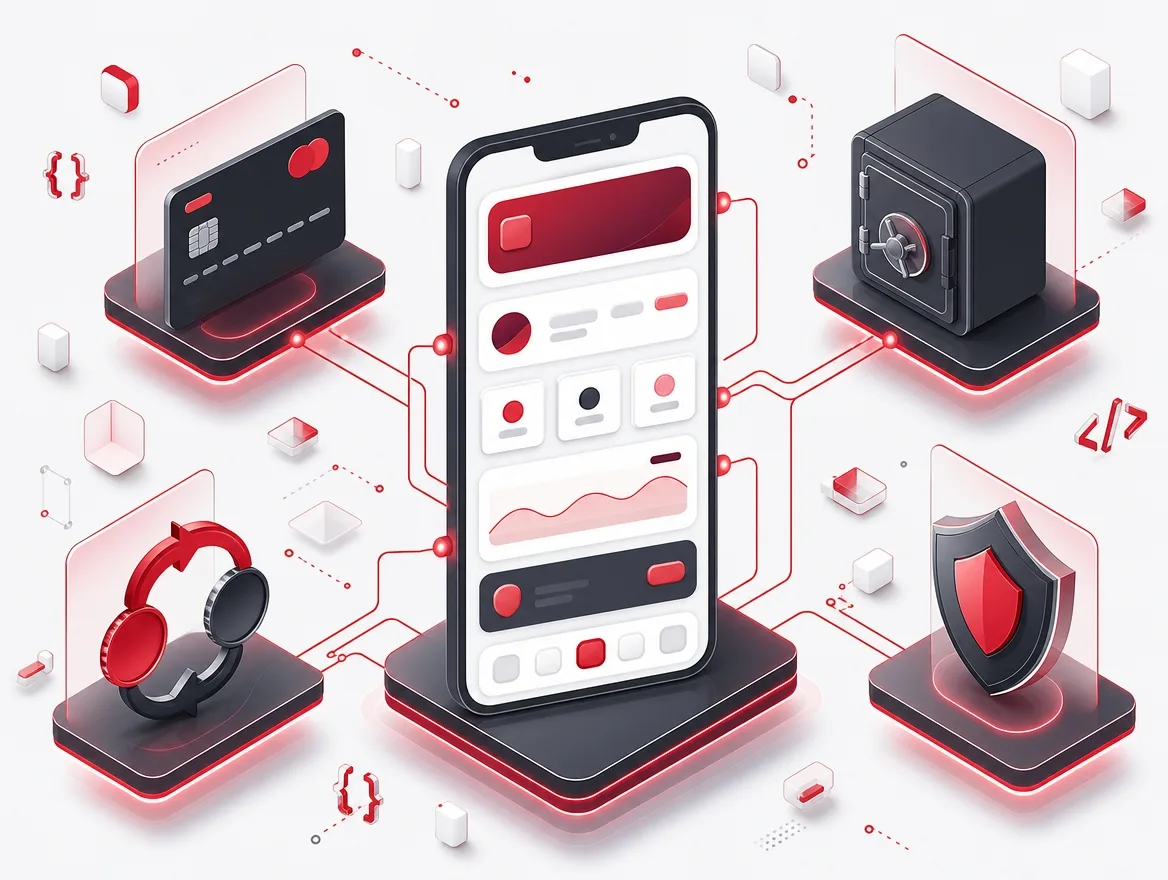
Digital banking platform linking a mobile app to card issuing, account vault, security, and customer service
ISO 9001:2015 Certified ISO 27001:2013 Certified

What Digital Banking Clients Say About AgileTech

Independent reviews from Clutch and DesignRush. Every review below is shown in full and links back to its source platform so you can confirm it yourself.

5.0
Jun 2025

“Their proactive communication, flexibility, and technical expertise stood out throughout the project.”

AgileTech Viet Nam used React Native to develop an iOS and Android app for a real estate platform. The team integrated the app with the client’s backend and implemented property search features. AgileTech Viet Nam’s high-quality work resulted in a 30% increase in user registrations and over 1,000 app downloads within the first month. The team delivered on time, provided regular updates, and responded to feedback. Their flexibility and proactive communication impressed the client.

30% more sign-ups and 1,000+ downloads in the first month

5.0
May 2026

“They followed a structured Agile approach with clearly defined milestones.”

AgileTech Viet Nam developed a web-based logistics management system for an automotive parts supplier. The team integrated the platform with third-party providers and built a real-time tracking dashboard. AgileTech Viet Nam’s work reduced manual processing by 55%, improved real-time shipment visibility, and increased operational efficiency across multiple departments. The team followed a structured Agile approach, communicated consistently, delivered on time, and was flexible.

Manual processing reduced by 55% with real-time shipment visibility

5.0
May 2026

“They were not just executing tasks but were genuinely invested in the product’s success.”

AgileTech Viet Nam developed an MVP for a digital solutions provider’s marketplace platform. They created the UI/UX design, developed the front- and backend, and integrated payment systems. AgileTech Viet Nam successfully launched the MVP on time, allowing the client to onboard 500 users within two months. The platform was stable with minimal issues. Moreover, the team was collaborative, flexible, quick to adapt to changing priorities, and genuinely invested in the project’s success.

MVP launched on time, 500 users onboarded within two months

5.0
May 2026

“Their ability to handle both high-level architecture and hands-on implementation is rare.”

An IT services company hired AgileTech Viet Nam to re-architect their enterprise SaaS platform. The team conducted a technical audit, designed a new architecture, migrated legacy data, and added API gateways. Thanks to AgileTech Viet Nam’s work, the client saw improvements in system scalability, platform uptime, and deployment time. The team followed the Agile methodology, communicated effectively, and was responsive to the client’s feedback. AgileTech Viet Nam helped the client make better decisions.

Improved scalability, uptime, and deployment time on an enterprise SaaS

5.0
May 2026

“Their balance between technical expertise and product thinking stood out.”

AgileTech Viet Nam developed an AI-powered analytics platform for an AI visibility and GEO solutions company. The platform featured real-time reporting dashboards and data processing pipelines. AgileTech Viet Nam’s work improved the client’s data processing efficiency and the accuracy of AI-generated insights. The platform was user-friendly and supported the client’s first large-scale deployments. AgileTech Viet Nam’s team was communicative, adaptive, and technically proficient.

Improved data-processing efficiency and AI insight accuracy

5.0
May 2026

“Their professionalism, responsiveness, and ability to execute efficiently made them feel like an operational partner.”

AgileTech Viet Nam optimized a workflow for a consulting firm. The team improved lead management processes and streamlined internal communication systems across multiple departments. AgileTech Viet Nam’s work improved the client’s operations, customer communication process, and overall workflow efficiency. The team was strategic and reliable. Moreover, AgileTech Viet Nam worked closely with the client to understand their business objectives and recommend solutions.

5.0
May 2026

“They were flexible in accommodating evolving business needs while still keeping the project on track.”

AgileTech Viet Nam developed a digital platform for a real estate firm. They designed the UI/UX, implemented advanced search and filtering functionalities, integrated dashboards, and automated reporting tools. The platform improved operational efficiency, business performance, lead conversion rates, and customer responsiveness. AgileTech Viet Nam implemented a well-structured project management approach, meeting timelines and responding to feedback with flexibility. Their tailored solutions stood out.

Improved efficiency, business performance, and lead conversion

5.0
Mar 2026

“The team demonstrated strong professionalism, reliability, and a proactive approach throughout the project.”

AgileTech Viet Nam developed a scalable engineering workflow system for an ICT company. The goal was to streamline internal processes, improve cross-team visibility, and enhance coordination. The system significantly improved operational efficiency by reducing manual processes and increasing transparency across teams for the client. AgileTech Viet Nam set clear milestones and provided regular updates to ensure everyone remained in sync. Their professionalism and reliability stood out.

Scalable engineering workflow system with fewer manual processes

4.5
Apr 2021

“They are incredible to work with and are truly passionate about technology and our concept.”

AgileTech Viet Nam provides mobile app development services for a social media startup. They are building the app using Node.js and Flutter. With the ongoing partnership, AgileTech Viet Nam’s passion has impressed the client so far. The team is truly into technology, and their concept makes the client feel confident about the project’s continuous success.

4.0
Jun 2019

“I was impressed with the flow of the project.”

AgileTech Viet Nam developed a mobile app from scratch. After helping with scoping and objective formation, AgileTech created design mockups and developed the full iOS and Android solutions. Valuable user data is being gathered in ongoing beta tests, which will soon lead to growth and expansion opportunities. AgileTech Viet Nam provided consistent communication and established a smooth workflow. Issues were raised proactively, allowing fixes to come earlier in the process.

5.0
Nov 2024

“AgileTech excelled in supporting our project from initial mock-ups through to the final delivery on the App Store.”

AgileTech excelled in supporting our project from initial mock-ups through to the final delivery on the App Store, incorporating data analytics that we could easily share with our customers. The scope of work included mock-up creation, UI/UX design, interactive prototyping, app development, rigorous testing, and setting up a secure production environment on AWS, culminating in the apps release on both iOS and Android platforms.

5.0
Nov 2024

“The platform has greatly improved our operational efficiency, and we wholeheartedly recommend AgileTech.”

Working with AgileTech has been an amazing experience, especially when it comes to creating a personalized e-learning program for our IT services business. We were pleasantly surprised by how adaptable and scalable the platform developed by the AgileTech Team was. Their proficiency with user-friendly course administration and community participation technologies enabled us to provide a thorough instructional resource catered to our customers’ particular requirements. The platform has greatly improved our operational efficiency, and we are amazed by its capacity to manage heavy traffic with ease and offer comprehensive reporting and analytics. The platform remained successful and user-friendly because of the team’s dedication to continuous support and their quick response to criticism. For any organization looking to create innovative and reliable digital solutions, we wholeheartedly recommend AgileTech as a partner.

Personalized e-learning platform that handles heavy traffic

5.0
Nov 2024

“They used a potent tech stack including PHP, React, and AWS to guarantee perfect scalability and zero downtime.”

AgileTech provided a superb Learning Management System (LMS) that creatively and precisely addressed the intricate needs of our organization. Within a scalable, completely customizable platform, the LMS made it possible to create comprehensive courses, administer student tests, engage the community, and obtain real-time data insights. AgileTech’s modular and agile approach made sure that every component, from the user-friendly course builder to the sophisticated analytics and communication tools, was customized to meet our demands despite the difficulties of developing such a feature-rich system. In order to guarantee perfect scalability and zero downtime, even with high user concurrency, AgileTech used a potent tech stack that included PHP, React, and AWS. Their post-launch assistance, which included frequent training sessions and upgrades, gave our staff the means to fully use the LMS’s potential. This project was a testament to AgileTech’s technical skill, rapid deployment, and dedication, making them an outstanding choice for educational technology development.

Feature-rich LMS with course builder, analytics, and comms

5.0
Nov 2024

“We saw huge cost savings and optimized stock levels, so we consider AgileTech a partner in our company transformation.”

AgileTech created a working Supply Chain Management (SCM) system that has helped our supermarket chain simplify operations across inventory management, demand forecasting and logistics. They integrated our existing systems, automated inventory and logistics and gave us robust demand forecasting with AI, we saw huge cost savings and optimized stock levels. And they continued to deliver on quality post launch with regular updates and training sessions, so we consider AgileTech as a partner in our company transformation.

AI-driven demand forecasting across inventory and logistics

5.0
Nov 2024

“Since we launched our new site we’ve seen a significant increase in traffic and sales, which proves their work is effective.”

We’ve had an amazing experience with AgileTech for our eCommerce platform. The team worked with us to build an user friendly online store that met all our business needs. Their eCommerce development expertise was evident from the start as they shared valuable insights on how to maximize sales. The AgileTech team are not only talented but also care about their clients success. Since we launched our new site we’ve seen a significant increase in traffic and sales which proves their work is effective.

5.0
Nov 2024

“Their attention to detail in web development and UI/UX design has given us a site that looks great and works flawlessly.”

Working with AgileTech has been a game changer for us. We wanted a modern and responsive website and AgileTech delivered more than we expected. The team was super collaborative and involved us in every step of the process. Their attention to detail in web development and UI/UX design has given us a site that looks great and works flawlessly. The AgileTech team members are not only talented professionals but also great communicators, so we could share our vision and ideas easily. They were so committed to our success and the end result has increased our user engagement and satisfaction so much.

What a Digital Banking Platform Includes

Six areas define the platform. The customer facing three are what gets demonstrated; the operational three are what determines whether the bank can actually run on it.

Onboarding, KYC, and Customer Lifecycle

Identity capture, document verification, liveness and selfie matching, sanctions and politically exposed person screening, and risk based approval routing. Onboarding is where most applicants are lost, so each step is measured and each failure is recoverable rather than sending the applicant back to the beginning. The lifecycle continues after account opening with periodic review, re verification, and change of circumstance handling.

Accounts, Balances, and Statements

Account structures, available against cleared balances, holds and pending items, interest accrual where applicable, and statements that reconcile exactly to the movements behind them. Available balance and ledger balance are different numbers, and presenting them clearly prevents a large share of support contacts. Statements are generated from ledger data, never assembled separately, so they cannot drift from the record.

Payments and Transfers

Internal transfers, domestic scheme payments, standing orders, scheduled and recurring transfers, beneficiary management, and cross border where relevant. Each has its own cut off times, failure modes, and reversal rules. Limits, cooling off periods on new beneficiaries, and confirmation of payee style checks reduce both fraud and mistaken payments, and belong in the design rather than added after an incident.

Cards and Wallet Provisioning

Card issuing through your provider, activation, PIN management, freeze and unfreeze, spending controls, virtual cards, and provisioning into Apple Pay and Google Pay. Card authorisations arrive in real time and must be reflected in available balance immediately, then reconciled when they settle days later. The gap between authorisation and settlement is a frequent source of customer confusion and is handled explicitly.

Back Office and Operations Console

The tooling your own staff use: customer search, case handling, document review, manual verification, limit overrides, transaction investigation, and dispute handling. Every action is permissioned, logged, and attributable to a named user, with four eyes approval on anything that affects money or risk posture. This module is consistently underbuilt, and the result is an operations team that raises engineering tickets for routine work.

Notifications, Support, and Audit Trail

Real time transaction alerts, security notifications on device and credential changes, in app messaging, and a complete audit trail across customer and staff actions. The audit trail is not a log file. It is a queryable, retained record built to answer a regulator or an investigator asking what happened to a specific customer on a specific day, years later.

Integration Surface

A digital banking platform is defined by what it connects to. These integrations are planned together, because the core banking system usually constrains the others.

  • Accounts, balances, postings, and customer records, whether through a modern API or an older batch and file based interface that dictates how current your data can be.
  • Domestic instant and batch schemes, direct debit, and cross border corridors, each with distinct cut offs, settlement cycles, and return or recall handling.
  • Issuer processor APIs for card creation, authorisation streams, controls, and settlement files, plus wallet provisioning flows for Apple Pay and Google Pay.
  • Document authentication, biometric matching, database checks, and address verification, with results retained as evidence rather than as a pass or fail flag.
  • Sanctions, politically exposed person, and adverse media screening at onboarding and on an ongoing basis, plus transaction monitoring with alert and case workflow.
  • Bureau enquiries and account aggregation for affordability and income verification, subject to consent capture and permission scope you can evidence later.
  • Device fingerprinting, behavioural signals, and step up authentication triggered by risk rather than applied uniformly to every action.
  • Extracts to your reporting function and warehouse, produced from the same records the customer sees, so internal and external numbers cannot disagree.

Technical and Governance Decisions

The engineering decisions that determine whether a digital banking development project holds up in production, set out before the build starts.

Who Owns the Balance

This is the first architectural question and it determines the shape of the whole system. If the core banking platform owns balances, then your platform is a consistent, well cached view over it, and the hard problems are latency, staleness, and what to display when the core is unavailable. If your platform owns balances, you are building a ledger and taking on reconciliation with the core, which is a substantially larger commitment.

Security, Authentication, and Consent

Strong customer authentication, device binding, secure element or keystore backed credentials, and step up challenges on risk relevant actions are baseline. Session handling assumes a hostile device: jailbreak and root detection, certificate pinning, and no sensitive data cached in the clear. Credential and device changes trigger notification and cooling off, because account takeover usually begins there.

Change Control in a Regulated Environment

Banking software changes under supervision. That means segregated environments, release approval with a named accountable owner, evidence of testing retained against each release, segregation of duties between those who write and those who deploy, and the ability to reconstruct exactly what code was running when an incident occurred.

Typical Stack

Conservative by intent. In banking, the ability to hire someone who can maintain the system in five years outweighs any benefit from a fashionable framework.

  • Native iOS and Android where security and platform integration matter most, React Native or Flutter where a single team and faster iteration are the priority, and React for web and back office consoles.
  • Java, Kotlin, or Go for services on the transaction path, with clear service boundaries around core integration, payments, cards, and onboarding so each can be tested and released independently.
  • PostgreSQL for platform data with strict constraints and full audit tables, Redis for session and rate limiting, an event stream for authorisation and notification flows, and a separate warehouse so reporting never competes with customer traffic.
  • Infrastructure as code, secrets in a managed vault, structured logging with personal and card data excluded by construction, and alerting on business signals such as onboarding completion and transfer failure rate, not only on infrastructure health.

Who This Is For

Established Banks Modernising the Front End

The core works, the branch network works, and the mobile experience is the weak point. Here the work is a modern customer experience and a capable operations console over an existing core, often through an integration layer that shields the new build from the core's older interfaces. The main risks are the core's data freshness and its throughput limits, which we test early rather than discover at launch.

Neobanks and Licensed Challengers

You hold or are obtaining a licence and are building the proposition from scratch, usually on a banking as a service or core provider rather than building a core yourself. Speed matters, but so does the evidence your regulator will ask for. We build the audit trail, reporting, and control artefacts as part of delivery, because retrofitting them under supervisory pressure is far more expensive.

Credit Unions, Cooperatives, and Regional Institutions

Smaller institutions need the same regulatory rigour with a fraction of the budget and no internal platform team. The sensible approach is a narrow, well built product set rather than a broad imitation of a large bank's app, plus operations tooling that lets a small team handle exceptions without engineering involvement. Total cost of ownership after handover is the governing constraint.

Embedded Finance and Banking as a Service Consumers

You are not a bank and do not intend to be one, but your product needs accounts, balances, or cards through a licensed partner. The distinctive work is the boundary: what your platform is responsible for, what the partner is responsible for, and how you reconcile against them. Getting that boundary explicit and evidenced is most of the risk in these programmes.

How We Deliver a Digital Banking Platform

A sequence that proves the ledger and reconciliation before launch, because money movement cannot be paused for a release.

AgileTech software delivery process A six step delivery workflow: requirement analysis, planning and design, development, quality assurance, deployment, then maintenance and support. 01 RequirementAnalysis 02 Planning &Design 03 Development 04 QualityAssurance 05 Deployment 06 Maintenance &Support
01

Establish scope and the ownership boundary

We determine which system owns balances, what the core can and cannot do, which functions are yours and which are your provider's, and what your regulatory obligations require the software to evidence. This produces a boundary document that prevents the most common failure, where a front end project silently becomes a core banking project.

02

Test the core integration before designing over it

Before designing screens we exercise the core's actual interfaces: latency under load, data freshness, error behaviour, throughput ceilings, and maintenance windows. These findings routinely change the design. Discovering a batch only interface after committing to real time balances is a costly and entirely avoidable surprise.

03

Build onboarding and the operations console together

Onboarding is built with the back office tooling that supports it, because manual review is part of onboarding, not an afterthought. We instrument every step to see where applicants drop out, and we ensure failed verifications can be resumed rather than restarted, which is the single largest recoverable loss in most onboarding funnels.

04

Add accounts, transfers, and cards incrementally

Each capability ships behind a flag with its full lifecycle, including failures, reversals, and the authorisation to settlement gap on cards. Limits, beneficiary controls, and step up authentication are included from the first release rather than added after a fraud loss makes them urgent.

05

Prove controls, reporting, and audit before launch

We validate that the audit trail answers real questions, that reporting reconciles to the core, that permissions and four eyes approvals hold under attempted misuse, and that incident runbooks work when rehearsed. Your risk and audit functions review this before any customer is onboarded, not after.

06

Launch by cohort and hand over properly

Live access starts with staff, then a small customer cohort, then widening groups, monitored on onboarding completion, transfer success, authorisation latency, and support contact reasons. Handover includes runbooks for core outage, scheme failure, card processor incidents, and suspected account takeover, along with the documentation your team needs to own this without us.

Frequently Asked Questions

Can you build a core banking system?

We can build ledger and account engines, and we have done so in other financial contexts, but for a bank we will usually advise against it. A core is a decade long commitment covering products, interest, fees, regulatory reporting, and migration of existing accounts. Buying or licensing a core and investing your effort in the experience and operations layer is almost always the better allocation. If you genuinely need a custom ledger, we will scope it honestly rather than understate it.

Is AgileTech a licensed bank or payment institution?

No. We are a software engineering company. We hold ISO 9001:2015 and ISO 27001:2013 certifications and no financial services licence of any kind. We do not hold customer funds and we are not party to your regulatory permissions. Licensing and supervision are yours, and we build to the requirements your licence imposes.

How long does a digital banking platform take?

A focused product set of onboarding, accounts, transfers, and a card over an existing core is typically several months to a first cohort launch, with the operations console and reporting being the parts most often underestimated. A broad proposition across multiple products and markets is a multi year programme delivered in stages. We give a range only after testing your core integration, since that determines much of the effort.

What does the core banking integration usually constrain?

Data freshness above all. Many cores expose balances through batch processes or interfaces with meaningful latency, which decides whether you can show a true real time balance or must display a clearly labelled recent one. Throughput limits, maintenance windows, and the absence of certain operations in the API are the other frequent constraints. We measure all of these before design rather than assuming them.

How do you handle strong customer authentication?

Authentication is risk based rather than uniform. Low risk actions proceed with an established session and device binding, while payments to new beneficiaries, limit changes, credential resets, and device additions require step up. Credentials are held in the platform secure element or keystore, never in application storage, and every security relevant change notifies the customer through a channel the change itself did not alter.

Can our operations team work without developer help?

That is the purpose of the operations console, and it is why we build it alongside the customer facing product rather than afterwards. Customer search, document review, case handling, transaction investigation, limit overrides, and dispute steps are all staff operable with permissions and audit. When an operations team needs a developer for routine exceptions, the platform is incomplete.

How is the audit trail different from logging?

Logs are for engineers diagnosing systems and are typically retained for weeks. An audit trail is a retained, queryable business record of who did what to which customer record and when, including staff actions and approvals, kept for the period your obligations require. It has to answer a specific question about a specific customer years later, which log aggregation is not built to do.

Do you work with banking as a service providers?

Yes, and it is a common arrangement. The critical work is the responsibility boundary: which system is authoritative for balances, how you reconcile against the provider daily, what happens during a provider incident, and what evidence you hold independently of them. Programmes on these providers rarely fail on the integration itself; they fail on reconciliation and on unclear responsibility.

How do you approach migrating existing customers?

Carefully and in stages, never as a single event. Migration is planned as its own workstream with rehearsals against production shaped data, reconciliation at every stage, a defined rollback position, and cohort by cohort movement with both systems reconciled during the overlap. We also plan the customer communication, since a migration that is technically clean can still fail if people are surprised by it.

What about regulatory reporting?

We build extracts and reports from the same authoritative records that customers and staff see, so internal and regulatory numbers cannot disagree. The definitions and the submission obligations are yours, since they depend on your licence and jurisdiction. We ask your compliance function to specify requirements early, because reporting needs frequently affect the data model and are expensive to add later.

What do you need from us to start?

Your licence position and regulatory obligations, your core banking or provider arrangement with access to its documentation and a sandbox, the product set and markets you intend to serve, expected customer and transaction volumes, and your internal control and release requirements. Access to the core sandbox early is the single most useful thing you can provide, because it removes the largest unknown.

Trusted and Recognized

Independent directories, certification bodies, and award programs that have assessed our work. Each badge links to its source or names the standard behind it, so every claim on this page can be checked at first hand.

Top Mobile App Developers - ClutchTop Software Development Company - GoodFirmsReliable Company - ExtractISO 9001:2015 certifiedISO 27001:2013 certifiedTechBehemoths Awards - Mobile App Development

Ready to Discuss Your Digital Banking Platform Project?

Tell us your licence position, your core banking or provider arrangement, and which system you expect to own balances. We will come back with a straight assessment of build versus integrate, a delivery sequence, and an estimate within 48 hours.

AgileTech Vietnam team collaboration

Consult Industry Specialists

Connect with us today to discuss your software development needs and discover how our tailored outsourcing services can propel your business forward.

Start a conversation
AgileTech Vietnam team at the office

Cookie settings

Strictly necessary storage keeps the site working and remembers this choice. Everything else is off until you switch it on, wherever you are in the world. Only one optional category has anything behind it today: External content, which covers the Google map of our Hanoi office on the Contact page.

Wherever you are. We apply one standard to everyone: nothing outside strictly necessary storage runs until you allow it. That meets the EU and UK requirement for prior consent, the notification and consent requirements of Singapore's PDPA, and US state privacy law. You can withdraw or change your choice at any time, as easily as you gave it, from Cookie settings in the footer.

If you are in the United States. We do not sell your personal information and we do not share it for cross-context behavioural advertising, so there is nothing to opt out of. We still honour an opt-out preference signal from your browser: if your browser sends Global Privacy Control, the optional categories stay off without you having to do anything.

Full detail, including the name and lifetime of the one cookie we set, is in the Cookie Policy.