What healthcare software does AgileTech build?
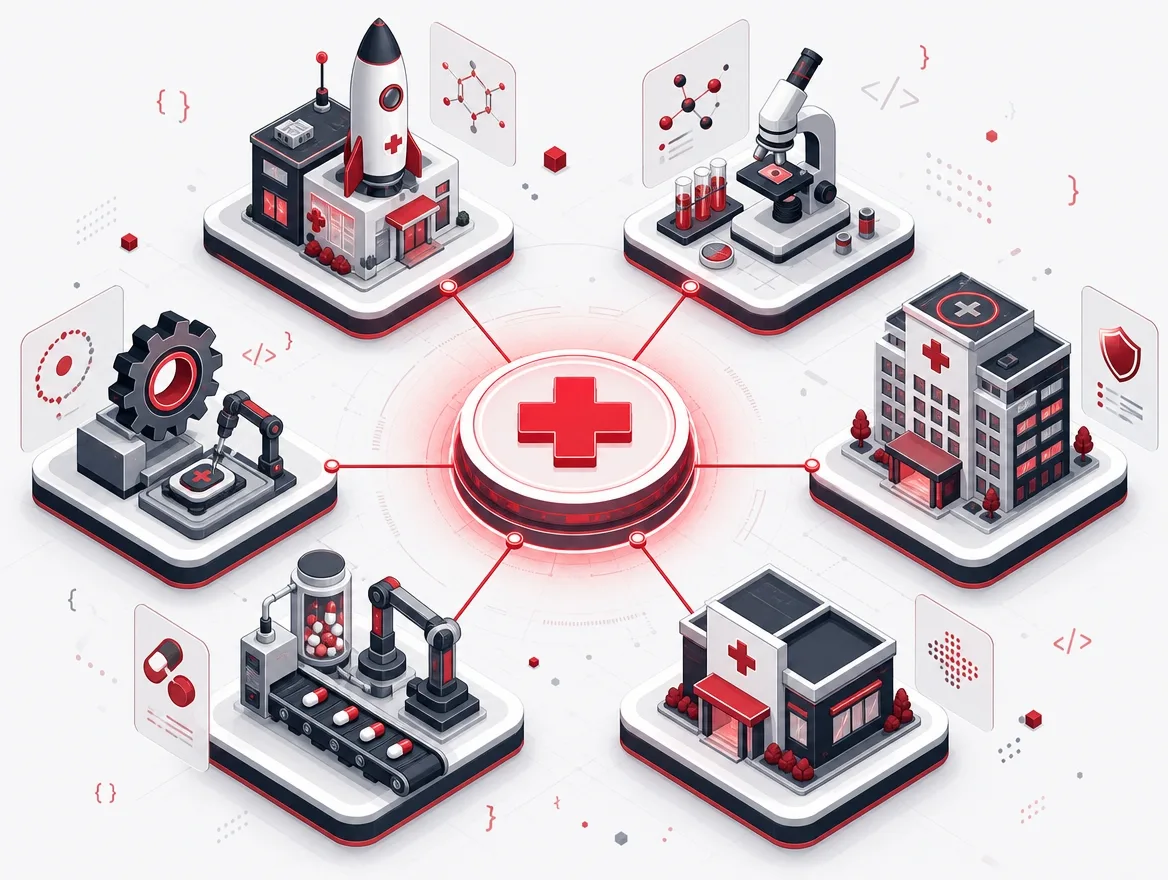
Five practice areas, each with its own page: EMR and EHR systems, telemedicine platforms, hospital management systems, patient engagement portals, and medical practice management software. Most engagements touch two or three, because a clinical record without a working schedule, or a portal without a record behind it, solves half a problem. Each page sets out the modules involved, what the system has to integrate with, the architectural decisions that determine whether it works, and how we sequence delivery in a live clinical setting.
Do you have delivered healthcare projects you can show us?
Our published case studies are in hospitality, and we will not present them as healthcare evidence. What we bring is 10+ years of software delivery, 300+ completed projects, and 200+ developers across mobile, web, cloud, and data engineering, alongside certified process and direct experience of the engineering problems these systems present: interoperability, audit, identity, consent, and integration with systems that were never designed to be integrated with. On a healthcare engagement we walk you through the architecture we would use, what we have built before in adjacent contexts, and what would be new, so you can assess the risk yourself rather than accept a claim.
Are you HIPAA compliant?
There is no such thing as a HIPAA-certified software vendor, so we do not describe ourselves as one, and any supplier who does is telling you something inaccurate. HIPAA obligations rest with the covered entity. Our role is to build to those obligations: encryption in transit and at rest, access control with audit logging, data minimisation, defined retention and deletion, breach detection, and a business associate agreement where one is required. Our information security management is certified to ISO 27001:2013 and our quality management to ISO 9001:2015, both of which are real, auditable certifications.
How do you handle interoperability with existing clinical systems?
By assessing the interfaces before quoting the build, because in healthcare the interface is usually the project. We work with HL7 v2 where that is what the incumbent speaks, FHIR where it is available and preferred, DICOM for imaging, and direct database or file integration where a vendor offers nothing better. The honest position is that a modern API is not always on offer, and where an interface has to be built or brokered first, that work leads the timeline and we say so at estimate stage.
Should we build custom software or buy an established product?
Frequently you should buy, and we will tell you when. Certified record systems and mature practice management products cover standard requirements well, and a vendor carrying the regulatory certification for a market is expensive to displace. Custom is defensible when your service model does not fit the standard shape, when integration and orchestration between products is the actual gap, when local regulation is poorly served by mainstream vendors, or when your scale makes per-seat licensing a strategic cost. The build-versus-buy assessment happens before scope is fixed, including when the outcome loses us the work.
Can you work alongside our existing record system rather than replacing it?
That is the more common engagement. Replacing a clinical record system is a large, high-risk programme, and most providers do not need one: they need capability the incumbent does not offer, delivered around it. Portals, telemedicine, departmental workflow, analytics, and coordination layers can all be built as additions that read from and write to the system of record through a review path, leaving the record itself authoritative and untouched.
How do you deploy without disrupting clinical care?
By sequencing so that clinicians never lose the ability to record and retrieve information. In practice that means piloting in one department or service, running in parallel where parallel running is feasible, migrating at boundaries that do not split an episode of care or a billing period, keeping the legacy system readable until nothing outstanding depends on it, and preparing rollback before go-live rather than after. Clinical continuity is a design constraint, not a launch-week concern.
How long does a healthcare software project take?
A focused first release is typically three to eight months depending on the capability, and each practice page gives its own honest range. The dominant variable is almost never the new software: it is the state of the interfaces around it and the governance decisions the project depends on, such as what a patient may see and when. Where clean interfaces and clear governance exist, delivery is fast. Where they do not, that work leads the timeline.
Who owns the clinical data and where is it hosted?
You own it. Hosting is determined by your jurisdiction's data residency requirements, which for health data are often stricter than for other sectors, and we design to them rather than defaulting to whichever region is convenient. We document what is stored, where, for how long, and under what legal basis, and we build export capability so you are never dependent on us to retrieve your own records.
What engagement models are available?
A dedicated development team for continuous product work, or staff augmentation to extend an in-house team with specific skills. Healthcare programmes usually suit a dedicated team, because the integration and domain knowledge accumulated in the first phase is expensive to rebuild in a new group. Share your requirements and we prepare a proposal within 48 hours covering team composition, sequence, timeline, and cost.