Global delivery from Hanoi, Vietnam ISO 9001:2015   ISO 27001:2013 hello@agiletech.vn (+84) 989 324 830

Marketplace Platform Development

A marketplace is two products in one platform: a buyer experience and a seller business. The storefront resembles ecommerce, but the difficult parts are the ones a single-seller store never encounters, namely onboarding sellers you do not control, governing a catalogue you do not own, and moving money that is not yours. We build marketplaces starting from those problems rather than from the shop window.

10+Years of Industry Expertise 200+Talented Developers 90%Customer Satisfaction Rate
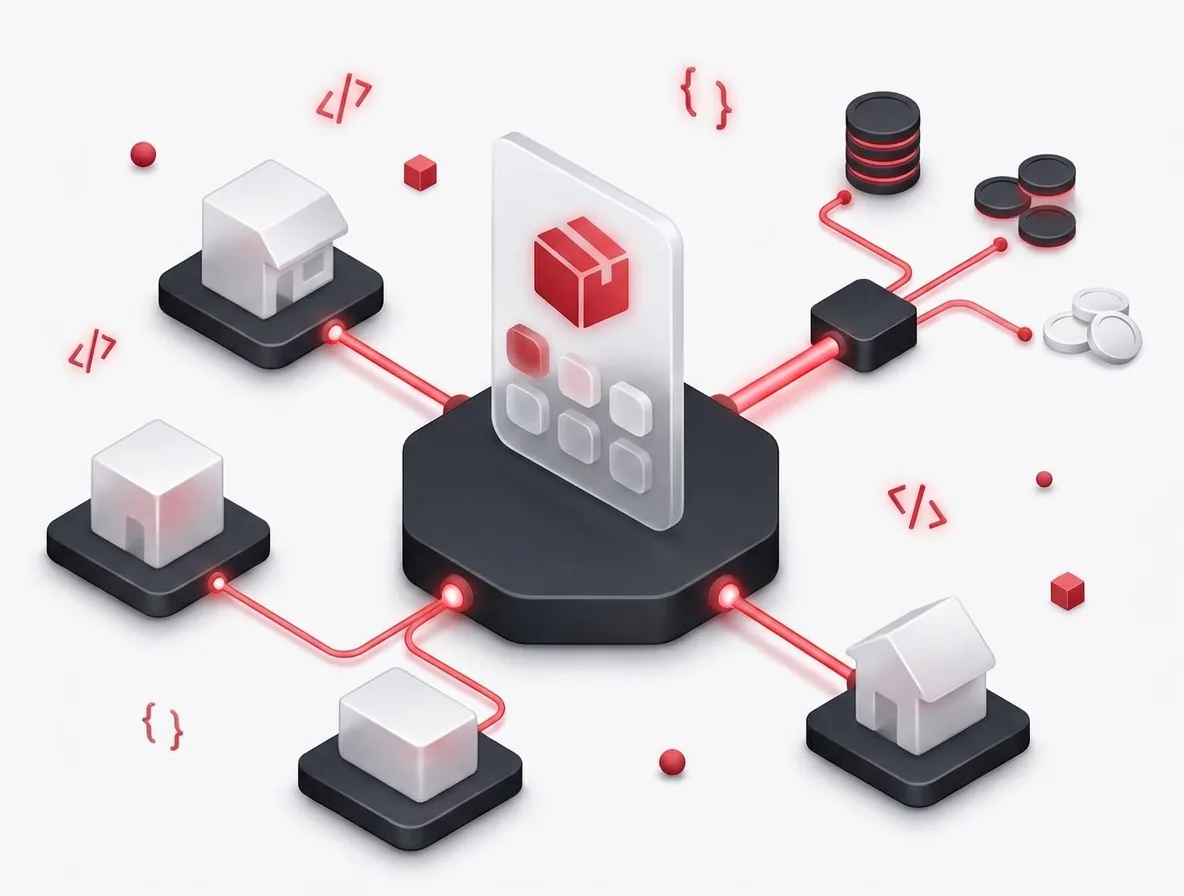
Multi-vendor marketplace connecting several sellers to one catalogue, checkout, and payout flow
ISO 9001:2015 Certified ISO 27001:2013 Certified

What Marketplace Platform Clients Say About AgileTech

Independent reviews from Clutch and DesignRush. Every review below is shown in full and links back to its source platform so you can confirm it yourself.

5.0
Nov 2024

“Since we launched our new site we’ve seen a significant increase in traffic and sales, which proves their work is effective.”

We’ve had an amazing experience with AgileTech for our eCommerce platform. The team worked with us to build an user friendly online store that met all our business needs. Their eCommerce development expertise was evident from the start as they shared valuable insights on how to maximize sales. The AgileTech team are not only talented but also care about their clients success. Since we launched our new site we’ve seen a significant increase in traffic and sales which proves their work is effective.

5.0
May 2026

“They were not just executing tasks but were genuinely invested in the product’s success.”

AgileTech Viet Nam developed an MVP for a digital solutions provider’s marketplace platform. They created the UI/UX design, developed the front- and backend, and integrated payment systems. AgileTech Viet Nam successfully launched the MVP on time, allowing the client to onboard 500 users within two months. The platform was stable with minimal issues. Moreover, the team was collaborative, flexible, quick to adapt to changing priorities, and genuinely invested in the project’s success.

MVP launched on time, 500 users onboarded within two months

5.0
Nov 2024

“We saw huge cost savings and optimized stock levels, so we consider AgileTech a partner in our company transformation.”

AgileTech created a working Supply Chain Management (SCM) system that has helped our supermarket chain simplify operations across inventory management, demand forecasting and logistics. They integrated our existing systems, automated inventory and logistics and gave us robust demand forecasting with AI, we saw huge cost savings and optimized stock levels. And they continued to deliver on quality post launch with regular updates and training sessions, so we consider AgileTech as a partner in our company transformation.

AI-driven demand forecasting across inventory and logistics

5.0
Jun 2025

“Their proactive communication, flexibility, and technical expertise stood out throughout the project.”

AgileTech Viet Nam used React Native to develop an iOS and Android app for a real estate platform. The team integrated the app with the client’s backend and implemented property search features. AgileTech Viet Nam’s high-quality work resulted in a 30% increase in user registrations and over 1,000 app downloads within the first month. The team delivered on time, provided regular updates, and responded to feedback. Their flexibility and proactive communication impressed the client.

30% more sign-ups and 1,000+ downloads in the first month

5.0
May 2026

“They followed a structured Agile approach with clearly defined milestones.”

AgileTech Viet Nam developed a web-based logistics management system for an automotive parts supplier. The team integrated the platform with third-party providers and built a real-time tracking dashboard. AgileTech Viet Nam’s work reduced manual processing by 55%, improved real-time shipment visibility, and increased operational efficiency across multiple departments. The team followed a structured Agile approach, communicated consistently, delivered on time, and was flexible.

Manual processing reduced by 55% with real-time shipment visibility

5.0
May 2026

“Their ability to handle both high-level architecture and hands-on implementation is rare.”

An IT services company hired AgileTech Viet Nam to re-architect their enterprise SaaS platform. The team conducted a technical audit, designed a new architecture, migrated legacy data, and added API gateways. Thanks to AgileTech Viet Nam’s work, the client saw improvements in system scalability, platform uptime, and deployment time. The team followed the Agile methodology, communicated effectively, and was responsive to the client’s feedback. AgileTech Viet Nam helped the client make better decisions.

Improved scalability, uptime, and deployment time on an enterprise SaaS

5.0
May 2026

“Their balance between technical expertise and product thinking stood out.”

AgileTech Viet Nam developed an AI-powered analytics platform for an AI visibility and GEO solutions company. The platform featured real-time reporting dashboards and data processing pipelines. AgileTech Viet Nam’s work improved the client’s data processing efficiency and the accuracy of AI-generated insights. The platform was user-friendly and supported the client’s first large-scale deployments. AgileTech Viet Nam’s team was communicative, adaptive, and technically proficient.

Improved data-processing efficiency and AI insight accuracy

5.0
May 2026

“They were flexible in accommodating evolving business needs while still keeping the project on track.”

AgileTech Viet Nam developed a digital platform for a real estate firm. They designed the UI/UX, implemented advanced search and filtering functionalities, integrated dashboards, and automated reporting tools. The platform improved operational efficiency, business performance, lead conversion rates, and customer responsiveness. AgileTech Viet Nam implemented a well-structured project management approach, meeting timelines and responding to feedback with flexibility. Their tailored solutions stood out.

Improved efficiency, business performance, and lead conversion

5.0
Mar 2026

“The team demonstrated strong professionalism, reliability, and a proactive approach throughout the project.”

AgileTech Viet Nam developed a scalable engineering workflow system for an ICT company. The goal was to streamline internal processes, improve cross-team visibility, and enhance coordination. The system significantly improved operational efficiency by reducing manual processes and increasing transparency across teams for the client. AgileTech Viet Nam set clear milestones and provided regular updates to ensure everyone remained in sync. Their professionalism and reliability stood out.

Scalable engineering workflow system with fewer manual processes

5.0
Nov 2024

“The platform has greatly improved our operational efficiency, and we wholeheartedly recommend AgileTech.”

Working with AgileTech has been an amazing experience, especially when it comes to creating a personalized e-learning program for our IT services business. We were pleasantly surprised by how adaptable and scalable the platform developed by the AgileTech Team was. Their proficiency with user-friendly course administration and community participation technologies enabled us to provide a thorough instructional resource catered to our customers’ particular requirements. The platform has greatly improved our operational efficiency, and we are amazed by its capacity to manage heavy traffic with ease and offer comprehensive reporting and analytics. The platform remained successful and user-friendly because of the team’s dedication to continuous support and their quick response to criticism. For any organization looking to create innovative and reliable digital solutions, we wholeheartedly recommend AgileTech as a partner.

Personalized e-learning platform that handles heavy traffic

5.0
Nov 2024

“They used a potent tech stack including PHP, React, and AWS to guarantee perfect scalability and zero downtime.”

AgileTech provided a superb Learning Management System (LMS) that creatively and precisely addressed the intricate needs of our organization. Within a scalable, completely customizable platform, the LMS made it possible to create comprehensive courses, administer student tests, engage the community, and obtain real-time data insights. AgileTech’s modular and agile approach made sure that every component, from the user-friendly course builder to the sophisticated analytics and communication tools, was customized to meet our demands despite the difficulties of developing such a feature-rich system. In order to guarantee perfect scalability and zero downtime, even with high user concurrency, AgileTech used a potent tech stack that included PHP, React, and AWS. Their post-launch assistance, which included frequent training sessions and upgrades, gave our staff the means to fully use the LMS’s potential. This project was a testament to AgileTech’s technical skill, rapid deployment, and dedication, making them an outstanding choice for educational technology development.

Feature-rich LMS with course builder, analytics, and comms

5.0
May 2026

“Their professionalism, responsiveness, and ability to execute efficiently made them feel like an operational partner.”

AgileTech Viet Nam optimized a workflow for a consulting firm. The team improved lead management processes and streamlined internal communication systems across multiple departments. AgileTech Viet Nam’s work improved the client’s operations, customer communication process, and overall workflow efficiency. The team was strategic and reliable. Moreover, AgileTech Viet Nam worked closely with the client to understand their business objectives and recommend solutions.

4.5
Apr 2021

“They are incredible to work with and are truly passionate about technology and our concept.”

AgileTech Viet Nam provides mobile app development services for a social media startup. They are building the app using Node.js and Flutter. With the ongoing partnership, AgileTech Viet Nam’s passion has impressed the client so far. The team is truly into technology, and their concept makes the client feel confident about the project’s continuous success.

4.0
Jun 2019

“I was impressed with the flow of the project.”

AgileTech Viet Nam developed a mobile app from scratch. After helping with scoping and objective formation, AgileTech created design mockups and developed the full iOS and Android solutions. Valuable user data is being gathered in ongoing beta tests, which will soon lead to growth and expansion opportunities. AgileTech Viet Nam provided consistent communication and established a smooth workflow. Issues were raised proactively, allowing fixes to come earlier in the process.

5.0
Nov 2024

“AgileTech excelled in supporting our project from initial mock-ups through to the final delivery on the App Store.”

AgileTech excelled in supporting our project from initial mock-ups through to the final delivery on the App Store, incorporating data analytics that we could easily share with our customers. The scope of work included mock-up creation, UI/UX design, interactive prototyping, app development, rigorous testing, and setting up a secure production environment on AWS, culminating in the apps release on both iOS and Android platforms.

5.0
Nov 2024

“Their attention to detail in web development and UI/UX design has given us a site that looks great and works flawlessly.”

Working with AgileTech has been a game changer for us. We wanted a modern and responsive website and AgileTech delivered more than we expected. The team was super collaborative and involved us in every step of the process. Their attention to detail in web development and UI/UX design has given us a site that looks great and works flawlessly. The AgileTech team members are not only talented professionals but also great communicators, so we could share our vision and ideas easily. They were so committed to our success and the end result has increased our user engagement and satisfaction so much.

What a Marketplace Platform Contains

The capability areas that define scope. The buyer storefront is one of six, and rarely the one that decides whether the platform works.

Seller Onboarding and Verification

Application and identity verification, business and tax documentation, bank account validation for payouts, agreement acceptance with versioning, tiering, and suspension or offboarding, so a seller's status is a governed state rather than a manual note.

Catalogue Governance and Moderation

Controlled taxonomy with required attributes per category, image standards enforced at upload, duplicate detection and product matching so many sellers can offer one product, policy and prohibited-item checks, and a moderation queue with genuine reviewer tooling.

Buyer Storefront and Multi-Seller Basket

Search and discovery across sellers, offer comparison on one product, seller reputation surfaced at the decision point, and a basket that splits cleanly into multiple shipments with separate delivery promises while remaining one payment for the buyer.

Split Payments, Escrow, and Payouts

One buyer payment split between sellers and your commission through a marketplace payment provider, funds held under defined release rules, scheduled payouts with per-seller statements, and refunds that reverse the correct share including commission treatment.

Order Routing and Fulfilment Tracking

Order split and routing to the right seller or fulfilment location, acceptance and dispatch deadlines, tracking ingestion across carriers, late and non-dispatch handling, and buyer-facing status that stays truthful when one shipment of three is delayed.

Ratings, Disputes, and Trust Operations

Verified-purchase reviews with abuse controls, seller performance metrics that drive visibility and tiering, structured dispute intake with evidence from both parties, platform arbitration with response deadlines, and fraud and abuse monitoring on both sides.

Systems a Marketplace Connects To

A marketplace is an intermediary, so it integrates in two directions at once: outward to buyers and payment rails, inward to sellers and their own systems.

  • Marketplace payment providers: Stripe Connect, Adyen for Platforms, or a regional equivalent handling sub-accounts, splits, holds, and payouts, so you are not holding other people's funds and taking on the licensing that implies.
  • Identity and business verification: KYC and KYB providers for seller onboarding, plus sanctions and watchlist screening where your jurisdiction and payment provider require it.
  • Seller systems and feeds: API, feed, and spreadsheet ingestion of listings, prices, and stock, because sellers range from an enterprise with an ERP to a small business with a laptop, and both need a workable path.
  • Carriers and logistics: label generation, tracking ingestion, and returns, whether the seller ships directly, you ship on their behalf, or a 3PL fulfils under your brand.
  • Tax calculation and invoicing: marketplace tax obligations differ from retail and vary by jurisdiction, including deemed supplier rules, so tax handling is confirmed per market before design.
  • Search infrastructure: a dedicated search service, since marketplace catalogues grow unpredictably and relevance across competing offers is a harder problem than searching your own range.
  • Finance and reconciliation: commission revenue, payout liabilities, refund adjustments, and settlement postings in a form your finance team can reconcile against the payment provider's records.
  • Notification and messaging: buyer-seller messaging with moderation, transactional notification across email and mobile, and audit retention on communications that may be cited in a dispute.

Technical Considerations for Marketplace Platforms

The engineering decisions that determine whether a marketplace development project holds up in production, set out before the build starts.

Money movement is designed first

Every marketplace we have assessed that ran into trouble late did so around funds: a refund that could not be reclaimed from a paid-out seller, commission calculated inconsistently across categories, or statements sellers disputed and finance could not defend. The flow of funds, the hold and release rules, the commission model, and the refund and clawback mechanics are specified before the storefront, because they determine the data model and are the most expensive thing to change afterwards.

The seller is a user, not a data source

Marketplaces fail on the supply side more often than the demand side, and poor seller tooling is a direct cause. Listing must be fast for a seller with fifty products and automatable for a seller with fifty thousand. Order notification must reach someone who will act. Statements must be self-explanatory. If sellers need your support team to complete routine tasks, your operational cost scales with supply and your growth stalls.

Trust is a system, not a policy page

Buyers extend credit to your brand, not to the seller. That means verified-purchase reviews resistant to manipulation, seller performance measured on dispatch time, cancellation rate, and dispute rate, consequences applied automatically through visibility and tiering, and fraud monitoring on both sides. Without enforcement mechanics, quality drifts downward and no amount of marketing repairs it.

Stack choices we typically recommend

PostgreSQL for orders, ledgers, and payout records where transactional integrity is essential, with an append-only financial event log for every money movement. Backend services in Node.js, Python, or Java, split so catalogue ingestion, order routing, and settlement scale independently. A dedicated search service for cross-seller relevance. Message queuing for feed ingestion and payout batches, idempotent by design because feeds and webhooks retry. React or Next.js front ends with server rendering for indexability, and AWS or Azure hosting.

  • Regulatory position: handling funds on behalf of others carries licensing consequences in most jurisdictions, which is why a marketplace payment provider is the default recommendation rather than a custom wallet.
  • Tax obligations: marketplace facilitator and deemed supplier rules differ by market and can place collection duties on you rather than the seller, so they are confirmed per jurisdiction before design.
  • Data separation: sellers must see their own data and never another seller's, enforced at the query layer rather than in the interface, and verified by test rather than assumed.
  • Financial auditability: every split, hold, payout, refund, and adjustment recorded immutably and attributable, since seller disputes and audits are answered from this log.

Who This Is For

Retailers opening their catalogue to third-party sellers

Extending range without buying stock is the most common motivation, and the most common underestimate. The storefront already exists; what is missing is seller onboarding, catalogue governance, split settlement, and dispute handling.

Distributors and wholesalers building a B2B marketplace

Trade buyers bring account-based pricing, credit terms, approval workflows, and quotation alongside marketplace mechanics. The model is the same; the payment, pricing, and permission requirements are considerably more involved.

Operators of category or regional marketplaces

Focused marketplaces compete on curation, category expertise, and local payment and delivery methods rather than breadth. That focus makes catalogue governance easier and makes seller tooling and trust mechanics the deciding factors.

Brands running a network of resellers or franchisees

Where partners hold their own stock and fulfil locally, marketplace mechanics apply even without external sellers: order routing to the right partner, settlement, and consistent buyer experience across independently operated businesses.

How We Deliver Marketplace Projects

A sequence built around the constraint that trading cannot pause while software is deployed.

AgileTech software delivery process A six step delivery workflow: requirement analysis, planning and design, development, quality assurance, deployment, then maintenance and support. 01 RequirementAnalysis 02 Planning &Design 03 Development 04 QualityAssurance 05 Deployment 06 Maintenance &Support
01

Model and Money Flow Definition

We define the marketplace model, fulfilment approach, commission structure, and the complete flow of funds including holds, payouts, refunds, and clawback, then confirm the regulatory and tax position per market before any build decision.

02

Seller Lifecycle and Governance Design

Onboarding and verification steps, listing rules and required attributes, moderation workflow, performance metrics, and the consequences attached to them. This is the platform's operating policy expressed as software.

03

Payment Provider and Integration Selection

We select the marketplace payment provider against your markets, currencies, payout needs, and seller profile, and validate feed ingestion, carrier, tax, and verification integrations against real accounts rather than documentation.

04

Core Platform Build

Seller onboarding, catalogue with governance, buyer storefront, order routing, and settlement built together, with the financial event log and data separation in place from the first release rather than added later.

05

Money, Trust, and Load Validation

End-to-end settlement testing including partial refunds, cancellations, and clawback after payout; seller data isolation testing; dispute workflow walkthroughs; and load testing on catalogue ingestion and search at projected scale.

06

Curated Launch then Expansion

Live with one category and a small committed seller group, with your operations team working real disputes and payouts, then expand category by category. Support covers provider API changes, tax updates, and abuse pattern response.

Frequently Asked Questions

How is a marketplace different from an online store?

A store sells its own stock and controls its own quality. A marketplace hosts other sellers, which introduces problems a store never faces: onboarding and verifying sellers, governing catalogue quality you do not own, splitting a single customer payment between multiple sellers and yourself, holding funds until delivery is confirmed, running payouts on a schedule, arbitrating disputes between two parties, and handling a basket that becomes several shipments from several sellers. The storefront looks similar. Almost everything behind it is different.

We want to sell on Amazon and Shopee, not run our own marketplace. Is this the right page?

No, and the two are close to opposites. This page is about operating the venue: third-party sellers list on your site, you handle seller onboarding, split payments, escrow, and payouts, and you earn commission. Selling your own stock on marketplaces somebody else operates is a different problem, covered on our marketplace integration page, where the work is listing syndication, stock and price sync across channels, and pulling orders back into one system. If you are the seller rather than the venue, start there.

What is the hardest part of building a marketplace?

Money movement, followed closely by supply. Split payments, escrow-style holds, commission calculation, refunds that must claw back from a seller payout, and per-seller settlement reporting are unforgiving, heavily regulated, and expensive to correct after launch. Supply is the commercial equivalent: a marketplace with no sellers has nothing to sell, and a marketplace with unvetted sellers destroys buyer trust. We design the money flow and the seller lifecycle before anyone discusses the storefront.

Can we start as a store and become a marketplace later?

Yes, and it is often the sensible sequence, but the migration is real work rather than a switch. Adding sellers means introducing a seller entity into orders, catalogue, payments, and returns, all of which were originally built assuming one owner. If a marketplace is genuinely in your plan, we recommend designing the data model with a seller dimension from the beginning even while there is only one seller, because adding it later touches almost everything.

How do split payments and payouts actually work?

Typically through a payment provider with marketplace capability such as Stripe Connect, Adyen for Platforms, or a regional equivalent. The buyer makes one payment; the provider splits it between seller sub-accounts and your commission, holds funds according to your release rules, and executes payouts on your schedule. Building this yourself means handling other people's money, which carries licensing and regulatory obligations in most jurisdictions. We use a provider unless there is a compelling reason not to, and we will explain the regulatory consequence if you want to.

How do you keep catalogue quality under control?

Through structure and gates rather than hope. Required attributes per category, controlled taxonomy, image standards enforced at upload, duplicate and matching rules so ten sellers listing one product do not create ten listings, approval workflow for new or unverified sellers, automated policy checks, and a moderation queue with real tooling. Catalogue quality is the difference between a marketplace that converts and a catalogue nobody can search.

Should sellers manage their own stock and shipping?

That is the model decision, and it shapes everything. Seller-fulfilled is simpler for you and gives inconsistent delivery experience. Platform-fulfilled, where you take stock into your own or a partner warehouse, gives control at significant operational cost. Many marketplaces run both, with clear buyer-facing labelling. We model each option's operational and software cost before you commit, because reversing this decision after launch is expensive.

How do you handle disputes, returns, and refunds?

With an explicit policy encoded in the platform rather than resolved case by case in an inbox. Return windows and eligibility by category, who pays return shipping, evidence submission from both sides, escalation to platform arbitration with defined response times, and refund mechanics that reverse the correct portion of a seller payout including commission treatment. Disputes are inevitable in a marketplace, so the workflow is designed as a first-class feature.

How do you get the commission model right?

Commission needs to be configurable per category, per seller tier, and per promotional agreement, calculated transparently so sellers can reconcile their own statements, and separated from the transaction path so rates can change without touching payment code. Listing fees, subscriptions, fulfilment charges, and advertising can layer on top. Sellers audit their statements closely, so the calculation must be explainable line by line.

How do you launch a marketplace without any sellers?

By treating supply as part of the launch plan rather than a later phase. That usually means a small curated set of committed launch sellers, low-friction onboarding with real support, honest tooling for their first listings, and category focus rather than breadth. From the software side, it means the seller-facing experience must be genuinely usable at launch, since early sellers who struggle to list will simply stop and take their supply elsewhere.

How long does a marketplace build take?

A focused marketplace covering seller onboarding, catalogue, buyer storefront, order routing, split payments, and payouts typically needs longer than a comparable single-seller store because of the money and seller lifecycle surface. We sequence it to one category and a curated seller group first, in production, before broadening. Multi-region, multi-currency, or platform-fulfilled models extend the timeline further.

What engagement models are available?

We offer a Dedicated Development Team for continuous product work and Staff Augmentation to extend your in-house team. AgileTech Vietnam brings 10+ years of experience and 200+ developers, with quality management certified to ISO 9001:2015 and information security to ISO 27001:2013. Share your requirements and we prepare a tailored proposal within 48 hours covering team composition, timeline, and cost.

Trusted and Recognized

Independent directories, certification bodies, and award programs that have assessed our work. Each badge links to its source or names the standard behind it, so every claim on this page can be checked at first hand.

Top Mobile App Developers - ClutchTop Software Development Company - GoodFirmsReliable Company - ExtractISO 9001:2015 certifiedISO 27001:2013 certifiedTechBehemoths Awards - Mobile App Development

Ready to Discuss Your Marketplace Platform Project?

Tell us your seller model, how payments and commission should work, and who owns catalogue quality. We will come back with a straight assessment of build versus integrate, a delivery sequence, and an estimate within 48 hours.

AgileTech Vietnam team group photo

Consult Industry Specialists

Connect with us today to discuss your software development needs and discover how our tailored outsourcing services can propel your business forward.

Start a conversation
AgileTech Vietnam team at the office

Cookie settings

Strictly necessary storage keeps the site working and remembers this choice. Everything else is off until you switch it on, wherever you are in the world. Only one optional category has anything behind it today: External content, which covers the Google map of our Hanoi office on the Contact page.

Wherever you are. We apply one standard to everyone: nothing outside strictly necessary storage runs until you allow it. That meets the EU and UK requirement for prior consent, the notification and consent requirements of Singapore's PDPA, and US state privacy law. You can withdraw or change your choice at any time, as easily as you gave it, from Cookie settings in the footer.

If you are in the United States. We do not sell your personal information and we do not share it for cross-context behavioural advertising, so there is nothing to opt out of. We still honour an opt-out preference signal from your browser: if your browser sends Global Privacy Control, the optional categories stay off without you having to do anything.

Full detail, including the name and lifetime of the one cookie we set, is in the Cookie Policy.