What is Drupal and when is it the right choice for my project?
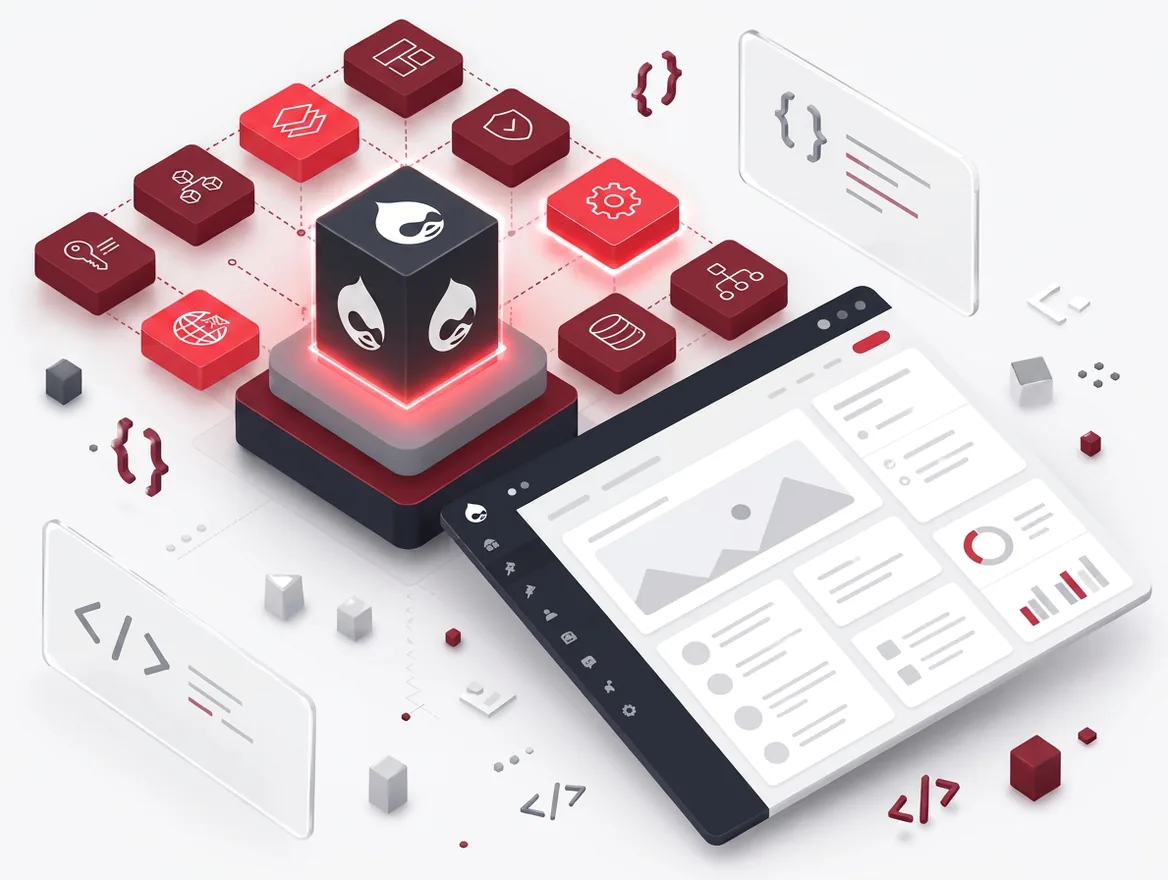
Drupal is an open-source content management framework built around structured content. Instead of pages, you model content types, fields, taxonomies and relationships, then compose views and displays over them. That structure is what makes Drupal a strong fit when you run many sites from one codebase, publish in several languages, need granular editorial permissions, or have to expose the same content to a website, a mobile app and a partner system at once. For a small brochure site the structure is overhead rather than benefit, and we will say so.
How is Drupal different from WordPress, and which should we use?
Both are open-source PHP content platforms, so the question is about the shape of your content, not the technology. WordPress starts from posts and pages and is faster to launch when editorial needs are straightforward. Drupal starts from content types, fields and access rules, so it carries complex taxonomies, multi-site estates, multilingual publishing and fine-grained permissions with less custom code. We assess your content model and editorial workflow before recommending either, and we build on both, so the recommendation is not driven by what we would rather work in.
Should we commission a Drupal project or hire Drupal developers into our own team?
They are different engagements and the difference is who owns delivery. On this page we are describing Drupal projects: we take a defined scope, run it with our own process and our own lead, and are accountable for the result. If instead you want a Drupal engineer working inside your team, in your repository, taking direction from your leads and following your definition of done, that is staff augmentation and it is covered on our IT staff augmentation page. Augmentation suits teams with engineering management to spare and a clear backlog. A delivered project suits teams without that spare management capacity, because adding people to an unclear process makes it less clear rather than more.
Can you migrate our existing site to Drupal, or upgrade an older Drupal version?
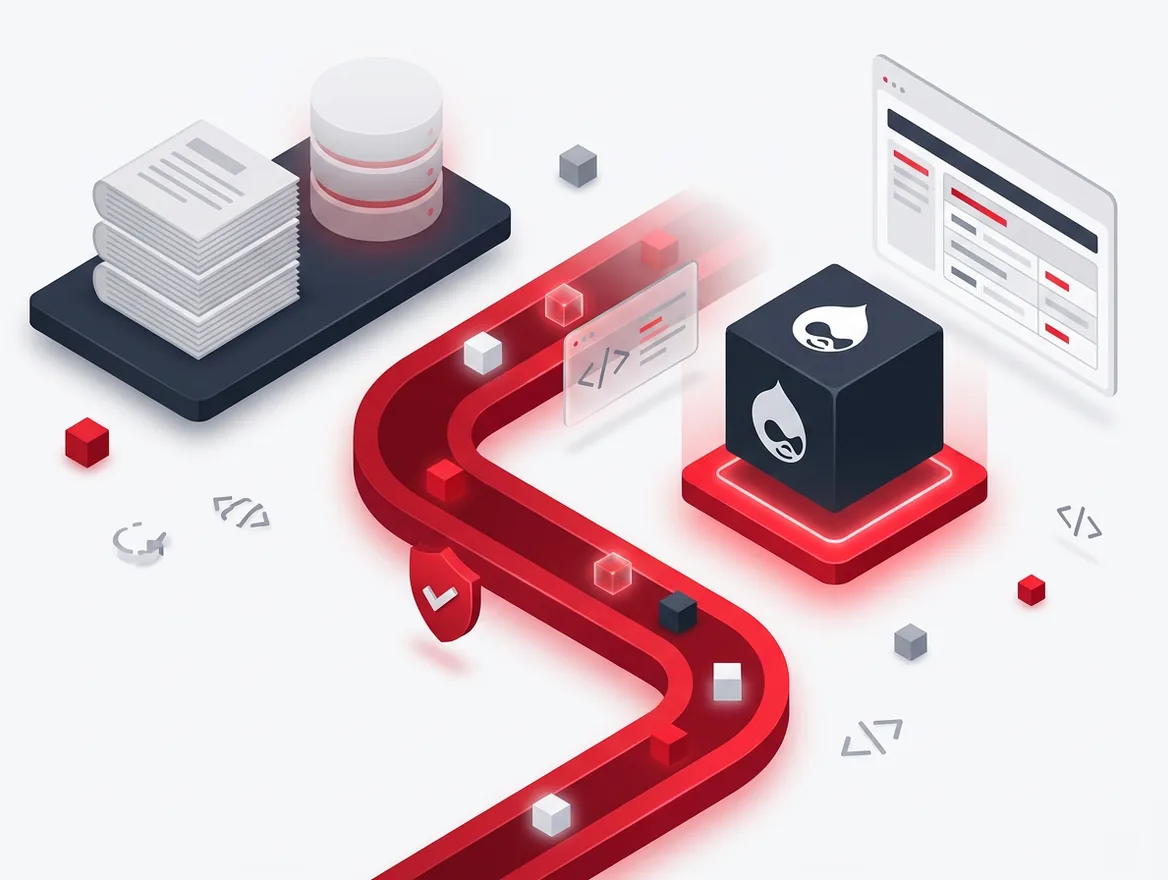
Yes, and both are content-mapping exercises before they are code exercises. We audit the existing content, taxonomies, media, URLs and access rules, define the target content model, then run the migration through Drupal's Migrate API so it can be repeated and verified rather than done once by hand. Version upgrades follow the same discipline: audit contributed modules and custom code for compatibility, replace what is abandoned, upgrade in a staging environment, and preserve URLs and redirects so search rankings and existing links survive the move.
Do you build custom Drupal modules, or only configure contributed ones?
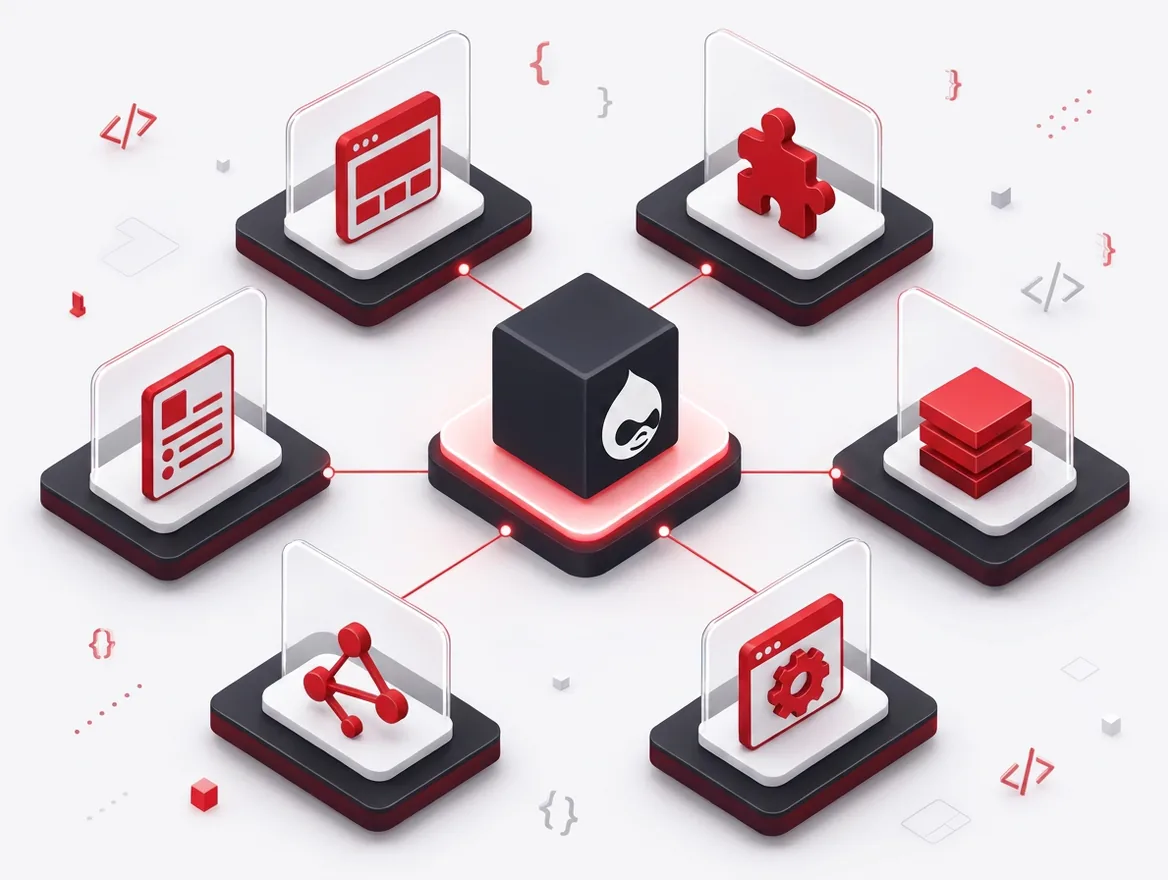
Both, in that order. Configuration and well-maintained contributed modules come first because they carry a community behind them and survive upgrades more cheaply than bespoke code. We write custom modules where your requirement genuinely has no maintained equivalent: a specific integration, a domain-specific workflow, a bespoke field type or access rule. Custom code is written to Drupal's coding standards and API patterns so the next upgrade treats it as a first-class citizen rather than an obstacle.
Can Drupal serve content to a mobile app or other front ends?
Yes. Drupal exposes content over JSON:API and REST out of the box, which lets you keep Drupal as the editorial and governance layer while a separate front end, a mobile application or a partner system consumes the same structured content. We design the content model and API contracts together so the fields your consumers need exist as fields rather than as parsed markup, and we handle authentication, caching and versioning for the endpoints we publish.
How do you keep a Drupal site secure and up to date?
Drupal has a dedicated security team that publishes advisories, and the practical work is having a process that acts on them. We keep core and contributed modules on supported versions, track advisories, apply security releases through a tested pipeline rather than directly in production, and configure roles and permissions so editors hold only the access their job requires. Our Refined Quality Management practices are verified by ISO 9001:2015 and our Powerful Security Management practices are supported by ISO 27001:2013.
What engagement models do you offer for Drupal development projects?
We offer a Dedicated Development Team model for long-term product work and Staff Augmentation to extend your in-house team. Share your requirements and we prepare a tailored proposal within 48 hours, including team composition, timeline, and cost estimate.
Do you provide support after the Drupal project launches?
Yes. After launch we monitor the running site, resolve defects, apply core and module security releases, manage dependency and version upgrades, and evolve the content model and architecture as editorial needs and traffic grow.